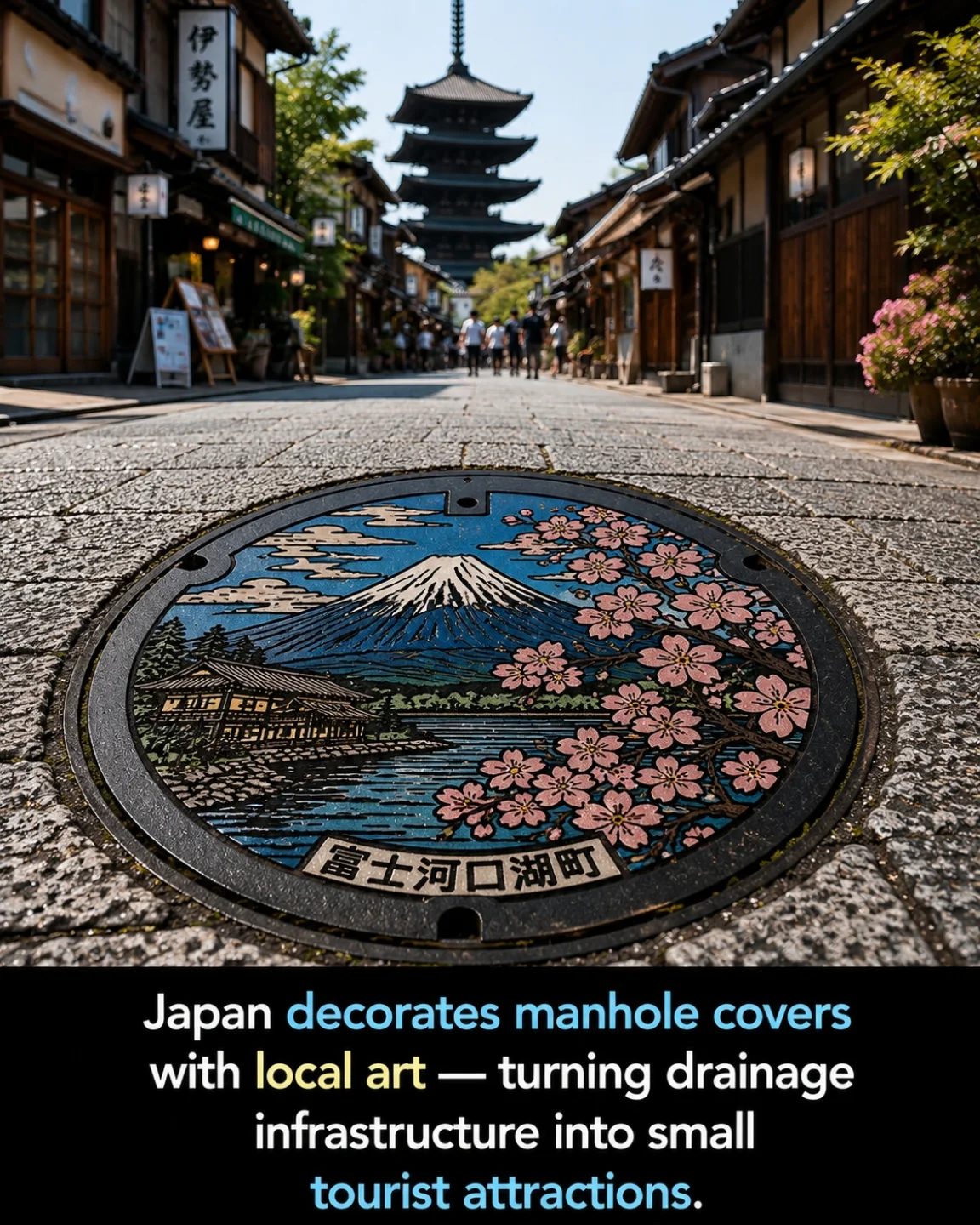
Japanese Manhole Covers
Japan is renowned for its unique cultural practices, and one of the most charming and often overlooked aspects is the decorative manhole covers found throughout the country. These covers, often adorned with intricate designs, serve as more than just functional drainage infrastructure; they have become small tourist attractions in their own right.
Context / Why This Matters
Japan's manhole covers are more than just functional pieces of urban infrastructure. They are artistic masterpieces that reflect the local culture, history, and natural beauty of the region. These covers are designed to blend in seamlessly with their surroundings, adding a touch of charm and uniqueness to the streets and neighborhoods. They have become so popular that some tourists even go out of their way to find and photograph these hidden gems.
Main Discussion
The Artistic Designs
The manhole covers in Japan are intricately designed with local art, often featuring depictions of famous landmarks, natural scenery, and cultural motifs. These designs are not just aesthetically pleasing but also serve as a way to celebrate the local heritage and traditions.
For example, the manhole cover showcased in a close-up image is decorated with a depiction of Mount Fuji surrounded by cherry blossoms and other Japanese scenery. This design is a perfect blend of nature and tradition, making it a delightful sight for passersby and tourists alike. The cherry blossoms, known as "sakura" in Japan, are a national symbol and are celebrated during the annual Hanami festival, where people gather to enjoy picnics under the blooming trees.
The Cultural Significance
The practice of decorating manhole covers began in the 1980s as a way to beautify urban landscapes and create a sense of community pride. Over time, it has evolved into a cultural phenomenon, with different regions in Japan competing to create the most unique and visually appealing designs. These designs are often chosen through public contests, where local artists and designers submit their ideas, and the winning design is then produced and installed as a permanent fixture in the city.
The Tourist Attraction
While the primary function of manhole covers is to provide easy access to drainage systems, their artistic designs have turned them into mini-tourist attractions. Visitors from all over the world come to Japan to see these intricately designed covers, often hunting for the most unique and visually stunning ones. The local art on these covers not only adds to the visual appeal of the city but also provides a window into the local culture and traditions.
Practical Tips
If you're planning to visit Japan and want to explore these unique manhole covers, here are a few tips to help you make the most of your experience:
Research Popular Locations
Before you set off on your journey, do some research to find out which cities are known for their unique manhole covers. Popular locations include Osaka, Kyoto, and Tokyo, each with its unique set of designs that reflect the local culture and scenery.
Look for Tourist Maps
Some tourist maps and guides specifically highlight manhole cover locations, making it easier for visitors to find these hidden gems. These maps can often be found in tourist information centers or downloaded from official tourism websites.
Join a Manhole Cover Tour
If you prefer a guided experience, many cities offer manhole cover tours. These tours are led by local experts who can provide insights into the history and significance of these covers. They can also take you to some of the most unique and visually stunning designs that you might miss on your own.
Important Takeaways
Japan's manhole covers are more than just functional pieces of infrastructure. They are a testament to the country's rich cultural heritage and artistic prowess. By turning drainage covers into miniature tourist attractions, Japan has added another layer of charm and uniqueness to its urban landscapes. These covers not only beautify the streets but also serve as a way to celebrate and showcase local art and culture.
Conclusion
Japan's intricate and beautifully designed manhole covers are a unique aspect of the country's cultural landscape. Whether you're a local resident or a visitor, these covers offer a fascinating glimpse into the local art and traditions. So the next time you're walking through a Japanese city, take a moment to look down and appreciate the beauty that lies beneath your feet.
Questions readers ask
Why are Japanese manhole covers so intricate and artistic?
Japanese manhole covers are designed with intricate art to reflect the local culture, history, and natural landscapes. This practice began in the 1980s as a way to promote civic pride and attract tourism, turning functional infrastructure into beautiful public art.
Can tourists find manhole covers with specific themes or designs?
Yes, many Japanese manhole covers feature specific themes or designs that represent local landmarks or cultural motifs. For instance, some covers depict Mount Fuji, while others showcase cherry blossoms or traditional Japanese patterns.
How do Japanese manhole covers contribute to tourism?
These artistic manhole covers have become small tourist attractions in their own right. They provide unique photo opportunities and encourage visitors to explore different neighborhoods and cities throughout Japan.
Who creates the designs for Japanese manhole covers?
The designs are typically created by local artists or through communal efforts by city workers and local residents. This collaborative process ensures that the designs accurately represent the local area and instill a sense of community pride.
What are some of the most famous Japanese manhole covers?
Some of the most renowned manhole covers include the Mount Fuji design in Shizuoka Prefecture and the cherry blossom motifs in various regions across Japan. These designs are celebrated for their aesthetic appeal and cultural significance.
Why are Japanese manhole covers often designed to blend in with their surroundings?
The manhole covers are designed to blend in with their surroundings to add to the overall aesthetic of the area. By incorporating local scenery and cultural motifs, the covers complement their environment and create a cohesive visual experience for both residents and visitors.
Are the designs on Japanese manhole covers ever changed or updated?
Designs on manhole covers are updated or changed periodically to reflect new initiatives or to refresh public interest. Additionally, new designs are often introduced when infrastructure is updated or new areas are developed, ensuring that the art remains relevant and appealing.
Related deep dives
Similar reads based on topic and creator.




Recent articles
Fresh deep dives from the latest Reels we unpacked.



Comments
Be the first to comment.