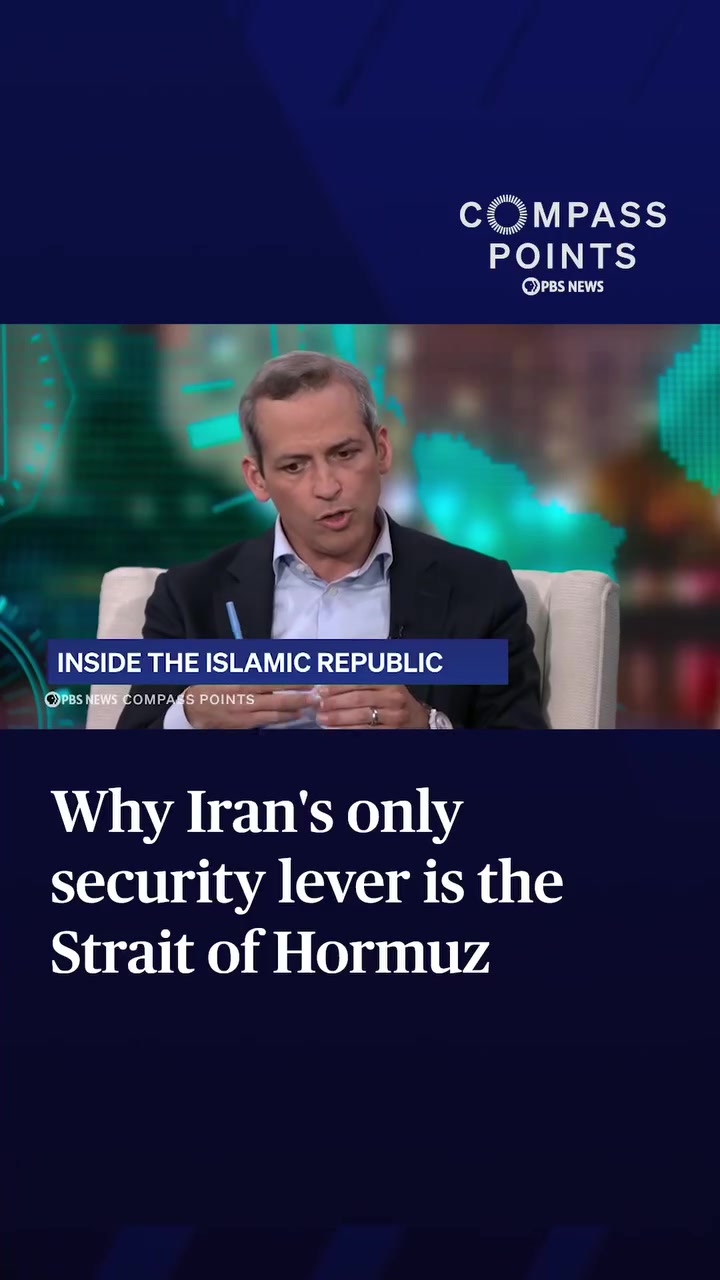
Iranian strategists have now designated the Strait of Hormuz as their primary security lever, making a painful choice for the world. They have determined 'the best way out of this war... is simply to make it as costly as possible for the United States and the world'. The Strait of Hormuz is a narrow waterway between the Persian Gulf and the Gulf of Oman. It is the world's most important oil chokepoint, with about 20% of global petroleum traded passing through it. Iran's new rhetoric suggests they may disrupt these flows in response to threats, putting the world on notice. The Iranian Supreme Leader was assassinated, and Iran engaged repeatedly in diplomacy without result, which led to them concluding there are no viable diplomatic options left. Now they have begun to see the Strait of Hormuz as their source of leverage.
Iran’s Strategy for Strategic Chokepoints
Iran’s strategic posture has shifted, placing the Strait of Hormuz at the center of its security calculus. The Strait of Hormuz connects the Persian Gulf to the larger world. This waterway is the sole maritime route through which the majority of Middle Eastern oil exports flow. With approximately 20% of the world's petroleum traversing this narrow passage, Iran’s control over the Strait of Hormuz can significantly influence global energy prices and supply. Approximately 60% of China's oil travels through the strait, and several other countries, like Japan, South Korea, and India are close to that mark. Can Iran effectively control the Strait of Hormuz?
A Changing Diplomatic Maneuver
With no viable diplomatic options open, this sharp shift reflects the Iranians' decision to change their strategy. Iranian and American diplomatic ties have not recovered since the American assassination of the Iranian Supreme Leader. United States and Iranian officials have talked repeatedly, but Iran's efforts have consistently failed to produce a viable diplomatic strategy or resolution. Iran’s current strategy is to close the Strait of Hormuz to shipping in the event of any future attack.
The Supreme Leader Assassination
In the country's recent past, America killed the Iranian Supreme Leader, despite Iranian attempts to de-escalate. Iran attempted several other diplomatic strategies. But the West's unwillingness to negotiate meant that Iran had no diplomatic solutions. The assassination of the Supreme Leader doesn't seem to have shifted Iran's strategic calculus, but it has shifted their expectations. Iran concluded they had no diplomatic options left. Since then, Iran has tightened the security around the Strait of Hormuz.
Escalation and Retaliation
Iran’s stance escalates matters by asserting economic leverage. An Iranian blockade of the Strait of Hormuz could cause an economic downturn and global recessions. The Strait of Hormuz supplies over 60% of China's oil and 90% of Japan's oil needs. A blockade could disrupt this flow and result in catastrophic global economic ramifications. If Iran does implement a blockade, countries like Japan and China must commit to Iran's demands.
Middle Eastern Geopolitics and Global Impacts
The re-naming of the Strait of Hormuz as Iran’s primary security lever impacts multiple stakeholders who have no interest or investment in the political situation in Iran. Iran’s actions will impact global energy, economic, and foreign policies. Iran’s growing influence over the Strait of Hormuz stirs angst among global leaders and policymakers. Iran's new geopolitical strategy is the most contentious issue in foreign policy. They have shifted the world's most critical security lever from hard power norms that the world has understood for centuries to a strategic chokepoint that influences the global economy. Now Iran must choose a strategy that balances economic leverage, security, and international pressure. International pressure remains on Iran to comply with international shipping law and ensure the Strait of Hormuz remains open.
Economic Levering
Iranian strategists have recognized that economic pressure can be a powerful tool in geopolitical disputes, however this has significant risks. While the Iranian government has repeatedly sat down with American officers, the countries have not been able to achieve a diplomatic solution. Flags have not been lowered on either side, and the impasse continues — intensifying Iran's desire for economic leverage. Iran might close the Strait of Hormuz, and increase economic pressure on the United States and the wider world. Iran’s new leverage is the economic effects of closing this sea passage: sales, use, and purchasing of petroleum products. Iran has few other economic options, and lacks the economic influence of the United States. If Iran does close the Strait of Hormuz and efforts to reopen it, Iran will continue their attempts to extend their influence.
Iran’s Strategic Calculations
Iran's move underscores its strategic shift in reliance on the Strait of Hormuz as a security lever. Iranian policymakers see the Strait of Hormuz as a strategic chokepoint and a vital component of their military and security strategy. Iran has rebranded the Strait of Hormuz as a tool for massive geopolitical leverage. With the Persian Gulf on one side and the Gulf of Oman on the other, the Strait of Hormuz is a vital economic link for many countries. Iran's new geopolitical strategy is controversial on the global stage. If Iran is attacked, they will increase economic pressure. Iran's strategy is to increase economic pressure. They will control the flow of more than a fifth of the world’s oil trade, which will increase economic pressure on countries like China, India, Japan, and South Korea. Global markets are watching Iran with concern. Iran poses a strategic risk to the Strait of Hormuz. The Persian Gulf and the Gulf of Oman are sites of intense geopolitical turmoil. Iran's new geopolitical strategy threatens global markets. The Strait of Hormuz is the world’s most critical shipping lane. International leaders and policymakers must work to mitigate this risk. International pressure is on Iran to maintain peace in the Persian Gulf and the Gulf of Oman. There is a large risk of a blockade by Iran that would disrupt the flow of oil and simple international trade. Iran has leveraged the Strait of Hormuz to maximize its economic influence and ability to pressure the United States, China, India, and many other countries.
Staying Open
Reforming and securing the Strait of Hormuz has been an urgent priority for policymakers worldwide. The Strait of Hormuz is a strategic resource for both security and economic leverage. Oil trade must remain open and unblocked for international officials. Officials working on this issue must use all available tools to maintain a stable and secure region.
Knowing the costs
The Strait of Hormuz is the most crucial chokepoint in global trade. Iran has used its strategic position and control over the Strait of Hormuz to maintain a strategic position. Iran has shifted from a position of purely hard power norms to a strategy that leverages the Strait of Hormuz for global influence. Nations such as China, India, Japan, and Korea must adjust their foreign policies. Iran’s control over the Strait of Hormuz has been a factor in global trade and strategic positioning for centuries. Strategic calculations are at the heart of all modern diplomacy, and the Strait of Hormuz is a critical element of the Middle East's economic and political landscape.
Questions readers ask
How exactly does Iran plan to disrupt oil flows through the Strait of Hormuz?
Iran has not detailed specific tactics, but the threat implies that they could use a combination of military assets, such as naval forces, submarines and missiles, to hinder or stop oil tankers from passing through the strait. They could also use mines or other obstructions to make the passage impassable. This would force countries to negotiate to reduce the blockade.
What would be the immediate global impact if Iran were to close the Strait of Hormuz?
Closing the Strait of Hormuz would immediately disrupt the flow of about 20% of the world's petroleum, leading to significant spikes in global oil prices. Countries heavily dependent on oil imports, such as Japan, China, and India, would be particularly affected, facing potential economic downturns and recessions. This could also trigger a global economic crisis, as energy prices would rise, destabilizing markets worldwide.
Why is the Strait of Hormuz so crucial to global oil markets?
The Strait of Hormuz is the world's most important oil chokepoint, with approximately 20% of global petroleum trade passing through it. It is the sole maritime route for the majority of Middle Eastern oil exports, making it a critical link in the global energy supply chain. Countries like China, Japan, South Korea, and India rely heavily on oil from this region, making any disruption to the strait's traffic a major concern.
How have Iran's diplomatic efforts with the U.S. affected their strategy?
Iran's repeated diplomatic efforts with the U.S. have been frustrated by the lack of progress and the assassination of the Iranian Supreme Leader. Iranian officials have engaged in talks but have not achieved a viable diplomatic resolution. This has led Iran to conclude that there are no diplomatic solutions left, prompting them to shift their strategy towards leveraging the Strait of Hormuz as a means to exert economic pressure.
What specific countries would be most affected by an Iranian blockade of the Strait of Hormuz?
Countries most affected by a blockade would be those heavily reliant on oil imports from the Middle East, particularly Japan and China. Both countries depend on the Strait of Hormuz for over 60% of their oil needs, making them highly vulnerable to any disruption in oil flows through the strait. Other countries, like South Korea and India, would also face significant challenges due to their dependence on Middle Eastern oil.
Related deep dives
Similar reads based on topic and creator.
Recent articles
Fresh deep dives from the latest Reels we unpacked.


Comments
Be the first to comment.