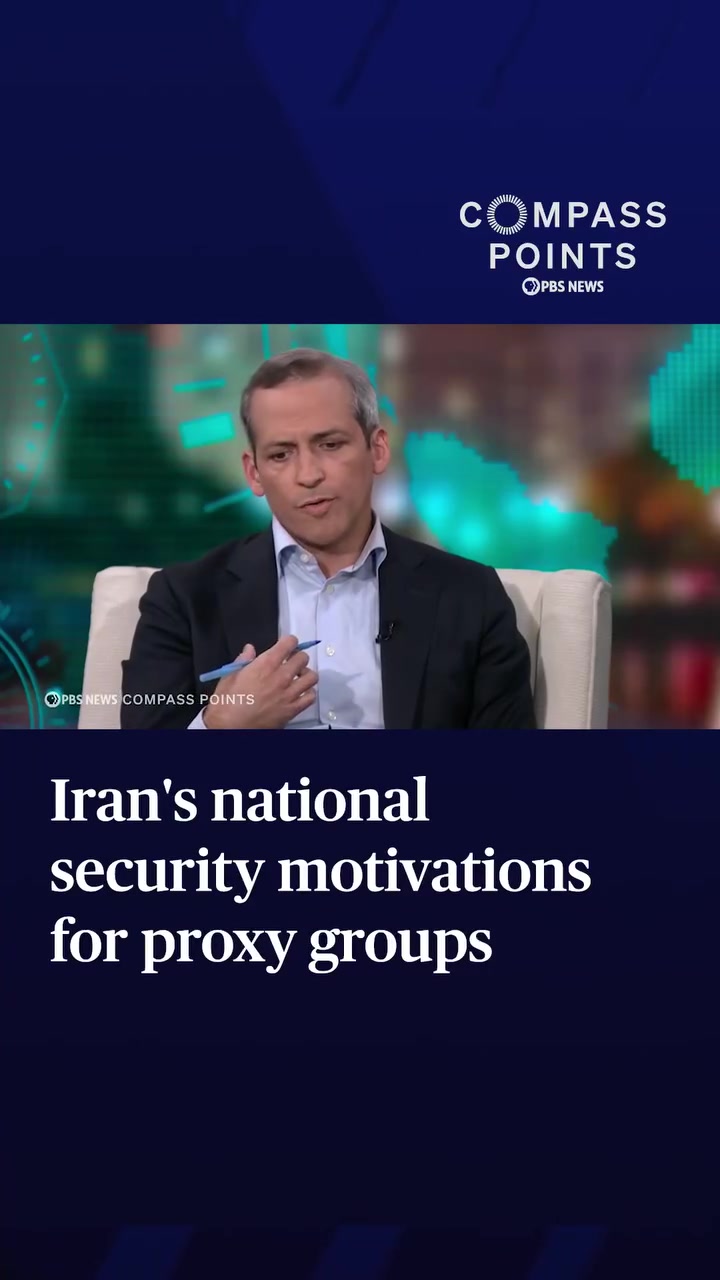
When Iran defines national security, it looks beyond its borders. From the U.S. perspective, security lies in American officials' decades-long perceptions and stated narratives: Iran deploys proxy forces—from Lebanon to Yemen, Iraq, and beyond. Iran and factions backed by Iranifying strategic calculations and military realism—the proxy forces form buffers for Iran against U.S. influence. This is how a reality motivated by "military realism," the number of US bases, and the Iranian government's awareness of American military pursuits explains Iran's national security motivations. By American standards, these networks are "the world's largest state sponsors of terrorism" and a "regional terrorism" threat.
Iran’s Proxy Network
A basic understanding of Iran's involvement with proxy forces requires a closer look at the groups themselves. Iran is associated with a network of proxy forces in the Palestine, Syria, Iraq, Lebanon, Afghanistan, and Yemen regions. Hezbollah, for instance, operates out of southern Lebanon, with its leadership and members living and working in Lebanon. Another example set in Yemen is the Houthis, who have received material and ideological support from Iran. Shia militias in Iraq, including Asa'ib Ahl al-Haq, have connections to Iran. The motivations of these groups are distinct, yet their ultimate goals intersect with Iran's primary security interest: to remain the regional power. By extension, these groups are "proxy" forces in that they accept Iranian funding, training, and weaponry, and in turn, support Iran's interests in their respective countries. The very term "proxy" signifies that these groups support Iranian interests they wouldn't act on without Iran's involvement.
Iran's National Security and American Influence
Few discussions of Iran’s motivations can avoid the U.S. footprint. The U.S. has a long history of military interventions in the Middle East, from toppling governments to starting wars. The U.S. military has been active in Syria, Iraq, and Yemen. Iran's use of proxy forces is, in part, a response to the perceived threat posed by American military presence. To Iran, the strategic logic behind its proxy networks is defined by a reality in which it is surrounded by American bases. Compare the number of US bases with Iranian influence across the Middle East. Iran is surrounded by 800 bases. Iran is not a hegemonic power in the Middle East, and its regional influence is limited to asymmetrical war and non-state and weak state actors like Hezbollah, Houthis, and Shia militias in Iraq. Iran cannot compete with the U.S. in a direct military confrontation and hence opts for a semi-war-like posture towards its perceived enemy.
The Proxy Buffer
This is clear in the context of Iran's concern for its security, border, and borders' national security. The geographical layout of the Middle East has led to a buffer zone around U.S. bases and allies. This buffer zone is maintained by Iran's proxy forces and is an essential aspect of Iran's national security strategy. When the U.S. or its allies deploy military assets in the region, Iran's proxy networks adjust to confront the new security threats. From Iran's perspective, the role of proxy forces is to project power and deter aggression, prevent any foreign army from breaching Iran's borders.
Iran’s Persistent Security
Iran's national security strategy has been consistent for almost 50 years. It uses proxy forces to respond to perceived threats. Iran started using proxies in response to decades of U.S. involvement in the region. Iran will not abandon this strategy unless the U.S. drastically changes its regional policies. Iran’s security logic is firmly rooted in the notion of buffer zones surrounding the nation.
Proxy Groups and Regional Security
The most critical strategic calculation that Iran makes is how to secure its security from the regional superpower. Iran’s security establishment views proxy forces as a means to provide a "buffer zone" between itself and the U.S. bases. Iran’s proxy forces, including Hezbollah, Houthis, and Shia militias in Iraq, play a crucial role in Iran's security strategy. In this sense, Iran's national security strategy is defined by the number of US bases in the region. Iran’s proxy forces cannot be analyzed without considering US bases. It is hard to make a narrative that the U.S. military bases are unhelpful. However, the regional perception of the U.S. military presence has forced Iran to create its first line of defense, a buffer zone, comprised of proxy forces. When the U.S. or its allies deploy military assets in the region, Iran's proxy networks adjust to confront the new security threats. The presence of the U.S. military in the region has compelled Iran to adopt a semi-war model of conflict to defend itself.
Strategic Necessity
Iran's perception of the world and its place in it has changed its national security strategy. From Iran's view, it is the U.S. that started the hostilities by attacking other countries in the region. The U.S. has been active in toppling and attacking and starting wars in the Middle East. Iran's response is to create a buffer between itself and the U.S. and its allies. Iran's strategy is clear: to create a buffer zone that would make an invasion of Iran unfeasible. Thus, Iran's national security strategy, from its perspective, does not result from an aggressor intention but a defensive and strategic necessity.
Evaluating Iran’s Proxy Networks
Proxy forces are a vital aspect of Iran's national security. If you're eager to evaluate these forces, what should you consider? How do these groups operate, who do they target, and what are their motivations? Understanding the political situation in the region is vital. It's also essential to look at the U.S. military presence in the Middle East. How do you think Iran will adjust its proxies' strategy? Finally, it's essential to consider why Iran chooses to use proxy forces. Iran’s use of proxy groups serves a purpose: to create a buffer zone of stability around Iran’s borders. However, Iran's national security strategy is not getting the results that it needs. In this context, it is essential to evaluate Iran’s ability to sustain a buffer zone and protect its essential interests. Iran's strategy has not worked, but it is still committed to it. Iran believes it is necessary to protect its national security. The Iranians may be active to the north, south, and east. Iran may also be looking to the west, toward Iraq, where its proxy forces are active. Iran’s left flank, Syria, which is backed by the Russian military. No part of Iran is safe from American influence. After 47 years, Iran still sees itself in the crosshairs of Washington. When the U.S. military is active in the Middle East, Iran is active. Iran’s strategy to protect itself is clear: national security by any means necessary.
Questions readers ask
What exactly are proxy forces in the context of Iran's national security strategy?
Proxy forces, in this context, are groups like Hezbollah, the Houthis, and Shia militias in Iraq. They receive support from Iran, including funding, training, and weaponry, and in turn, act in ways that align with Iran's regional interests. These groups are considered 'proxies' because they wouldn't be acting in these ways without Iran's backing. They have a role in Iran's national security strategy, even if they have distinct motivations.
How does the U.S. military presence influence Iran's use of proxy forces?
The U.S. has a significant military presence in the Middle East, with hundreds of bases surrounding Iran. This presence is seen as a threat by Iran, which feels surrounded and vulnerable. In response, Iran uses proxy forces as a buffer against U.S. influence and as a means to counter U.S. military power without engaging in direct confrontation, which could be more costly and risky for Iran.
How does Iran maintain control over its proxy forces?
Iran maintains control over its proxy forces through a combination of material support and ideological influence. By providing funding, training, and weaponry, Iran ensures that these groups remain dependent on it. Additionally, Iran shares a common ideological stance with many of these groups, which helps to align their goals with Iran's regional interests. However, the extent to which Iran exerts control over these groups can vary.
Why doesn't Iran engage in direct military confrontation with the U.S.?
Iran is at a significant military disadvantage compared to the U.S. and cannot compete directly. Iran is surrounded by over 800 U.S. military bases. Engaging in direct military confrontation with the U.S. would be risky and costly for Iran, so it opts for an asymmetrical war strategy using proxy forces. This allows Iran to exert influence and protect its interests without engaging in a direct, high-cost conflict.
How do Iran's proxy forces benefit from their relationship with Iran?
Iran's proxy forces benefit from the relationship in several ways. They receive financial support, military training, and advanced weaponry from Iran, which enhances their capabilities. Additionally, Iran's support allows these groups to maintain their influence and power in their respective countries, often in opposition to U.S. allies. The relationship also provides these groups with a sense of legitimacy and ideological backing.
Related deep dives
Similar reads based on topic and creator.



Recent articles
Fresh deep dives from the latest Reels we unpacked.



Comments
Be the first to comment.