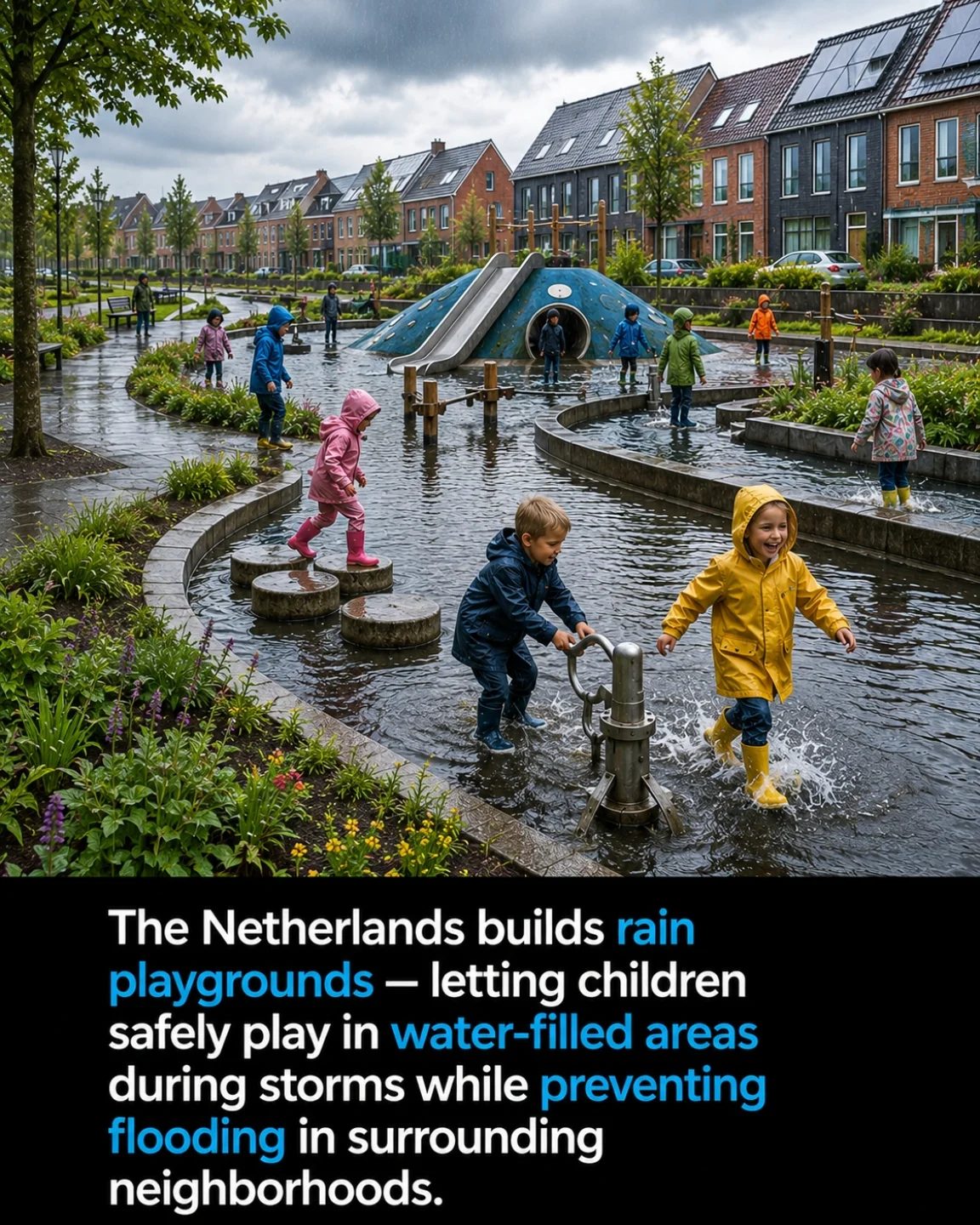
Rain Playgrounds in the Netherlands
Rain playgrounds in the Netherlands offer a unique solution to managing stormwater while providing children with a fun and safe environment to play. These specially designed spaces allow kids to enjoy the rain and splash around, while also serving a critical function in urban water management.
Context / Why this Matters
The Netherlands is well-known for its innovative approaches to water management. Rain playgrounds embody this ingenuity by turning a potential problem into a community asset. By integrating these playgrounds into urban planning, the Netherlands demonstrates a forward-thinking strategy that can benefit other regions facing similar challenges.
Main Discussion
What are Rain Playgrounds?
Rain playgrounds are designed to handle excess rainwater by allowing it to collect in designated areas. These areas are often located in public spaces, such as parks and playgrounds, and are designed to be safe for children to play in, even when filled with water. The concept is not just about managing water; it's also about creating enjoyable spaces for community recreation.
How do Rain Playgrounds Work?
These playgrounds typically feature a series of channels, basins, and other water-handling structures. During heavy rain, these structures fill up with water, which can then be slowly released or absorbed into the ground, reducing the risk of flooding in the surrounding neighborhoods. This system works in tandem with other urban water management strategies, such as green roofs and permeable pavements, to create a holistic approach to rainwater management.
Benefits of Rain Playgrounds
- Flood Prevention: By collecting and managing rainwater, these playgrounds help prevent flooding in nearby areas.
- Community Safety: They provide a safe space for children to play during rainy weather, reducing the risk of accidents caused by flooded streets and sidewalks.
- Environmental Benefits: These playgrounds promote natural water filtration and reduce the strain on urban drainage systems, contributing to a healthier environment.
- Community Engagement: They offer a unique community space where children can enjoy the outdoors, even in wet weather, fostering a sense of community and fun.
Rain Playgrounds in Action
In some Dutch cities, these playgrounds are designed with colorful drains and decorative water features, turning the rainwater management system into an attractive part of the play area. Children can navigate through these features, learning about water management in a playful and interactive way. Additionally, the design often incorporates slides, sandboxes, and other traditional playground elements, ensuring that the space remains fun and engaging for kids of all ages.
Practical Tips
If you're considering creating a similar space in your community, here are some practical steps to get started:
- Assess Local Needs: Determine whether your community would benefit from a rain playground. Consider factors such as the local climate, flooding risks, and the need for community recreation spaces.
- Engage the Community: Involve local residents, especially families with children, in the planning process. Their input can help shape a playground that meets the community's unique needs and preferences.
- Consult Experts: Work with urban planners and water management experts to design a safe and effective rain playground. They can help ensure that the space meets all safety standards and water management requirements.
- Secure Funding: Explore funding options, such as grants, community fundraising, or public-private partnerships, to cover the costs of construction and maintenance.
- Promote the Space: Once the playground is built, promote it through local events, social media, and community outreach. Encourage families to visit and make the most of this unique community resource.
Important Takeaways
Rain playgrounds in the Netherlands offer a unique and practical solution to urban water management. By providing a safe and enjoyable space for children to play, these playgrounds not only help prevent flooding but also create community spaces that are both fun and functional.
Conclusion
Rain playgrounds in the Netherlands showcase a creative approach to urban planning and water management. They serve as a model for how communities can turn challenges into opportunities. By integrating these innovative spaces into urban design, the Netherlands has created a sustainable and enjoyable environment for its residents. Whether you're considering a similar project for your community or simply curious about this unique concept, rain playgrounds provide valuable insights into the future of urban planning and community engagement.
Questions readers ask
What makes rain playgrounds in the Netherlands unique?
Rain playgrounds in the Netherlands are unique because they combine recreational spaces for children with functional urban water management systems. This dual-purpose design allows kids to play while the playground handles excess rainwater, helping to prevent local flooding.
How do rain playgrounds contribute to flood prevention in urban areas?
Rain playgrounds contribute to flood prevention by designed to temporarily hold and gradually release excess rainwater. This helps to reduce the strain on urban drainage systems during heavy rainfall, decreasing the risk of flooding in surrounding areas.
Can these playgrounds be found in specific types of locations?
Yes, rain playgrounds are typically located in parks and other public spaces within urban environments. This strategic placement not only provides convenient access for children but also ensures that the playgrounds can effectively manage rainwater from the surrounding areas.
What benefits do these playgrounds offer to communities besides flood control?
In addition to aiding in flood control, rain playgrounds foster a sense of community by providing a safe and engaging space for children to play. They also promote awareness and appreciation for sustainable urban design and the environment.
What are some key features of a rain playground?
Key features of a rain playground include specially designed water collection surfaces, interactive water elements for play, and systems to filter and gradually release water. These features ensure that the playground can manage rainwater effectively while offering an enjoyable play experience.
How do rain playgrounds fit into the broader context of Dutch water management?
Rain playgrounds are a part of the Netherlands' holistic approach to water management, which emphasizes integration and multifunctionality. By combining recreational and functional purposes, these playgrounds exemplify the Dutch strategy of turning potential challenges into opportunities for community enrichment and sustainability.
Are there similar initiatives in other countries?
While the specific design and scale of rain playgrounds may vary, other countries are also exploring similar concepts of integrating water management with public spaces. These initiatives often focus on creating sustainable urban environments that can adapt to changing weather patterns and provide recreational benefits to communities.
Related deep dives
Similar reads based on topic and creator.




Recent articles
Fresh deep dives from the latest Reels we unpacked.


Comments
Be the first to comment.