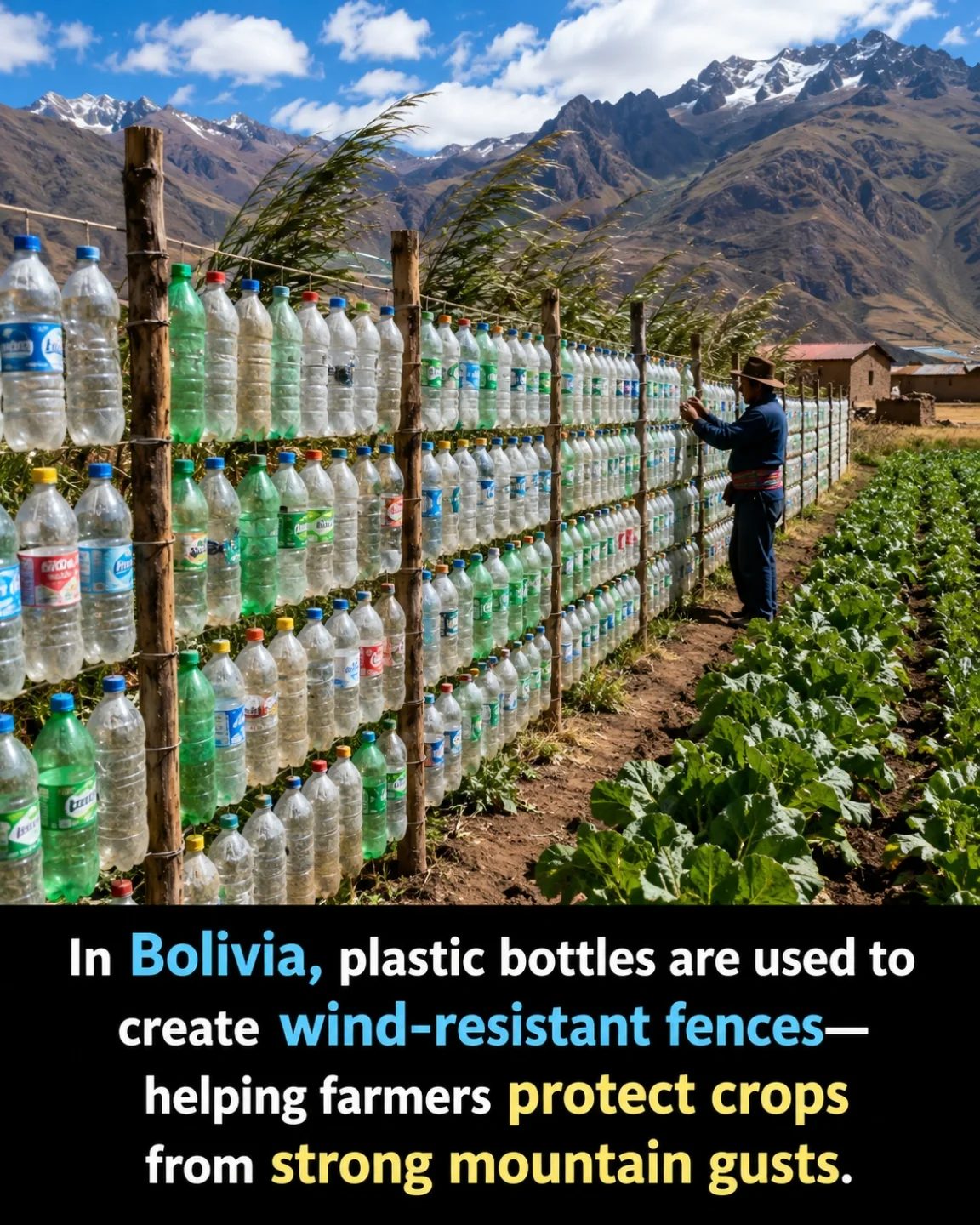
Plastic Bottle Fences: A Unique Sustainable Farming Technique in Bolivia
Plastic bottle fences have emerged as an innovative and sustainable farming technique in the challenging mountainous terrain of Bolivia. Farmers in this region have discovered a clever way to protect their crops from strong mountain winds using recycled plastic bottles. This method not only helps safeguard crops but also provides a practical solution for plastic waste management.
Why this matters
Farming in mountainous regions is fraught with challenges, particularly the relentless winds that can damage crops and reduce yields. Traditional fencing materials can be costly and difficult to source, making them impractical for many farmers. The use of plastic bottles as a fencing material addresses these issues by providing an accessible, cost-effective, and eco-friendly solution.
Main discussion
The Innovation of Plastic Bottle Fences
The concept of using plastic bottles to create wind-resistant fences is both simple and brilliant. Farmers string plastic bottles together to form sturdy, flexible barriers that can withstand strong winds. These fences are particularly effective in protecting crops from the harsh mountain gusts that are common in Bolivia's high-altitude regions.
Building the Fences
Constructing a plastic bottle fence involves a few straightforward steps. First, plastic bottles are collected and cleaned. These bottles are then filled with water or sand to provide weight and stability. The bottles are strung together using strong rope or wire and spaced evenly along the rows of crops. The resulting fence is both durable and flexible, allowing it to bend with the wind without breaking.
Protecting Crops from Wind Damage
The primary benefit of these fences is their ability to shield crops from the damaging effects of strong winds. In mountainous areas, wind can uproot young plants, damage leaves, and even alter the soil structure, making it harder for plants to grow. By using plastic bottle fences, farmers can create a barrier that deflects wind away from their crops, ensuring healthier growth and higher yields.
Environmental and Economic Benefits
The use of plastic bottles for fencing offers multiple environmental and economic benefits. Firstly, it provides a practical use for plastic waste, which is often a significant environmental concern. By repurposing plastic bottles, farmers contribute to waste reduction and promote recycling. Additionally, the cost of constructing these fences is minimal, as plastic bottles are readily available and require no specialized tools or materials for assembly.
Adaptability and Versatility
One of the key advantages of plastic bottle fences is their adaptability to various farming needs. These fences can be easily adjusted in length and height to accommodate different crop types and field sizes. They can also be repositioned as needed, making them a versatile solution for farmers who need flexible fencing options.
Community and Cultural Impact
The implementation of plastic bottle fences has had a positive impact on farming communities in Bolivia. Farmers have found a sense of pride in using innovative and sustainable methods to protect their crops. The technique has also fostered a sense of community, as neighbors often collaborate to collect and assemble the bottles.
Practical tips
Implementing a plastic bottle fence on your farm is a straightforward process. Here are some practical tips to help you get started:
-
Collect and Clean Bottles: Gather as many plastic bottles as you can, preferably in similar sizes. Clean them thoroughly to remove any contaminants that could harm the soil.
-
Fill with Weight: To provide stability, fill the bottles with water or sand. This added weight will help keep the bottles in place and prevent them from being blown away by the wind.
-
String Together: Use strong rope or wire to string the bottles together. Make sure the stringing material is durable and can withstand exposure to the elements.
-
Position the Fence: Place the fence along the rows of crops that are most susceptible to wind damage. Ensure the fence is positioned at an angle that will deflect wind away from the crops.
-
Maintain and Adjust: Regularly inspect the fence for any signs of wear or damage. Adjust the height and length of the fence as needed to accommodate growing crops or changing wind patterns.
Important takeaways
- Plastic bottle fences are an innovative and sustainable solution for protecting crops from strong winds in mountainous regions.
- These fences are cost-effective, eco-friendly, and easy to construct using readily available materials.
- The technique not only helps farmers protect their crops but also contributes to waste reduction and recycling efforts.
- Plastic bottle fences are versatile and can be adapted to various farming needs, making them a practical solution for many farmers.
Conclusion
Plastic bottle fences represent a creative and effective approach to sustainable farming in Bolivia. By repurposing plastic waste, farmers can protect their crops from strong winds while promoting environmental sustainability. This innovative technique offers a practical solution to common agricultural challenges and showcases the ingenuity of farmers in adapting to their unique environments. As more farmers adopt this method, the benefits of plastic bottle fences are likely to extend beyond individual farms, contributing to broader environmental and agricultural improvements.
Questions readers ask
How are plastic bottle fences constructed in Bolivia?
Plastic bottle fences in Bolivia are typically constructed by stringing together recycled plastic bottles onto wire mesh or fishing line. Farmers often use clear or colored bottles, depending on availability, and secure them in place to create a sturdy, wind-resistant barrier around their crops. The process is straightforward and requires minimal tools, making it accessible for many farmers in the region.
What types of crops benefit most from these fences?
Plastic bottle fences are particularly beneficial for crops that are sensitive to wind damage. This includes a variety of vegetables, fruits, and grains commonly grown in Bolivia's mountainous regions. By reducing wind exposure, these fences help maintain soil moisture, prevent erosion, and improve overall crop yields.
How effective are plastic bottle fences in protecting against mountain winds?
Plastic bottle fences have been shown to significantly reduce the impact of strong mountain winds on crops. The combination of the bottles' shape and the number of bottles per square meter acts as a wind barrier, diffusing wind energy and decreasing its velocity. This results in less physical damage to crops and better retention of soil and nutrients.
What are the environmental benefits of using recycled plastic bottles for fencing?
Using recycled plastic bottles for fencing offers multiple environmental benefits. It reduces plastic waste that would otherwise end up in landfills or the environment. Additionally, it lowers the demand for new fencing materials, conserving resources and reducing the carbon footprint associated with manufacturing and transportation.
Can this technique be applied in other regions with similar challenges?
Yes, the plastic bottle fencing technique can be adapted to other regions facing similar challenges, such as strong winds and limited resources. Farmers in mountainous or windy areas around the world can benefit from this cost-effective and eco-friendly solution. The key is to ensure a steady supply of recycled plastic bottles and the right construction methods tailored to local conditions.
How do Bolivian farmers source the recycled plastic bottles for these fences?
Bolivian farmers typically source recycled plastic bottles from local communities and nearby towns. Many people contribute to this initiative by collecting and donating used plastic bottles, creating a community-driven effort to support sustainable farming practices. Local organizations and cooperatives may also facilitate the collection and distribution of these materials.
What are the long-term benefits of using plastic bottle fences for crop protection?
Long-term benefits include improved soil health, as the reduced wind exposure helps retain moisture and nutrients. Additionally, the fences can deter pests and animals from damaging crops. Over time, this translates to higher crop yields and better financial stability for farmers. The durability of the bottles also means that the fences can last for several years, providing sustained benefits.
Related deep dives
Similar reads based on topic and creator.




Recent articles
Fresh deep dives from the latest Reels we unpacked.




Comments
Be the first to comment.