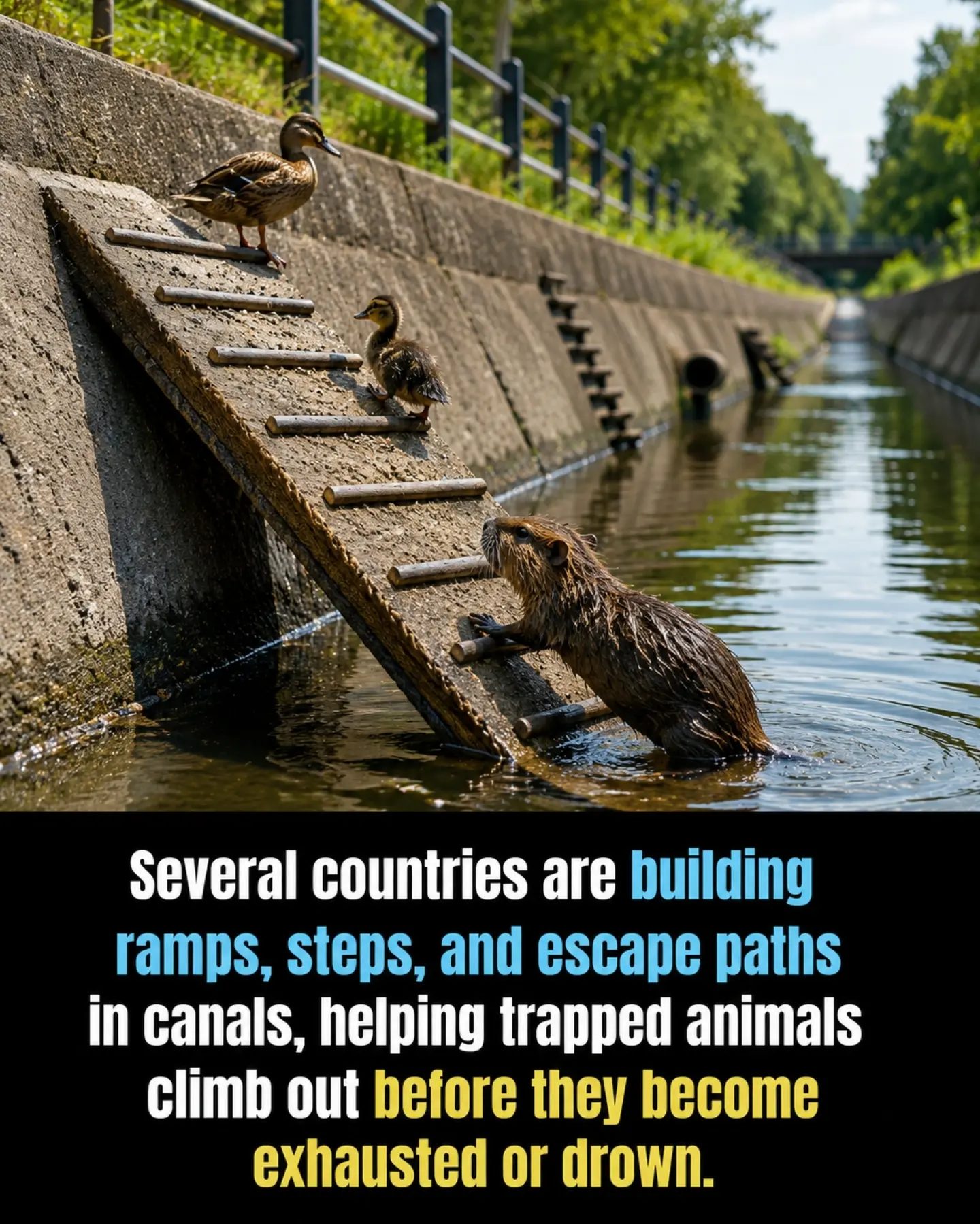
Animal Rescue: How Ramps and Steps in Canals Save Lives
Canals, while beautiful and functional for human activities, can pose significant dangers to wildlife. Animals, including ducks and beavers, can easily become trapped and exhausted or worse, drown in these waterways. Fortunately, several countries have taken proactive steps to mitigate these risks by building ramps, steps, and escape paths along the canal edges. These simple yet effective structures provide crucial lifelines for animals, helping them climb out of the water and back to safety.
Why This Matters
The importance of these safety structures cannot be overstated. Canals, while integral to human infrastructure, are often designed with little consideration for the safety of wildlife. Animals frequently find themselves trapped in these waterways, unable to escape due to steep, slippery walls. The installation of ramps and steps offers a practical solution to this problem, ensuring that animals can find their way out before they become too fatigued or face drowning.
Understanding the Problem
The Dangers of Canals
Canals are man-made waterways designed for various purposes, including transportation, irrigation, and flood control. While these structures are beneficial to humans, they create significant hazards for wildlife. Animals that fall into or become trapped in canals face several challenges:
- Exhaustion: The constant effort to swim or tread water can lead to exhaustion.
- Drowning: Without a way to escape, animals may drown.
- Predation: Trapped animals are easy targets for predators.
The Role of Ramps and Steps
To address these issues, several countries have begun integrating ramps, steps, and escape paths into their canal designs. These structures serve as lifelines for animals, offering them a way to climb out of the water and back to safety. The designs are simple yet effective, typically consisting of:
- Gradual Slopes: Ramps with gentle inclines that allow animals to climb out gradually.
- Steps: Flat, stable surfaces that provide resting points for animals as they climb.
- Escape Paths: Cleared areas leading away from the water's edge, giving animals a safe route to return to their habitats.
Practical Tips for Implementing Animal-Safe Canals
Design Considerations
When designing canal ramps and steps, several factors should be considered to ensure their effectiveness:
- Material: Use non-slip materials that provide good traction for various animal species.
- Height and Width: Ensure the structures are wide and high enough to accommodate different sizes and types of animals.
- Placement: Position the ramps and steps at strategic locations where animals are most likely to become trapped.
Maintenance and Monitoring
Once installed, these structures require regular maintenance to ensure they remain functional:
- Cleaning: Regularly clean the ramps and steps to remove debris and algae, which can make them slippery.
- Inspections: Conduct periodic inspections to check for damage or wear and tear.
- Monitoring: Observe animal behavior around the structures to assess their effectiveness and make necessary adjustments.
Important Takeaways
The Impact on Wildlife
The installation of ramps and steps in canals has a profound impact on wildlife. These structures significantly reduce the risk of exhaustion and drowning, providing a safer environment for various species. By offering a means of escape, these structures help preserve local ecosystems and promote biodiversity.
Community Engagement
Community involvement is essential for the success of these initiatives. Local residents, environmental groups, and wildlife organizations can play a crucial role in advocating for and maintaining these safety measures. Public awareness campaigns can educate people about the importance of these structures and encourage their implementation in more waterways.
Future Directions
As more countries recognize the benefits of animal-friendly canal designs, there is a growing need for standardized guidelines and best practices. Collaboration between governments, environmental organizations, and wildlife experts can lead to the development of effective strategies for protecting wildlife in and around canals.
Conclusion
Canals are essential features of human infrastructure, but they pose significant risks to wildlife. The installation of ramps, steps, and escape paths in these waterways offers a practical solution to this problem, providing animals with a means to escape and return to safety. By implementing these structures and promoting community engagement, we can create a safer environment for wildlife while ensuring the functionality of our waterways.
Questions readers ask
What types of animals benefit from escape ramps in canals?
Escape ramps in canals primarily benefit animals that are good swimmers but can become exhausted or trapped, such as ducks, beavers, otters, and even small mammals that may fall into the water. These ramps provide a means for these animals to safely exit the canal and return to their habitats.
How do escape ramps and steps improve canal wildlife safety?
Escape ramps and steps improve canal wildlife safety by offering animals a way to escape from the water. These structures are strategically placed along the canal edges, allowing animals to climb out and rest, reducing the risk of exhaustion or drowning.
What are some innovative designs used in canal wildlife escape paths?
Innovative designs for canal wildlife escape paths include ramps with textured surfaces for better grip, steps with varying heights to accommodate different animal sizes, and gentle slopes to make climbing easier. Some designs also incorporate vegetation to make the structures more appealing and familiar to wildlife.
Which regions have successfully implemented wildlife-friendly canal designs?
Several regions worldwide have successfully implemented wildlife-friendly canal designs. For example, the Netherlands, known for its extensive canal systems, has integrated various escape structures to safeguard local wildlife. Other European countries and parts of North America have also adopted similar measures.
What are the key considerations when building wildlife escape ramps in canals?
When building wildlife escape ramps in canals, key considerations include the slope and height of the ramp, the material used for better grip, and the placement along the canal. The ramps should be easily accessible from the water and visible to animals. Additionally, regular maintenance is essential to ensure the ramps remain functional and safe for wildlife.
How do escape ramps in canals help prevent animal deaths?
Escape ramps in canals help prevent animal deaths by providing a safe exit for animals that may become trapped or exhausted in the water. Without these structures, animals can drown or succumb to exhaustion. Ramps give them a lifeline, allowing them to escape and continue their natural behaviors.
What role do local communities play in maintaining wildlife-friendly canal designs?
Local communities play a crucial role in maintaining wildlife-friendly canal designs. Community involvement ensures that escape ramps and steps are regularly inspected and repaired. They can also help monitor the effectiveness of these structures and report any issues to local authorities. Community awareness campaigns can further promote the importance of these safety measures.
Related deep dives
Similar reads based on topic and creator.
Recent articles
Fresh deep dives from the latest Reels we unpacked.


Comments
Be the first to comment.