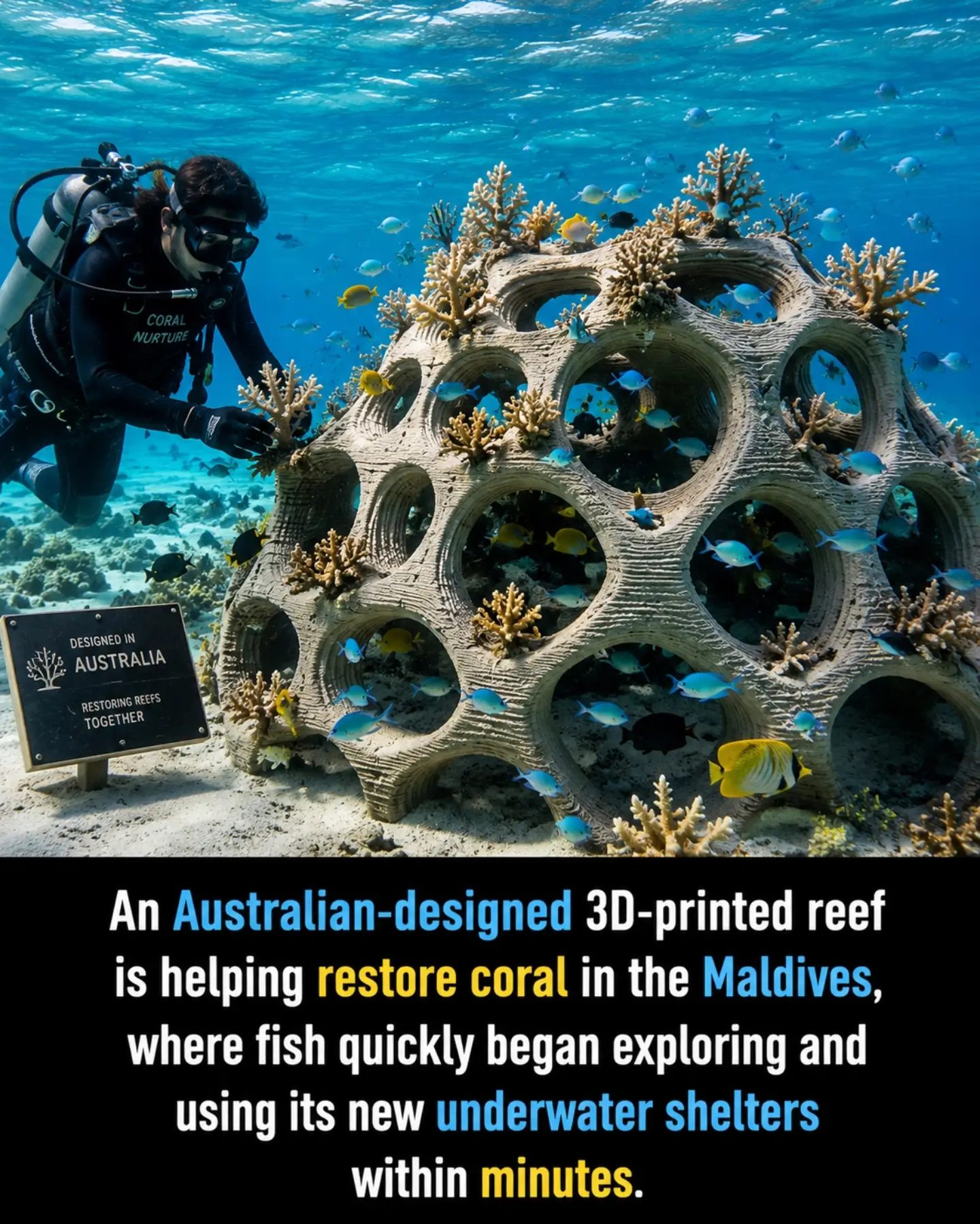
3D-Printed Coral Reef Structures for Ecosystem Restoration
Coral reefs are some of the most biodiverse ecosystems on Earth, but they are under serious threat due to climate change, pollution, and other environmental factors. The introduction of 3D-printed coral reef structures, such as those designed by Coral Nurture, offers a promising solution for restoring these vital habitats. These innovative structures are designed to mimic natural coral reefs, providing a stable foundation for coral growth and supporting marine life.
Context: Why Coral Reef Restoration Matters
Coral reefs are often referred to as the "rainforests of the sea" due to their incredible biodiversity. They support approximately 25% of all known marine life, despite covering only 0.1% of the ocean floor. Unfortunately, coral reefs around the world are declining at an alarming rate. According to various scientific studies, up to 50% of the world's coral reefs have been lost in the last 30 years, and without intervention, this trend is likely to continue.
The degradation of coral reefs has significant consequences for marine ecosystems and human communities. Coral reefs protect shorelines from erosion and storm damage, support fisheries that provide food and livelihoods for millions of people, and contribute to the economy through tourism. Restoring coral reefs is not just an environmental priority; it is also a socio-economic imperative.
Main Discussion
The Technology Behind 3D-Printed Reef Structures
3D-printed reef structures are engineered to replicate the complex, three-dimensional architecture of natural coral reefs. These structures are typically made from eco-friendly materials that mimic the porous and textured surface of natural coral, providing an ideal substrate for coral larvae to settle and grow. The process involves using advanced 3D printing technology to create intricate designs that can be customized to suit specific environmental conditions.
Coral Nurture designs these structures in Australia, where they are then deployed in locations like the Maldives. The Maldives, an archipelago in the Indian Ocean, is particularly vulnerable to coral bleaching due to rising sea temperatures. The deployment of 3D-printed reef structures in the Maldives aims to create resilient habitats that can withstand environmental stress and support the recovery of local coral populations.
Rapid Colonization by Marine Life
One of the most remarkable aspects of 3D-printed reef structures is their ability to quickly attract and support marine life. Unlike traditional artificial reefs, which often take years to become fully colonized, 3D-printed reef structures can be inhabited by fish and other marine organisms within minutes of deployment. This rapid colonization is due to the structures' design, which provides ample hiding places, shelter and foraging opportunities.
In the Maldives, the 3D-printed reef structures deployed by Coral Nurture were quickly surrounded by fish, highlighting the effectiveness of these designs in supporting marine biodiversity. The structures not only provide a physical habitat but also create a microclimate that supports the growth of coral and other marine organisms.
Environmental and Economic Benefits
The restoration of coral reefs through 3D-printed structures offers numerous environmental and economic benefits. Environmentally, these structures help to rebuild damaged ecosystems, enhance biodiversity, and improve water quality. Economically, healthy coral reefs support fisheries and tourism, which are vital for the livelihoods of many coastal communities.
By deploying 3D-printed reef structures, organizations like Coral Nurture are contributing to the broader goal of marine conservation. These structures are a tangible example of how technology can be leveraged to address environmental challenges and restore some of the world's most fragile ecosystems.
Challenges and Considerations
While 3D-printed reef structures offer a promising solution for coral reef restoration, there are several challenges and considerations to keep in mind. One of the primary challenges is ensuring that the materials used in 3D-printed structures are eco-friendly and do not introduce new pollutants into the marine environment. Additionally, the long-term durability of these structures needs to be carefully evaluated to ensure they can withstand the dynamic conditions of the ocean.
Another consideration is the scalability of 3D-printed reef structures. While they show great promise, deploying these structures on a large scale will require significant resources and coordination. It is essential to work with local communities, governments, and other stakeholders to ensure that these projects are sustainable and have a positive impact on the environment and local economies.
Practical Tips
If you are interested in supporting coral reef restoration efforts or exploring the use of 3D-printed reef structures, here are some practical tips:
Engage with Local Conservation Efforts
One of the best ways to support coral reef restoration is to engage with local conservation efforts. Many organizations, including Coral Nurture, are working to restore coral reefs through innovative technologies and community involvement. By volunteering or donating to these organizations, you can contribute to the conservation of marine ecosystems.
Advocate for Sustainable Practices
Advocating for sustainable practices in your community and beyond is another effective way to support coral reef conservation. Encourage businesses and individuals to adopt eco-friendly practices that reduce pollution and protect marine environments. This can include promoting sustainable fishing practices, reducing plastic use, and supporting renewable energy sources.
Educate Yourself and Others
Learning more about coral reefs and the challenges they face is an important step in supporting their conservation. Share your knowledge with others and raise awareness about the importance of these ecosystems. The more people understand the significance of coral reefs, the more likely they are to take action to protect them.
Support Research and Innovation
Research and innovation are crucial for the development of new technologies and approaches to coral reef restoration. Support organizations that are at the forefront of research in this field, and encourage investments in technologies like 3D-printed reef structures. By fostering innovation, we can develop more effective and efficient solutions for marine conservation.
Important Takeaways
- 3D-printed coral reef structures, like those designed by Coral Nurture, offer a promising solution for restoring damaged coral reefs.
- These structures are designed to mimic natural coral reefs, providing a stable foundation for coral growth and supporting marine life.
- The rapid colonization of 3D-printed reef structures by marine organisms highlights their effectiveness in supporting biodiversity.
- Coral reef restoration has significant environmental and economic benefits, including enhanced biodiversity, improved water quality, and support for fisheries and tourism.
- Challenges such as material sustainability, long-term durability, and scalability need to be addressed for the successful deployment of 3D-printed reef structures.
- Engaging with local conservation efforts, advocating for sustainable practices, educating yourself and others, and supporting research and innovation are practical ways to support coral reef conservation.
Conclusion
The restoration of coral reefs through 3D-printed structures represents a significant advancement in marine conservation. By leveraging innovative technology, organizations like Coral Nurture are working to rebuild damaged ecosystems and support the recovery of marine life. While there are challenges to overcome, the potential benefits for both the environment and local communities are immense. Through collective effort and innovation, it is possible to restore and protect these vital ecosystems for future generations.
Questions readers ask
How do 3D-printed coral structures aid in reef restoration?
3D-printed coral structures provide stable surfaces that mimic natural coral reefs, facilitating coral growth and encouraging marine life to thrive. These structures, like those from Coral Nurture, offer a solid foundation for coral fragments to attach and grow, accelerating the recovery of damaged reefs.
Why are coral reefs in the Maldives at risk?
Maldives reefs are threatened by climate change, pollution, and other environmental stressors. Rising sea temperatures cause coral bleaching, while pollution can smother corals and disrupt their growth. These factors make innovative restoration techniques, such as 3D-printed structures, crucial for their preservation.
What is the role of Coral Nurture in reef restoration?
Coral Nurture is at the forefront of reef restoration techniques, developing 3D-printed coral structures to help restore damaged reefs. Their initiatives focus on creating stable, artificial reefs that support marine biodiversity and promote natural coral regeneration.
Can 3D-printed reefs really support marine life?
Yes, 3D-printed reefs are designed to support a variety of marine life. The structures provide habitats and shelter for many species, from fish to crustaceans. By mimicking natural reefs, these 3D-printed structures help restore the ecological balance of affected areas.
How does 3D printing help in restoring coral reefs naturally?
3D printing allows for the creation of custom-designed structures that replicate natural coral formations, providing an ideal surface for coral growth. These structures can be placed in areas where reefs have been damaged, promoting natural coral recovery and supporting the reestablishment of marine ecosystems.
What are the benefits of using 3D-printed coral structures over traditional reef restoration methods?
3D-printed coral structures offer several advantages, including precise design, rapid deployment, and the ability to replicate complex natural formations. Unlike traditional methods, 3D printing allows for the creation of large, stable structures that can withstand environmental stressors, enhancing the chances of successful coral reef recovery.
How can I support coral reef restoration initiatives in the Maldives?
You can support coral reef restoration initiatives by donating to organizations like Coral Nurture, spreading awareness about the importance of coral reefs, and participating in local or international reef conservation projects. Additionally, adopting eco-friendly practices can help reduce pollution and mitigate climate change, benefiting coral reefs globally.
Related deep dives
Similar reads based on topic and creator.

Recent articles
Fresh deep dives from the latest Reels we unpacked.
Comments
Be the first to comment.