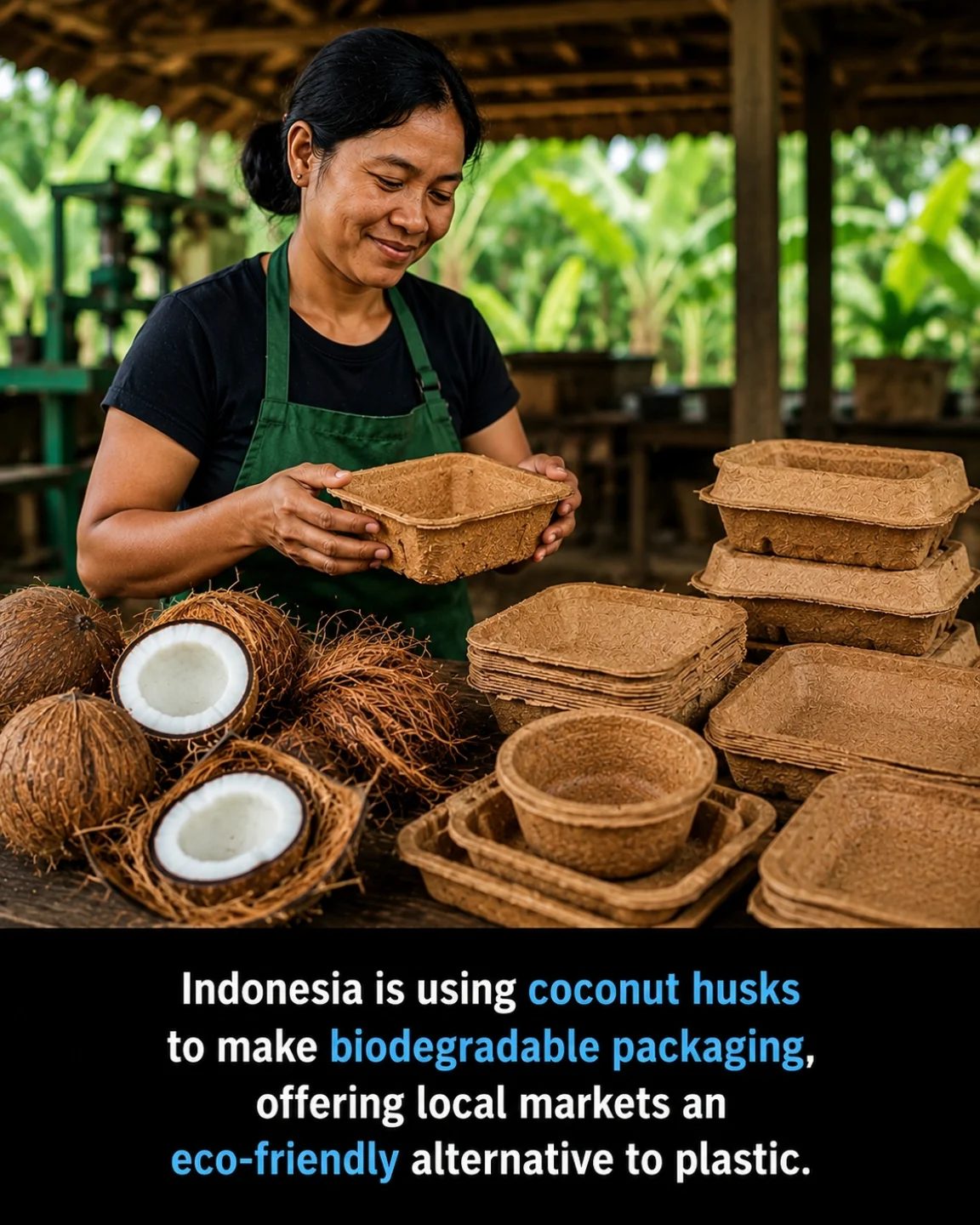
Biodegradable packaging is an eco-friendly alternative that is becoming increasingly popular in markets around the world. One interesting example is the use of coconut husks in Indonesia.
Why This Matters
Transitioning from plastic packaging to biodegradable options offers numerous environmental benefits. Biodegradable packaging can break down naturally, reducing the amount of waste that ends up in landfills and oceans. By using locally sourced materials, communities can also support sustainable practices and reduce their carbon footprint. This matters for local markets especially, as they can demonstrate their commitment to environmental sustainability and attract eco-conscious consumers.
Biodegradable Packaging in Indonesia
In Indonesia, coconut husks are being utilized to create biodegradable packaging, providing a sustainable and eco-friendly alternative to plastic. This initiative is particularly relevant for local markets, where the emphasis on sustainability can make a significant difference.
The Process of Creating Biodegradable Packaging
The process of transforming coconut husks into biodegradable packaging involves several steps. First, the coconut husks are collected and cleaned. Then, they are processed to create a pulp that can be molded into various shapes and sizes. This pulp is then dried and treated to enhance its durability and water resistance.
The Environmental Impact
Using coconut husks for packaging offers several environmental benefits. Coconut husks are a renewable resource, and by repurposing them, we reduce waste and the need for plastic. The biodegradable nature of the packaging means it will break down naturally, minimizing environmental pollution. Local markets in Indonesia can lead the way in showcasing how everyday materials can be transformed into eco-friendly solutions.
The Role of Local Markets
The packaging is intended for local markets, where sustainability can have a significant impact. Local markets are ideal for testing and promoting biodegradable packaging, as they are often more flexible and community-oriented. By adopting biodegradable packaging, local markets can set a positive example for larger retailers and consumers, encouraging a broader shift towards sustainable packaging solutions. This initiative from Indonesia serves as an inspiring model for other regions looking to reduce their reliance on plastic.
Practical Tips for Using Biodegradable Packaging
For those interested in using biodegradable packaging, here are some practical tips:
Look for Reliable Suppliers
When sourcing biodegradable packaging, look for suppliers that specialize in eco-friendly products. Ensure the packaging meets industry standards and can withstand the rigors of transportation and storage.
Check for Certifications
Certifications such as "compostable" or "biodegradable" can provide assurance that the packaging will break down naturally. Look for certifications from recognized organizations to ensure the product's authenticity.
Experiment with Different Materials
Coconut husks are just one example of a sustainable material. Experiment with other materials like bamboo, cornstarch, or sugarcane to find the best fit for your needs. Each material has its own strengths and can be used in various applications.
Educate Your Customers
Consumers are increasingly aware of environmental issues, and providing information on the benefits of biodegradable packaging can help build customer loyalty. Share the story behind the materials and the steps taken to ensure they are eco-friendly. This transparency can strengthen your brand and encourage customers to support your sustainable efforts.
Important Takeaways
The shift to biodegradable packaging is a positive step towards reducing environmental pollution and promoting sustainability. Here are the key takeaways:
- Biodegradable packaging offers a sustainable and eco-friendly alternative to plastic, especially in local markets like those in Indonesia.
- Materials like coconut husks are renewable and biodegradable, reducing waste and pollution.
- Local markets can lead the way in promoting sustainable packaging solutions by adopting and showcasing these eco-friendly options.
- When sourcing biodegradable packaging, look for reliable suppliers and certifications to ensure the product's authenticity.
- Encourage customers to support sustainable practices by educating them on the benefits of biodegradable packaging.
Conclusion
The use of biodegradable packaging, particularly in local markets, is an exciting development in the fight against environmental pollution. By utilizing locally sourced materials like coconut husks, communities can promote sustainability while reducing waste. As more businesses and consumers embrace these eco-friendly alternatives, the impact on the environment will be significant. The journey towards a greener future is ongoing, and biodegradable packaging is a promising step in the right direction.
Questions readers ask
How are coconut husks transformed into biodegradable packaging?
Coconut husks are processed through a sustainable packaging process that involves cleaning, drying, and sometimes grinding or molding the husks into desired shapes. This transforms them into functional and eco-friendly packaging materials, providing a plastic alternative.
What are the benefits of using coconut husks for packaging?
Using coconut husks for packaging offers multiple benefits. It reduces waste by utilizing a renewable resource, decreases the reliance on plastic, and contributes to a lower carbon footprint. Additionally, it supports local economies by using locally sourced materials.
How does biodegradable coconut packaging help the environment?
Biodegradable coconut packaging helps the environment by breaking down naturally over time, reducing the amount of waste that accumulates in landfills and oceans. This process minimizes pollution and supports a circular economy, where waste is minimized and resources are used sustainably.
What role do local markets play in Indonesia's packaging revolution?
Local markets in Indonesia are at the forefront of the country's packaging revolution. They embrace eco-friendly packaging alternatives and offer products made from materials like coconut husks, demonstrating their commitment to sustainability and attracting eco-conscious consumers.
What are the benefits of supporting Indonesia's eco-friendly markets?
Supporting Indonesia's eco-friendly markets helps promote sustainable practices and reduces environmental impact. By choosing products with coconut husk biodegradable packaging, consumers can actively contribute to waste reduction and the preservation of natural resources.
How can consumers learn more about the sustainable packaging process in Indonesia?
Consumers can learn more about the sustainable packaging process by exploring resources like sustainable packaging videos and articles that detail the steps involved in transforming coconut husks into eco-friendly packaging. Local markets and community initiatives often provide insights into this process.
What are some examples of biodegradable coconut packaging products?
Biodegradable coconut packaging products can include a variety of items such as food containers, trays, and even decorative items. These products are designed to be both functional and environmentally friendly, offering a sustainable alternative to traditional plastic packaging.
Recent articles
Fresh deep dives from the latest Reels we unpacked.



Comments
Be the first to comment.