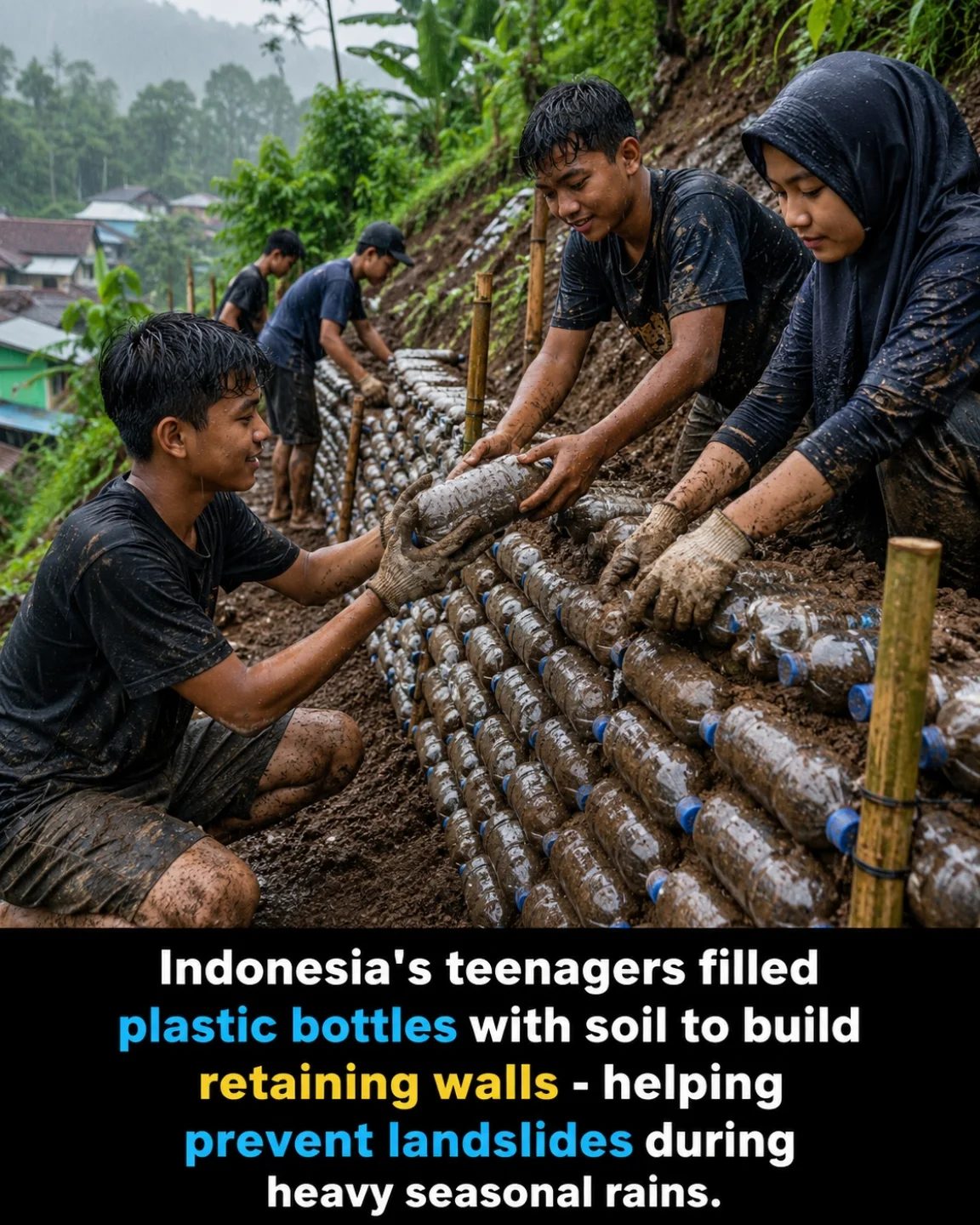
Environmental Construction: Indonesia's Teenagers Build Retaining Walls Using Plastic Bottles
Teenagers in Indonesia are taking the initiative to combat environmental challenges by building retaining walls using plastic bottles. This innovative and eco-friendly approach helps prevent landslides during heavy seasonal rains, showcasing the power of community-based projects.
Why This Matters
Environmental issues like landslides are critical concerns in many parts of the world, especially in regions with heavy rainfall. Landslides can cause significant damage to properties, infrastructure, and even loss of life. In Indonesia, where heavy seasonal rains are common, finding effective solutions to mitigate these risks is essential. The project undertaken by these teenagers serves as a model for how local communities can address environmental challenges through creative and sustainable methods.
Main Discussion
The Project
The core of this environmental project involves filling plastic bottles with soil to create sturdy retaining walls. This method is not only cost-effective but also environmentally friendly, as it repurposes waste materials that would otherwise end up in landfills. The walls are designed to stabilize the soil and prevent erosion, thereby reducing the risk of landslides.
How It Works
- Material Collection: The first step is to collect a large number of plastic bottles. These bottles are typically collected from local communities, making it a community-driven initiative.
- Filling the Bottles: The bottles are then filled with soil. This step is crucial as the weight of the soil provides the necessary stability for the retaining wall.
- Constructing the Wall: The filled bottles are arranged in layers, with each layer interlocking with the previous one to create a solid structure. This interlocking design enhances the stability of the wall.
Community Involvement
One of the most notable aspects of this project is the active participation of teenagers. Their involvement not only highlights the importance of youth engagement in environmental projects but also demonstrates the potential for sustainable development within the community. By working together, these teenagers are not only building physical structures but also fostering a sense of community responsibility and environmental stewardship.
Practical Tips
For Local Communities
If you are part of a community facing similar environmental challenges, consider the following tips:
- Educate and Engage: Start by educating the community about the benefits of such projects. Engage local youth and encourage their participation, as they often bring fresh ideas and boundless energy.
- Gather Materials: Collect plastic bottles and other recyclable materials. Ensure that the materials are clean and free from contaminants.
- Design and Plan: Work with local experts or environmental organizations to design and plan the project. This ensures that the structures are effective and safe.
- Build Together: Organize community-building days where everyone can participate. This not only makes the work faster but also strengthens community bonds.
For Teenagers
If you are a teenager interested in environmental conservation, here are some steps you can take:
- Learn About the Environment: Educate yourself about environmental issues in your area. Understanding the problems will help you find effective solutions.
- Reuse and Recycle: Look for ways to reuse and recycle materials in your daily life. This not only helps the environment but also sets a good example for others.
- Collaborate: Work with friends and community members to implement projects. Collaboration can amplify your impact and make the work more enjoyable.
- Document and Share: Document your projects and share your experiences with others. This can inspire more people to take action.
Important Takeaways
- Innovative Solutions: Repurposing plastic bottles into retaining walls is an innovative solution to environmental challenges.
- Community Engagement: Involving the local community, especially teenagers, in such projects can lead to sustainable development.
- Educational Value: Such projects offer practical lessons in environmental conservation, waste management, and community development.
Conclusion
The initiative by Indonesian teenagers to build retaining walls using plastic bottles is a testament to the power of community-based environmental projects. By repurposing waste materials and involving local youth, this project addresses a critical environmental issue while fostering a sense of community responsibility. This model can be emulated in other regions facing similar challenges, highlighting the importance of local engagement and sustainable practices.
Questions readers ask
How do Indonesian teenagers construct retaining walls from plastic bottles?
The teenagers collect and fill plastic bottles with sand or soil, then arrange them in layers to form a sturdy barrier. These layers are secured with mesh netting and anchored to the ground to create a stable retaining wall. This method helps to prevent soil erosion and mitigate landslide risks, especially during heavy rains.
What makes using plastic bottles for retaining walls a sustainable solution?
Using plastic bottles for retaining walls is sustainable because it repurposes waste plastic that might otherwise pollute the environment. This eco-friendly practice reduces plastic waste and promotes a cleaner environment. Additionally, it minimizes the need for new materials and construction costs, making it a cost-effective approach to environmental challenges.
What are the benefits of involving teenagers in environmental projects?
Involving teenagers in environmental projects fosters a sense of responsibility and engagement with their community. It encourages them to take proactive steps towards environmental conservation. Moreover, these projects provide hands-on experience and practical skills in sustainable practices, empowering them to become future leaders in environmental initiatives.
How effective are plastic bottle retaining walls in preventing landslides?
Plastic bottle retaining walls can be highly effective in preventing landslides, especially in areas with moderate to heavy rainfall. By absorbing water and stabilizing the soil, these barriers help reduce soil erosion and the risk of landslides. They are particularly effective in areas with steep slopes, hills, and other landslide-prone regions.
Can this method be replicated in other regions with similar environmental challenges?
Yes, the method can be replicated in other regions with similar environmental challenges, such as landslides and soil erosion. The process is simple and cost-effective, requiring minimal resources and technical expertise. By following the steps taken by Indonesian teenagers, communities worldwide can adapt this approach to their specific needs and environmental conditions.
What other environmental benefits can come from repurposing plastic bottles?
Repurposing plastic bottles offers several environmental benefits. It reduces the amount of waste sent to landfills and oceans, helping to mitigate plastic pollution. Additionally, using repurposed plastic bottles can lower the demand for new plastic production, which in turn reduces greenhouse gas emissions and conserves natural resources.
How can communities support youth environmental initiatives like this one?
Communities can support youth environmental initiatives by providing resources, recognition, and opportunities for growth. Offering funding, materials, and mentorship can help these projects thrive. Moreover, community involvement and sharing success stories can inspire more young people to get involved, creating a ripple effect of positive change.
Related deep dives
Similar reads based on topic and creator.



Recent articles
Fresh deep dives from the latest Reels we unpacked.



Comments
Be the first to comment.