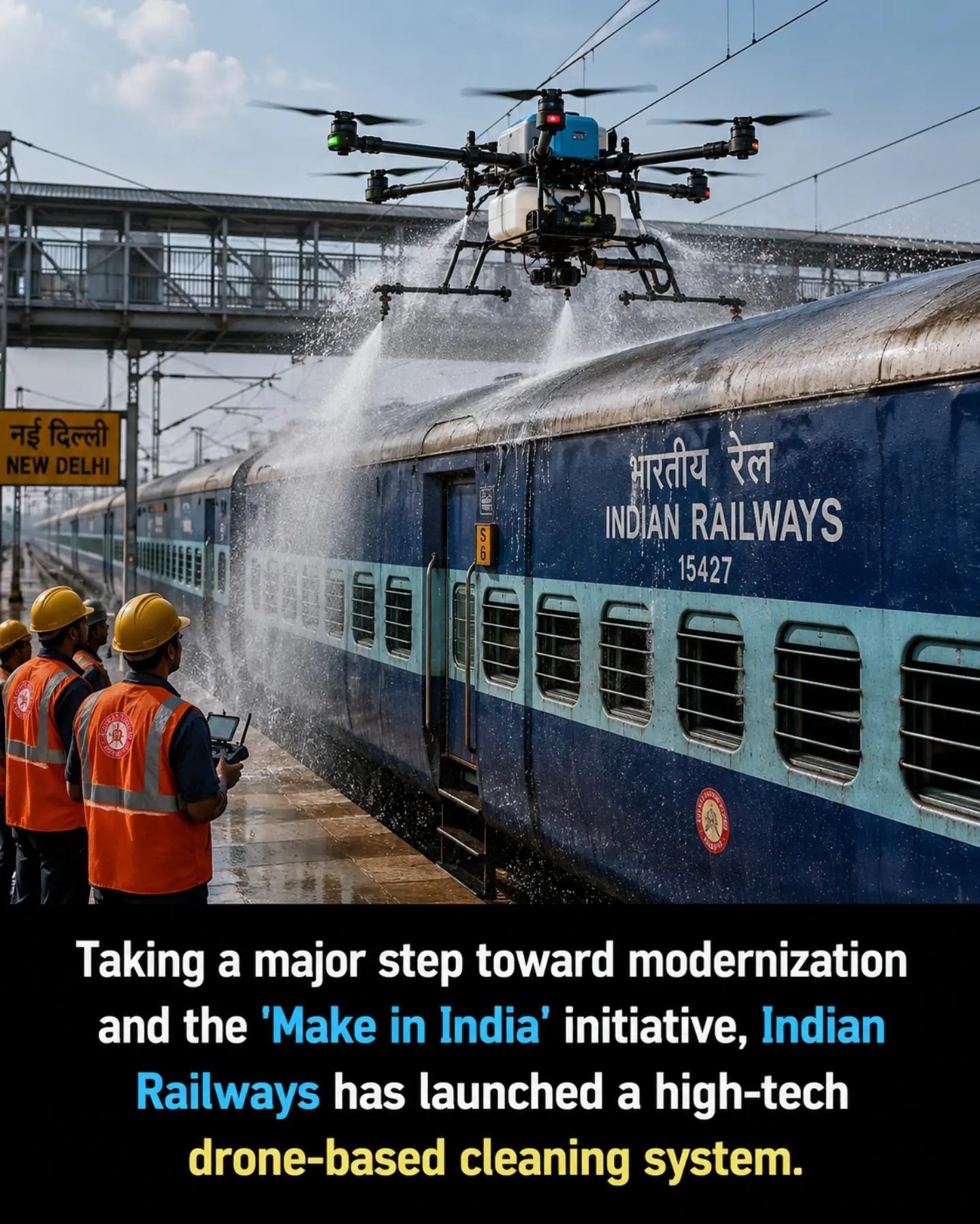
Drone-Based Train Cleaning
Drone technology is revolutionizing various industries, and now it has found a unique application in maintaining the cleanliness of trains. Indian Railways has launched a high-tech drone-based cleaning system, marking a significant step towards modernization and aligning with the 'Make in India' initiative.
Why This Matters
The introduction of drone-based cleaning systems in the rail sector is more than just a technological advancement; it represents a shift towards more efficient, safe, and environmentally friendly practices. These systems can enhance the overall cleanliness of railway infrastructure, improve passenger satisfaction, and reduce the manual labor involved in maintaining trains.
Main Discussion
The Technology Behind Drone-Based Cleaning
Drone-based cleaning systems use advanced robotics and automation to clean large surfaces quickly and efficiently. These drones are equipped with specialized nozzles that can spray water, cleaning solutions, or other cleaning agents onto the train surfaces. The drones can reach heights and angles that are difficult for human cleaners to access, ensuring a thorough cleaning process.
Key Components
-
Autonomous Navigation: Drones are programmed to navigate along the train, covering every part of the surface without the need for human intervention. This ensures consistency and thoroughness in the cleaning process.
-
High-Pressure Water Jets: Equipped with high-pressure water jets, these drones can effectively remove dirt, grime, and other contaminants from the train's exterior. Some models may also use specialized cleaning solutions to tackle tough stains.
-
Safety Features: The drones are designed with safety in mind, featuring sensors that detect obstacles and prevent collisions. This is crucial in an environment where safety is paramount, such as a train station.
Benefits for Indian Railways
Efficiency and Cost-Effectiveness
The drone-based system offers several advantages over traditional cleaning methods. Firstly, it significantly reduces the time required to clean a train. Instead of relying on manual labor, which can be time-consuming and labor-intensive, drones can cover large areas quickly and efficiently.
Secondly, the cost savings are substantial. By automating the cleaning process, Indian Railways can reduce labor costs and the need for extensive manual equipment. Additionally, the drones can operate during off-peak hours, minimizing disruption to train schedules and improving overall efficiency.
Enhanced Safety
Cleaning trains manually involves working at heights and handling heavy equipment, which poses significant safety risks. Drone-based cleaning eliminates these risks by using robots to perform the task. This not only reduces the likelihood of accidents but also ensures that the cleaning process is carried out without jeopardizing the safety of the workers.
Environmental Impact
The drones' ability to use water and cleaning solutions more efficiently reduces waste and environmental impact. Unlike manual cleaning, which often involves excessive use of water and chemicals, drones can be programmed to use just the right amount needed, making the process more eco-friendly.
Practical Tips
For Railway Authorities
When implementing a drone-based cleaning system, railway authorities should consider the following:
-
Training and Maintenance: Ensure that the staff is well-trained in operating and maintaining the drones. Regular maintenance checks are essential to keep the drones in optimal working condition.
-
Regulations and Safety Standards: Follow all safety regulations and standards. This includes ensuring that the drones are safe to use in railway environments and that they comply with all relevant safety protocols.
-
Integration with Existing Systems: Integrate the drone-based cleaning system with existing maintenance and cleaning schedules. This ensures a seamless transition and avoids any disruptions in the cleaning process.
For Drone Operators
For those operating the drones, it is crucial to:
-
Understand the Environment: Familiarize yourself with the railway environment, including the layout, train schedules, and any potential hazards.
-
Monitor Performance: Regularly monitor the performance of the drones to ensure they are functioning correctly and efficiently.
-
Safety Protocols: Always follow safety protocols and use safety equipment when necessary. Even though drones reduce the risk of accidents, it's essential to remain vigilant.
Important Takeaways
Drone-based train cleaning is a groundbreaking innovation that brings numerous benefits to the railway sector. It enhances efficiency, reduces costs, improves safety, and minimizes environmental impact. For Indian Railways, this initiative not only supports modernization efforts but also aligns with the broader 'Make in India' initiative, showcasing the country's commitment to technological advancement and self-reliance.
Conclusion
The adoption of drone-based cleaning systems by Indian Railways represents a significant leap forward in railway maintenance. This technology not only modernizes the cleaning process but also sets a new standard for efficiency, safety, and environmental responsibility. As more industries explore the potential of drones, it is clear that this technology has a bright future ahead, with numerous applications yet to be discovered.
Questions readers ask
How does the drone cleaning system work on trains?
The drone cleaning system uses advanced technology to spray water and cleaning agents onto the train's exterior. These drones are equipped with high-pressure nozzles and are controlled remotely, allowing them to reach all parts of the train efficiently.
What are the benefits of using drone-based cleaning systems in railway maintenance?
Drone-based cleaning systems offer several benefits, including increased efficiency, improved safety for workers, and reduced environmental impact. They can clean trains faster and with less water usage, minimizing the need for manual labor and lowering operational costs.
How does this innovation align with the 'Make in India' initiative?
This innovation aligns with the 'Make in India' initiative by promoting the development and use of high-tech, indigenously designed solutions in various sectors. It showcases India's capability to innovate and implement advanced technologies, contributing to the country's industrial growth.
What specific tasks can these drones perform during train cleaning?
These drones can perform a variety of tasks, including spraying water, applying cleaning agents, and even drying surfaces. They can clean both the exterior and some interior areas of the train, ensuring a comprehensive cleaning process.
How does the use of drones enhance safety in train maintenance?
The use of drones reduces the need for manual cleaning, which often involves workers climbing onto train surfaces or working in confined spaces. By minimizing human involvement in hazardous tasks, drones significantly enhance worker safety.
Can these drones be used for other maintenance tasks besides cleaning?
Currently, the focus is primarily on cleaning, but the potential for these drones to perform other maintenance tasks is being explored. Future applications could include inspecting hard-to-reach areas, applying protective coatings or performing minor repairs.
What environmental advantages does drone-based cleaning offer?
Drone-based cleaning systems are more environmentally friendly because they use less water and cleaning agents compared to traditional methods. They also reduce the need for chemical-laden cleaning products, contributing to a more sustainable and eco-friendly maintenance process.
Related deep dives
Similar reads based on topic and creator.




Recent articles
Fresh deep dives from the latest Reels we unpacked.



Comments
Be the first to comment.