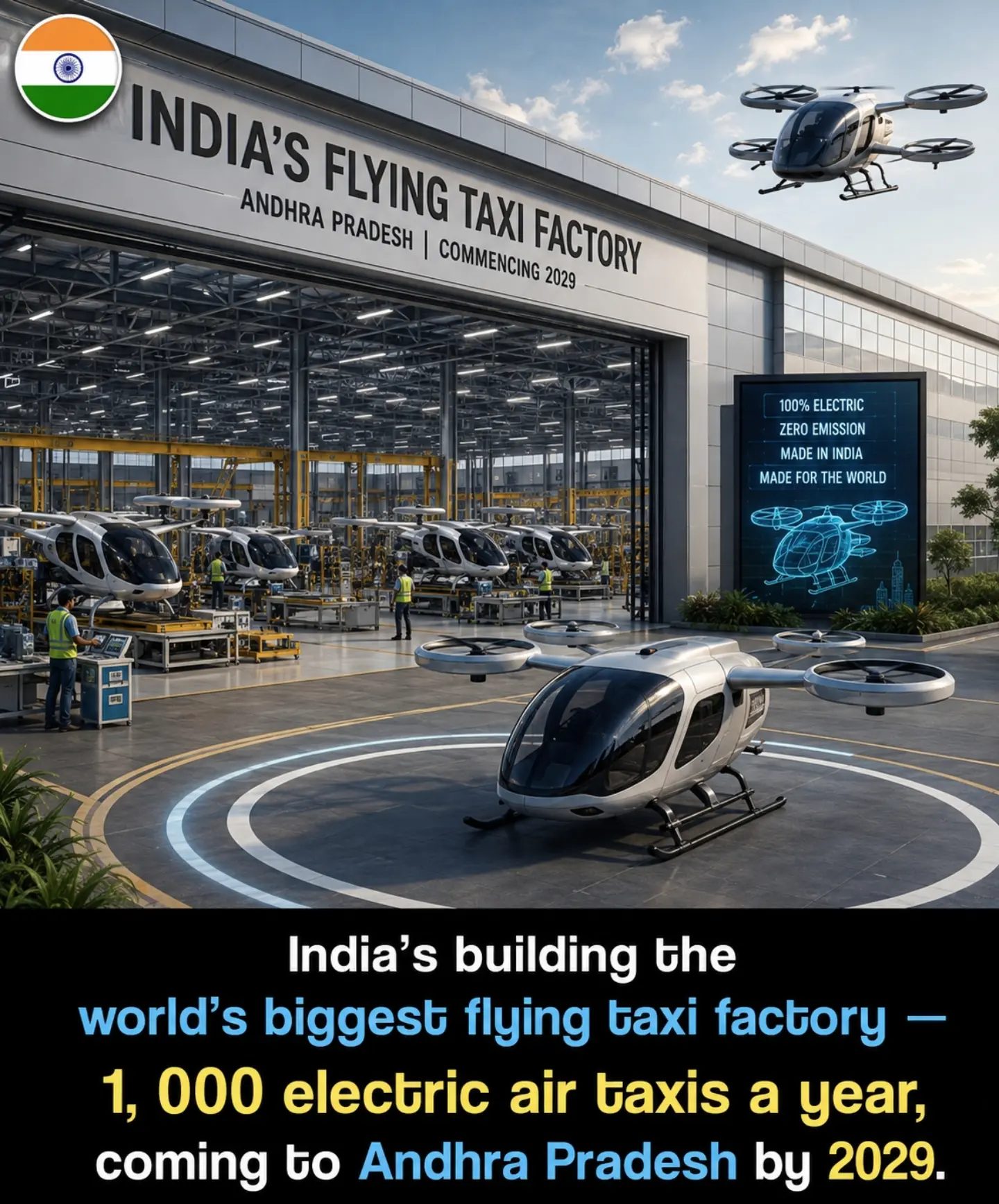
India's Ambitious Plan for the World's Largest Flying Taxi Factory
India is making significant strides in the realm of sustainable urban transportation with the construction of the world's largest flying taxi factory in Andhra Pradesh. Scheduled to commence production in 2029, this factory aims to manufacture 1,000 electric air taxis annually, marking a monumental shift towards eco-friendly aerial transit.
Why This Matters
The development of electric flying taxis represents a revolutionary approach to addressing urban congestion and reducing carbon emissions. As cities worldwide grapple with traffic congestion and environmental sustainability, these innovative vehicles offer a promising solution. By producing 1,000 electric air taxis per year, the factory in Andhra Pradesh will significantly contribute to the global effort to reduce emissions and enhance urban mobility.
The Future of Urban Mobility
Electric Flying Taxis: The Next Big Thing
Electric flying taxis are poised to revolutionize urban transportation. These vehicles operate on a vertical takeoff and landing (VTOL) system, eliminating the need for traditional runways. This makes them ideal for urban environments where landing spots are limited. Powered by electric batteries, these taxis produce zero emissions, making them an environmentally sustainable option for urban commuters.
The Technological Advancements
The technology behind electric flying taxis involves several key components:
- Electric Propulsion: These taxis are powered by high-capacity batteries that provide the energy needed for vertical takeoff and landing, as well as horizontal flight.
- Autonomous Navigation: Many models are designed to operate autonomously, using advanced sensors and artificial intelligence to navigate through urban skies safely.
- Material Science: Lightweight and durable materials are used to construct the taxis, ensuring they are both energy-efficient and safe for passengers.
The Environmental Impact
One of the most compelling reasons for the shift towards electric flying taxis is their environmental impact. Traditional modes of transportation, such as cars and helicopters, contribute significantly to air pollution and greenhouse gas emissions. Electric flying taxis, being zero-emission vehicles, offer a cleaner alternative.
In addition to reducing carbon emissions, these taxis can also mitigate noise pollution. Electric motors are quieter than combustion engines, making them more suitable for urban environments where noise levels are already high.
Practical Tips for Urban Mobility
As electric flying taxis become more prevalent, several practical tips can help urban planners and commuters make the most of this new mode of transportation:
For Urban Planners
- Incorporate Landing Zones: Identify and designate safe landing zones within urban areas to facilitate the seamless integration of flying taxis into the existing infrastructure.
- Regulate Air Traffic: Develop comprehensive regulations for air traffic management to ensure the safe operation of flying taxis alongside other aircraft.
- Promote Public Awareness: Educate the public about the benefits and usage of electric flying taxis to foster acceptance and encourage adoption.
For Commuters
- Stay Informed: Keep up-to-date with the latest developments in flying taxi technology and regulations to make informed decisions about usage.
- Plan Ahead: Use mobile apps and other digital tools to plan your route and book flights in advance, ensuring a smooth and efficient commute.
- Safety First: Always prioritize safety by following guidelines and regulations set by authorities for using flying taxis.
Important Takeaways
The construction of the world's largest flying taxi factory in Andhra Pradesh is a monumental step towards sustainable urban mobility. With the capacity to produce 1,000 electric air taxis annually, this initiative will significantly reduce carbon emissions and alleviate traffic congestion in urban areas. The technology behind these taxis, including electric propulsion and autonomous navigation, represents a leap forward in transportation innovation.
As we look towards the future, the integration of electric flying taxis into urban landscapes will require careful planning and regulation. Urban planners and commuters alike must work together to ensure a smooth transition to this new mode of transportation, leveraging its environmental and practical benefits.
Conclusion
The development of the world's largest flying taxi factory in Andhra Pradesh is a testament to India's commitment to sustainable urban mobility. By producing 1,000 electric air taxis annually, this factory will play a crucial role in reducing carbon emissions and improving urban transportation. As we embrace this new era of transportation, it is essential to prioritize safety, efficiency, and environmental sustainability. The future of urban mobility is here, and it is electric.
Questions readers ask
What are electric air taxis and why are they significant for urban transportation?
Electric air taxis are innovative, eco-friendly vehicles designed to provide short-distance aerial transit within cities. They are significant because they address urban congestion by offering an alternative to ground-based traffic and reduce carbon emissions by utilizing electric power.
Why is the factory in Andhra Pradesh notable for flying taxi manufacturing?
The factory in Andhra Pradesh is notable because it is set to be the world's largest flying taxi manufacturing facility. Beginning in 2029, it aims to produce 1,000 electric air taxis annually, making it a significant player in the global flying taxi market.
How will the launch of this flying taxi factory impact India's urban transit?
The launch of India's flying taxi factory is expected to significantly impact urban transit by providing a sustainable aerial transit option. This will help alleviate traffic congestion in cities and promote cleaner air quality by reducing carbon emissions from traditional ground-based vehicles.
What are the benefits of flying taxis for urban commuters?
Flying taxis offer urban commuters a faster, more efficient way to travel within cities, bypassing ground traffic. They also provide a more environmentally friendly option compared to conventional cars or taxis, contributing to a reduction in overall carbon footprint.
What innovations are expected from India's flying taxi production?
India's flying taxi production is anticipated to bring several innovations, including advanced electric propulsion systems, autonomous flight technologies, and vertical takeoff and landing (VTOL) capabilities. These advancements will enhance the efficiency, safety, and user experience of aerial transit.
How does India's flying taxi initiative align with global trends in sustainable transportation?
India's flying taxi initiative aligns with global trends by focusing on electric and aerial transit solutions that reduce carbon emissions. This aligns with worldwide efforts to adopt cleaner, more efficient transportation methods, positioning India at the forefront of sustainable urban mobility innovations.
Related deep dives
Similar reads based on topic and creator.

Recent articles
Fresh deep dives from the latest Reels we unpacked.




Comments
Be the first to comment.