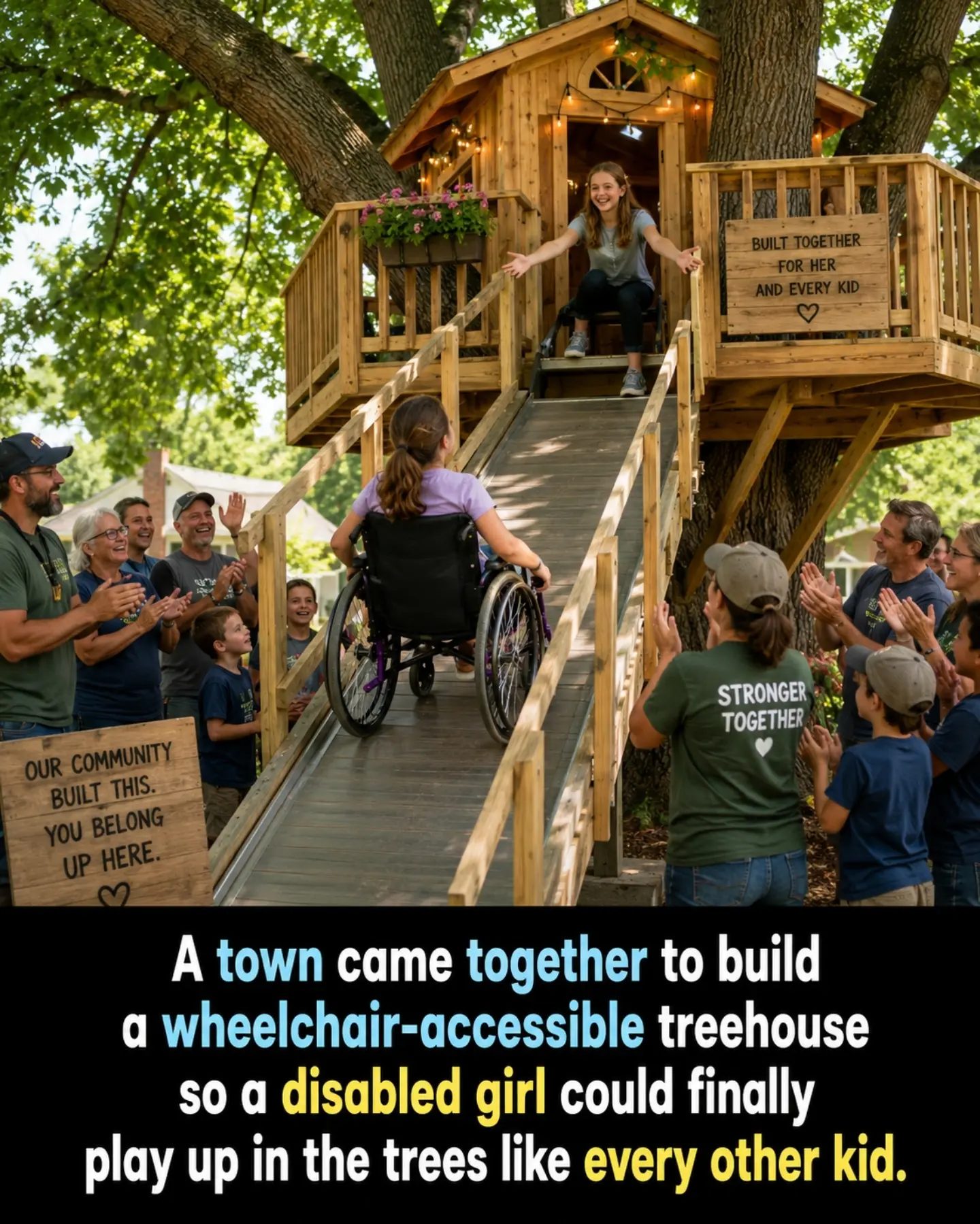
Accessible Treehouse Build
A wheelchair-accessible treehouse may sound like a contradiction in terms, but it's a reality made possible through community effort and innovative design. This treehouse, built to accommodate a disabled girl, demonstrates how thoughtful planning can create inclusive spaces for children of all abilities.
Context / Why this Matters
Play is an essential part of childhood, and for many children, playtime often involves outdoor activities like climbing, exploring, and imaginative play. However, traditional treehouses are not designed with wheelchair accessibility in mind. This means that children who use wheelchairs or have mobility impairments are often excluded from these beloved childhood experiences. The creation of an accessible treehouse addresses this gap, ensuring that all children have the opportunity to enjoy the magic of treehouse play.
Main Discussion
The Power of Community Collaboration
The accessible treehouse project is a shining example of how communities can come together to address specific needs. A town united to construct a wheelchair-friendly treehouse, ensuring that a young girl with disabilities could join her peers in playing among the trees. This collective effort underscores the power of community support and collaboration.
The project brought together a variety of skills and resources. Local builders, designers, and volunteers worked tirelessly to ensure that the treehouse met the necessary safety standards while being fully accessible. The result is a structure that not only serves its intended purpose but also stands as a symbol of inclusivity and community spirit.
Designing for Accessibility
Creating a wheelchair-accessible treehouse requires careful planning and design. Key elements include:
- Ramps: Instead of stairs, ramps provide a smooth and gradual incline, allowing children in wheelchairs to access the treehouse easily.
- Wide Doorways: Standard treehouse doorways are often too narrow for wheelchair passage. Wide doorways ensure that children in wheelchairs can enter and exit freely.
- Sturdy Flooring: The flooring must be sturdy and secure to support the additional weight and ensure stability for wheelchair users.
- Safety Features: Safety rails and secure handholds are essential to provide stability and prevent falls.
Inclusive Design Benefits Everyone
While the primary goal of an accessible treehouse is to include children with disabilities, the benefits extend beyond that. An inclusive design can enhance the experience for all children, promoting empathy, understanding, and a sense of community. Moreover, it sets a powerful example for future projects, encouraging a broader consideration of accessibility in all play spaces.
Building for Inclusive Play
The treehouse is not just a physical structure; it is a testament to the community’s values of inclusivity and togetherness. The message "BUILT TOGETHER FOR HER AND EVERY KID" emphasizes that the project was born out of a collective desire to make playtime accessible to all children. The spirit of inclusivity extends to the taglines like "STRONGER TOGETHER" and "YOU BELONG UP HERE," which underscore the idea that everyone, regardless of their abilities, has a right to enjoy the simple pleasures of childhood.
Practical Tips
Engaging the Community
For a project of this magnitude, community engagement is crucial. Here are some practical steps to involve the community:
- Organize Meetings: Hold meetings to discuss the project’s scope, objectives, and the necessary resources. Ensure that all stakeholders, including parents, educators, and local businesses, are involved.
- Seek Expert Advice: Consult with accessibility experts to understand the specific needs and requirements for accessible play structures.
- Fundraising: Organize fundraising events, such as community fairs, bake sales, or crowdfunding campaigns, to gather the necessary funds.
Design and Construction
- Choose the Right Location: Select a safe and accessible location for the treehouse, ensuring it is easily reachable for children with different mobility needs.
- Plan for Accessibility: Incorporate features like ramps, wide doorways, and secure railings during the design phase. Ensure that the treehouse complies with local building codes and safety standards.
- Use Durable Materials: Opt for sturdy, weather-resistant materials that can withstand outdoor conditions and frequent use.
Maintenance and Safety
- Regular Inspections: Conduct regular inspections to ensure that the treehouse remains safe and in good condition.
- Community Involvement: Encourage community members to participate in maintenance activities, fostering a sense of ownership and responsibility.
Celebrating Inclusivity
- Launch Events: Organize a launch event to celebrate the opening of the accessible treehouse. This can include a ribbon-cutting ceremony, games, and activities for all children.
- Ongoing Engagement: Plan ongoing events and activities to keep the treehouse a vibrant part of the community. This can involve themed days, workshops, or community picnics.
Important Takeaways
The accessible treehouse project highlights several key takeaways:
- Community Support: A collective effort can overcome significant challenges and create inclusive spaces.
- Inclusive Design: Thoughtful design can ensure that play spaces are accessible to all children, promoting equality and inclusivity.
- Long-Term Benefits: Inclusive design not only benefits children with disabilities but also fosters a more empathetic and understanding community.
The treehouse is a physical manifestation of the community’s commitment to inclusivity and accessibility. It serves as a beacon of hope, reminding everyone that with collaboration and determination, no barrier is insurmountable.
Conclusion
An accessible treehouse is more than just a play structure; it is a symbol of a community’s dedication to inclusivity and accessibility. By coming together to build a wheelchair-accessible treehouse, a town has ensured that every child, regardless of their abilities, can enjoy the magic of climbing and exploring in the trees. This project serves as an inspiring example of how innovative design and community support can create a more inclusive world for all children.
Questions readers ask
What inspired the community to build a wheelchair accessible treehouse?
The community was inspired to build a wheelchair accessible treehouse to ensure that children of all abilities could enjoy outdoor play and engage in imaginative activities together. The project aimed to address the exclusion that children with mobility impairments often face with traditional treehouses.
How was the treehouse designed to be inclusive?
The treehouse was designed with thoughtful planning and innovative features to accommodate children with disabilities. This includes wheelchair accessibility, ensuring that all children can enjoy the treehouse and participate in activities with their peers.
Who led the planning and construction of the inclusive treehouse?
The planning and construction of the inclusive treehouse were driven by the community, demonstrating the power of collective effort. Various volunteers, professionals, and local residents collaborated to make this heartwarming project a reality.
What benefits does an accessible treehouse bring to the community?
An accessible treehouse brings numerous benefits to the community. It fosters inclusivity, encourages social interaction among children of all abilities, and creates a shared space where everyone can participate in outdoor play and activities. It also sends a powerful message about the importance of accessibility and community support.
How can other communities start a similar inclusive treehouse project?
Other communities can start a similar inclusive treehouse project by first assessing the needs of their children and involving local residents, volunteers, and professionals in the planning process. Securing funding, obtaining necessary permits, and choosing a suitable location are also crucial steps. Collaborating with organizations that specialize in accessible design can provide additional insights and support.
What challenges might a community face when building an accessible treehouse?
Communities might face several challenges, including securing sufficient funding, finding volunteers with the necessary skills, and navigating local regulations. Ensuring the design meets accessibility standards and addressing potential safety concerns are also important considerations. However, with thorough planning and community support, these challenges can be overcome.
Recent articles
Fresh deep dives from the latest Reels we unpacked.




Comments
Be the first to comment.