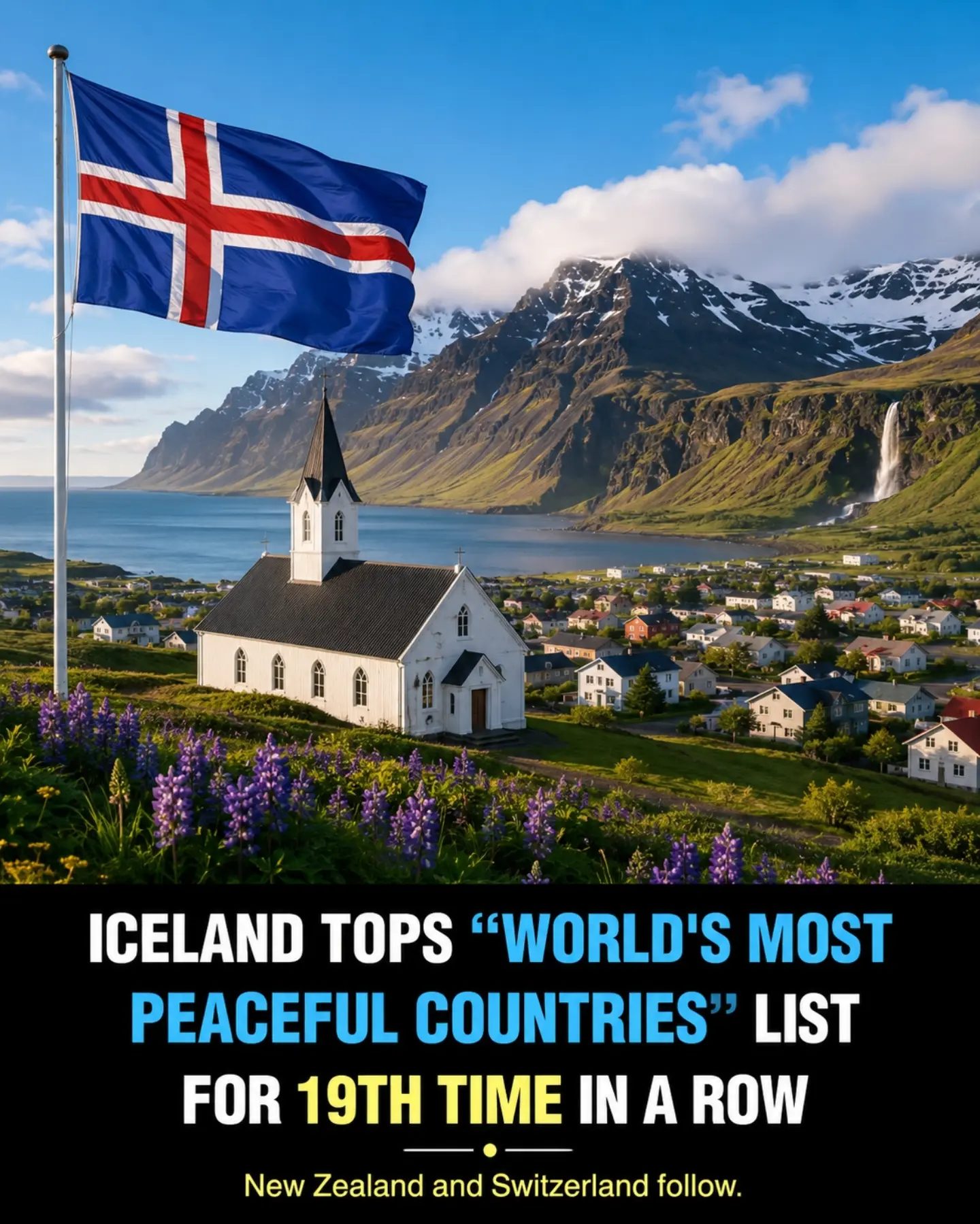
Iceland's Ranking as the Most Peaceful Country
Iceland consistently ranks as the world's most peaceful country, a testament to its enduring commitment to tranquility and stability. This small Nordic country has maintained this prestigious title for 19 consecutive years, a feat unparalleled in global rankings. Its leadership in peace and stability is a beacon of hope in a world grappling with numerous conflicts and uncertainties.
Why This Matters
Iceland's peaceful ranking is not merely a title; it reflects the country's profound commitment to peace, human rights, and sustainable development. The Global Peace Index (GPI) evaluates countries based on factors such as levels of safety and security, domestic and international conflict, and militarization. Iceland's top ranking underscores its excellence in these areas, making it a model for other nations to emulate.
The ranking has significant implications for tourism, international relations, and domestic policies. Tourism, a vital part of Iceland's economy, thrives on its reputation for safety and tranquility. For visitors, the assurance of peace and stability is a significant draw. Moreover, Iceland's standing impacts its diplomatic relations, often positioning it as a neutral ground for international negotiations.
Main Discussion
Historical Context
Iceland's journey to becoming the world's most peaceful country is rooted in its history. The country has a long tradition of neutrality, avoiding major wars and conflicts. Its constitution, adopted in 1944, emphasizes peace and human rights. Iceland's commitment to international peace initiatives, such as its role in the United Nations and other global organizations, further solidifies its peaceful reputation.
Key Factors Contributing to Iceland's Peace
Stable Political Environment
Iceland boasts a stable political environment, with a democratic system that emphasizes consensus and negotiation over conflict. The country's political culture fosters a spirit of cooperation and mutual respect, which permeates all levels of governance. This stability is crucial for maintaining peace and order.
Low Crime Rates
Iceland has one of the lowest crime rates in the world, a key factor in its high peace ranking. The country's strong social welfare system, which provides universal healthcare and education, contributes to a lower incidence of crime. High levels of trust and community cohesion further reduce the likelihood of criminal activity.
Strong Social Welfare
Iceland's robust social welfare system ensures that all citizens have access to essential services. This inclusivity helps to reduce social disparities and promotes a sense of unity and solidarity among its people. The government's investment in healthcare, education, and social services reflects its commitment to the well-being of its citizens.
Environment and Sustainability
Iceland's commitment to environmental sustainability is another key factor in its peaceful ranking. The country's clean energy initiatives and efforts to mitigate climate change are globally recognized. This dedication to sustainability fosters a sense of harmony with the natural world, contributing to a peaceful and sustainable society.
Comparisons with Other Peaceful Countries
While Iceland tops the rankings, other countries also contribute to a peaceful world. New Zealand and Switzerland, for instance, are close contenders. These countries share similar traits with Iceland, such as stable political environments, strong social welfare systems, and low crime rates. Their consistent presence in the top rankings highlights the importance of these factors in maintaining peace.
Practical Tips
For countries aspiring to achieve a similar level of peace, several practical tips can be derived from Iceland's example:
Foster a Culture of Cooperation
Promote a political culture that values consensus and negotiation. Encourage open dialogue and the inclusion of diverse voices in decision-making processes. This approach can help to build trust and reduce conflicts.
Invest in Social Welfare
Prioritize investments in healthcare, education, and social services. A strong social welfare system can help to reduce disparities and promote a sense of community and solidarity.
Promote Environmental Sustainability
Adopt clean energy initiatives and sustainable practices. Environmental sustainability not only contributes to a healthier planet but also fosters a sense of harmony and cooperation among citizens.
Strengthen Legal and Security Systems
Ensure that law enforcement and security systems are effective and fair. This includes ensuring that justice is accessible to all and that the rule of law is upheld.
Important Takeaways
Iceland's ranking as the most peaceful country in the world is a testament to its unwavering commitment to peace, stability, and human rights. The country's stable political environment, low crime rates, robust social welfare system, and dedication to environmental sustainability are key factors in its peaceful ranking. Other nations can learn from Iceland's examples, fostering a culture of cooperation, investing in social welfare, promoting sustainability, and strengthening legal and security systems.
Conclusion
Iceland's consistent ranking as the world's most peaceful country serves as an inspiration and a model for global peace. Its commitment to peace, stability, and human rights is a beacon of hope in a world grappling with numerous conflicts. By understanding and emulating Iceland’s strategies, other nations can work towards creating a more peaceful and harmonious world.
Questions readers ask
How does Iceland maintain its status as the world's most peaceful country?
Iceland maintains its status through a strong commitment to safety, stability, and human rights, while continually performing well in the Global Peace Index across factors such as security, conflict resolution, and low militarization. The country's peaceful status is a result of effective governance, robust social policies, and a culture that values harmony and cooperation.
What is the Global Peace Index and why is Iceland's ranking significant?
The Global Peace Index (GPI) is a report produced by the Institute for Economics and Peace that ranks countries based on their level of peacefulness. Iceland's ranking is significant because it has held the top spot for 19 consecutive years, highlighting its consistent excellence in maintaining peace and serving as a benchmark for other nations.
How does Iceland's low militarization contribute to its peaceful status?
Iceland's low militarization is a key factor in its peaceful status. The country has no standing army and relies on international agreements for defense, which reduces internal conflict and promotes a culture of peace. This approach allows Iceland to invest more in social welfare and sustainable development rather than military spending.
What role do Iceland's scenic views and landscape play in its overall peace?
While not a direct factor in the Global Peace Index, Iceland's scenic views and landscape contribute to the overall well-being and tranquility of its residents. The natural beauty encourages a relaxed lifestyle, attracts tourists, and supports a thriving eco-tourism industry, further enhancing the country's peaceful atmosphere.
How does Iceland's human rights record influence its peaceful ranking?
Iceland's strong human rights record is closely tied to its peaceful ranking. The country is known for its progressive policies, including gender equality, LGBTQ+ rights, and strong social welfare programs. A commitment to human rights fosters a safer and more cohesive society, reducing social tensions and conflicts.
Where does New Zealand rank in terms of peaceful countries, and how does it compare to Iceland?
New Zealand typically ranks high in global peace indices, often in the top 10, but it does not match Iceland's top ranking. Iceland's 19-year streak as the most peaceful country highlights a consistently superior performance in peace indices, including in areas like safety, security, and low militarization.
Related deep dives
Similar reads based on topic and creator.




Recent articles
Fresh deep dives from the latest Reels we unpacked.



Comments
Be the first to comment.