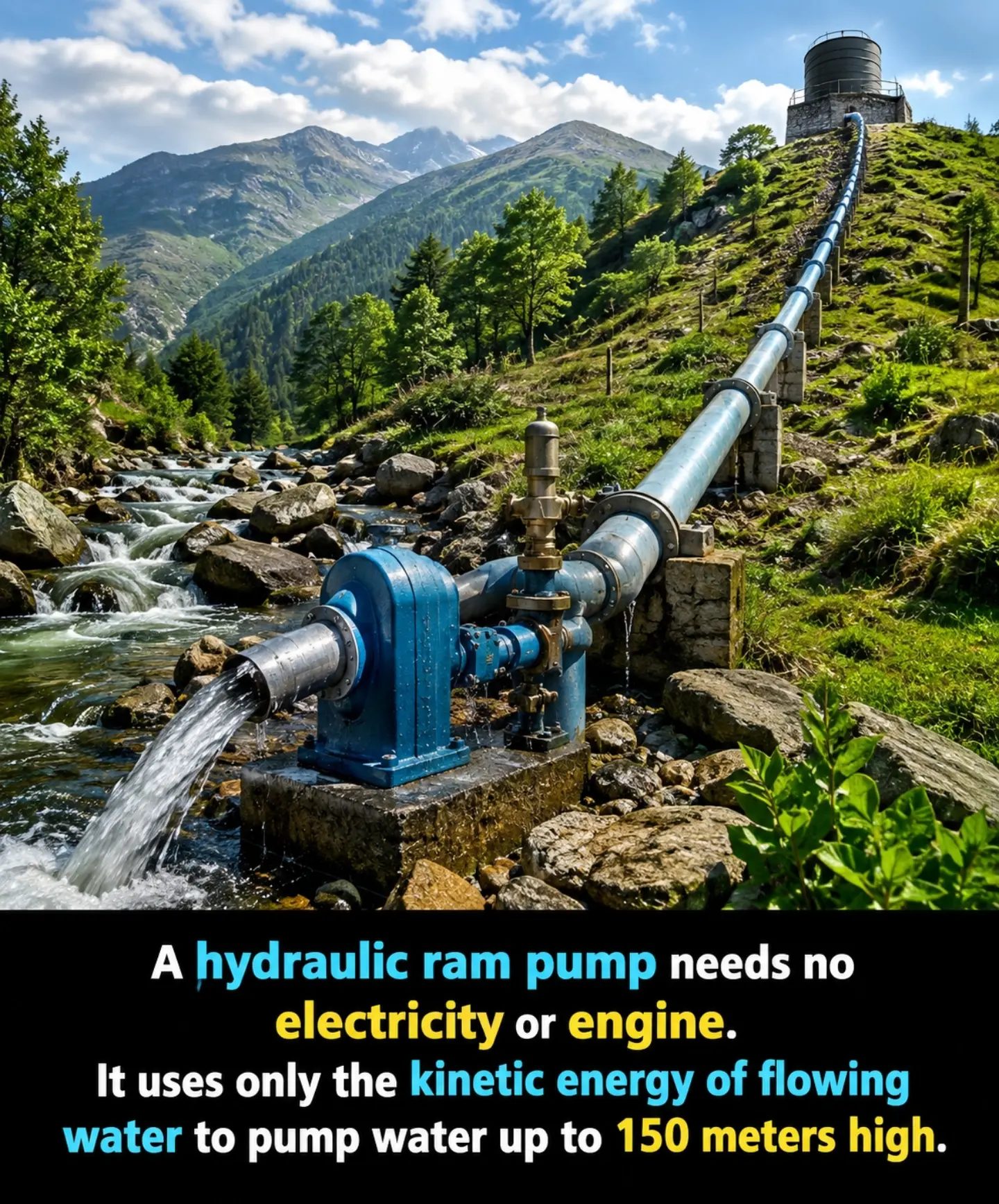
Hydraulic Ram Pump
Hydraulic ram pumps are a fascinating engineering marvel that can operate without the need for electricity or an engine. These pumps are designed to lift water using only the kinetic energy generated by flowing water. This makes them particularly useful in remote or off-grid locations where traditional power sources are not available.
Why This Matters
The ability of hydraulic ram pumps to function without external power sources makes them invaluable in various applications. They are commonly used in rural areas for water supply, irrigation, and other purposes where access to electricity or fuel is limited. Understanding how these pumps work can provide practical solutions for sustainable water management and resource conservation.
Main Discussion
How Hydraulic Ram Pumps Work
At their core, hydraulic ram pumps utilize the natural flow of water to create pressure, which lifts a portion of that water to a higher elevation. The process involves a series of valves and chambers that control the water flow. Here's a simplified breakdown:
- Water Flow: Water from a stream or another flowing water source enters the pump.
- Check Valve: A check valve allows water to flow into the pump but prevents it from flowing back.
- Pressure Build-Up: As more water flows in, pressure builds up in the pump's chamber.
- Delivery Valve: When the pressure reaches a certain point, a delivery valve opens, allowing a portion of the water to be pushed up to a higher elevation.
- Cycle Repeat: The process repeats as water continues to flow, creating a continuous cycle of water lift.
Key Components
Several key components are essential for the operation of a hydraulic ram pump:
- Drive Pipe: This is the pipe that carries the flowing water from the source to the pump.
- Check Valve: Ensures that water flows in only one direction.
- Pressure Chamber: Where the water builds up pressure.
- Delivery Valve: Opens to allow water to be pumped to a higher elevation.
- Delivery Pipe: Carries the pumped water to its destination.
Advantages
Hydraulic ram pumps offer several advantages:
- No External Power: They operate solely on the energy from flowing water, making them ideal for off-grid locations.
- Low Maintenance: With fewer moving parts, these pumps require minimal maintenance.
- Environmentally Friendly: Since they don't use electricity or fuel, they have a lower environmental impact.
- Cost-Effective: Once installed, the operating costs are minimal, as there are no fuel or electricity expenses.
Limitations
While hydraulic ram pumps have many benefits, they also come with some limitations:
- Flow Requirements: They require a consistent and continuous flow of water to operate effectively.
- Efficiency: The efficiency of these pumps can vary based on the height to which water needs to be lifted and the flow rate of the water source.
- Initial Cost: The initial installation cost can be high, depending on the complexity and scale of the project.
Applicable Use Cases
These types of pumps are particularly useful in various scenarios:
- Rural Water Supply: Providing clean water to remote communities.
- Irrigation: Watering crops in fields that are far from a power source.
- Livestock Watering: Supplying water to livestock in areas without electricity or fuel.
- Firefighting: Ensuring a water supply in remote areas where fires are a risk.
Practical Tips
Selecting the Right Pump
When choosing a hydraulic ram pump, several factors should be considered:
- Water Flow Rate: Ensure the pump can handle the available water flow rate.
- Head Height: Determine the height to which the water needs to be pumped.
- Environmental Conditions: Consider the terrain, weather, and other environmental factors that might affect the pump's operation.
Installation Tips
Proper installation is crucial for the efficient operation of a hydraulic ram pump. Here are some tips:
- Site Selection: Choose a location with a consistent water flow.
- Pipe Layout: Ensure the drive pipe is correctly laid to avoid kinks or blockages.
- Maintenance: Regularly inspect and clean the valves and chambers to maintain optimal performance.
Important Takeaways
- Hydraulic ram pumps are a sustainable and cost-effective solution for water lifting in off-grid locations.
- They operate using the kinetic energy of flowing water, making them environmentally friendly.
- Proper selection, installation, and maintenance are key to ensuring the pump's efficiency and longevity.
- These pumps are versatile and can be used in various applications, from rural water supply to irrigation and firefighting.
Conclusion
Hydraulic ram pumps are an ingenious engineering solution that harnesses the natural flow of water to lift it to higher elevations without the need for electricity or fuel. Their simplicity, reliability, and low environmental impact make them an excellent choice for areas where traditional power sources are unavailable. By understanding how these pumps work and considering their advantages and limitations, you can make informed decisions about whether a hydraulic ram pump is the right choice for your water management needs.
Questions readers ask
What is a hydraulic ram pump and how does it work?
A hydraulic ram pump is a device that uses the kinetic energy from flowing water to lift a portion of that water to a higher elevation. It operates by harnessing the momentum of water flowing through a drive pipe, converting this energy into pressure that pushes water up and through a delivery pipe to the desired location.
Where are hydraulic ram pumps commonly used?
Hydraulic ram pumps are typically used in rural, off-grid, or remote locations where access to electricity or fuel is limited. They are ideal for water supply and irrigation, enabling these areas to access water resources without relying on traditional power sources.
Can a hydraulic ram pump be used for irrigation in a remote farm?
Yes, hydraulic ram pumps are excellent for irrigation in remote farms. They can lift water from a nearby stream or river to the fields, providing a reliable water source without the need for electricity or fuel. This makes them a cost-effective and sustainable solution for agricultural purposes.
What are the main components of a hydraulic ram pump system?
The main components of a hydraulic ram pump system include the drive pipe, waste valve, delivery valve, air chamber, and delivery pipe. The drive pipe captures the flowing water, the waste valve regulates the water flow, and the delivery valve directs the lifted water to the desired location. The air chamber helps to smooth out the pulses of water and maintain consistent pressure.
How does a hydraulic ram pump benefit sustainable water management?
Hydraulic ram pumps benefit sustainable water management by utilizing the natural flow of water to lift and distribute it. They require no external power, reducing reliance on fossil fuels and lowering operational costs. Additionally, they can help conserve water resources by efficiently delivering water to where it is needed most.
Are hydraulic ram pumps suitable for areas with very low water flow?
Hydraulic ram pumps can be less effective in areas with very low water flow, as they require a certain amount of kinetic energy from the flowing water to operate. It is recommended to consult with a professional to assess the suitability of a hydraulic ram pump for a specific location with low water flow. In some cases, alternative pumping systems might be more appropriate.
How can I find out more about installing a hydraulic ram pump?
To learn more about installing a hydraulic ram pump, you can consult online resources, including manufacturer websites, instructional videos, and blogs. Additionally, reaching out to local experts or professionals experienced in water pumping systems can provide practical guidance and ensure the installation process is successful.
Recent articles
Fresh deep dives from the latest Reels we unpacked.




Comments
Be the first to comment.