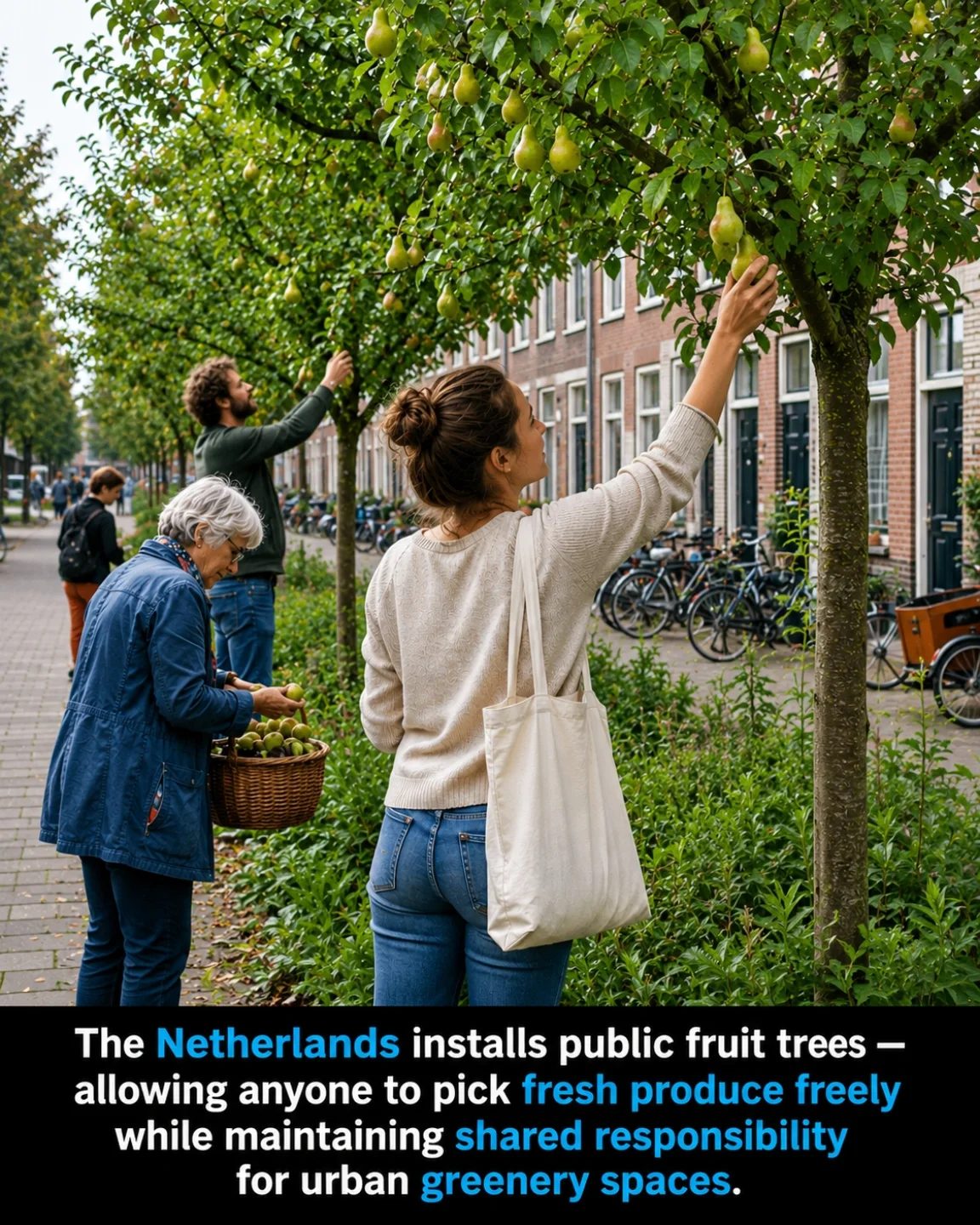
Public Fruit Trees in the Netherlands
The Netherlands is known for its innovative approach to urban planning, and one of its most unique initiatives is the installation of public fruit trees. These trees are not just for aesthetic purposes; they serve a dual function of providing fresh produce to the community and promoting shared responsibility for urban green spaces. This initiative is a testament to the country's commitment to sustainability and community engagement.
Context / Why this matters
In an era where urbanization is on the rise, the need for green spaces and sustainable living practices has never been more critical. Public fruit trees in the Netherlands address multiple urban challenges simultaneously. They provide a source of fresh, locally grown produce, reduce food miles, and encourage community involvement in maintaining urban greenery. This initiative is particularly relevant in cities where access to fresh produce can be limited, and green spaces are often underutilized or neglected.
Main discussion
The Initiative
The public fruit trees initiative in the Netherlands is a community-driven effort to enhance urban greenery while providing access to fresh produce. The initiative allows anyone to pick fruits freely from these trees, fostering a sense of shared responsibility and community engagement. The trees are strategically placed in public areas, making them accessible to a wide range of people.
Community Engagement
One of the key benefits of this initiative is the community engagement it fosters. By allowing anyone to pick fresh produce, the initiative encourages people to take an active interest in their surroundings. This can lead to a greater appreciation for urban greenery and a sense of shared responsibility for maintaining these spaces. The sight of an older woman collecting fruit in a basket and a younger woman reaching for a pear highlights the intergenerational appeal of this initiative. It brings people together, creating a sense of community and shared purpose.
Sustainability and Accessibility
The public fruit trees initiative is a step towards sustainable urban living. By providing fresh produce locally, it reduces the need for transportation of fruits, lowering carbon emissions. Additionally, it ensures that everyone, regardless of their socio-economic status, has access to fresh, nutritious food. This is particularly important in urban areas where access to fresh produce can be limited due to lack of local farms or high prices.
Shared Responsibility
The initiative promotes the concept of shared responsibility for urban green spaces. By allowing anyone to pick fruits, it creates a sense of ownership and responsibility towards these spaces. People are more likely to take care of spaces they feel a sense of ownership towards, leading to better-maintained urban greenery. This is a win-win scenario where the community benefits from fresh produce, and the urban environment benefits from improved maintenance and sustainability.
Types of Fruits
While pears are prominently featured in the initiative, other types of fruit trees are also installed. This variety ensures that a wide range of fresh produce is available to the community. The types of fruits may vary depending on the region and climate, but the initiative generally includes a mix of seasonal fruits.
Practical tips
If you live in an area where such an initiative is present, here are some practical tips to make the most of it:
- Check the Season: Different fruits are available at different times of the year. Knowing what is in season can help you plan your visits and make the most of the initiative.
- Bring a Basket: Having a basket or a bag can make it easier to collect and carry the fruits you pick. This is especially useful if you plan to pick larger quantities.
- Respect the Trees: Remember that the fruits are there for everyone to enjoy. Be mindful of leaving enough for others and taking only what you need.
- Get Involved: If you have the time and inclination, consider getting involved in maintaining the trees. This could include watering, pruning, or even planting new trees.
- Share the Experience: Invite friends and family to join you. It's a great way to spend time outdoors, enjoy fresh produce, and promote community engagement.
Important takeaways
- Community Involvement: The initiative fosters a sense of community and shared responsibility for urban greenery.
- Sustainability: It promotes sustainable urban living by providing locally grown, fresh produce.
- Accessibility: It ensures that everyone has access to fresh, nutritious food.
- Variety: A range of fruits are available, depending on the region and climate.
- Seasonal Availability: Different fruits are available at different times of the year.
Conclusion
The public fruit trees initiative in the Netherlands is a shining example of how urban greenery can be utilized to benefit the community. By allowing anyone to pick fresh produce freely, it promotes shared responsibility, sustainability, and community engagement. This initiative serves as an inspiration for other cities looking to enhance their urban green spaces and foster a greater sense of community. Through such initiatives, urban living can become more sustainable, accessible, and community-centric.
Questions readers ask
What are public fruit trees and where can I find them in the Netherlands?
Public fruit trees are fruit-bearing trees planted in shared urban spaces for community use. They can be found in parks, along streets, and in other public areas across the Netherlands, with a concentration in cities like Amsterdam, Rotterdam, and Utrecht. Local government websites or community maps often list specific locations.
Who maintains the public fruit trees in the Netherlands?
The maintenance of public fruit trees is a shared responsibility. Local governments typically plant and provide initial care, but they also encourage community involvement. Residents can volunteer to help with watering, pruning, and harvesting, fostering a sense of shared responsibility and community engagement.
Can anyone pick fruit from the public fruit trees?
Yes, the fruit from public fruit trees is intended for everyone to enjoy. However, it's essential to follow local guidelines. Some cities may have rules about when and how much fruit you can pick. Always respect the trees and the community by not over-harvesting and cleaning up after yourself.
What types of fruit trees are commonly planted as public fruit trees?
The Netherlands plants a variety of fruit trees, including apple, pear, plum, cherry, and even some exotic fruits like mulberry. The selection is typically based on suitability for the local climate and soil conditions, as well as fruit popularity and harvest season to ensure a steady supply throughout the growing season.
How does the public fruit tree initiative address urbanization and food accessibility?
This initiative tackles urbanization by greening urban landscapes and providing a source of fresh, locally grown produce. It enhances food accessibility by putting nutritious food within reach of urban residents, including those who may lack access to private gardens or traditional grocery stores.
Related deep dives
Similar reads based on topic and creator.



Recent articles
Fresh deep dives from the latest Reels we unpacked.




Comments
Be the first to comment.