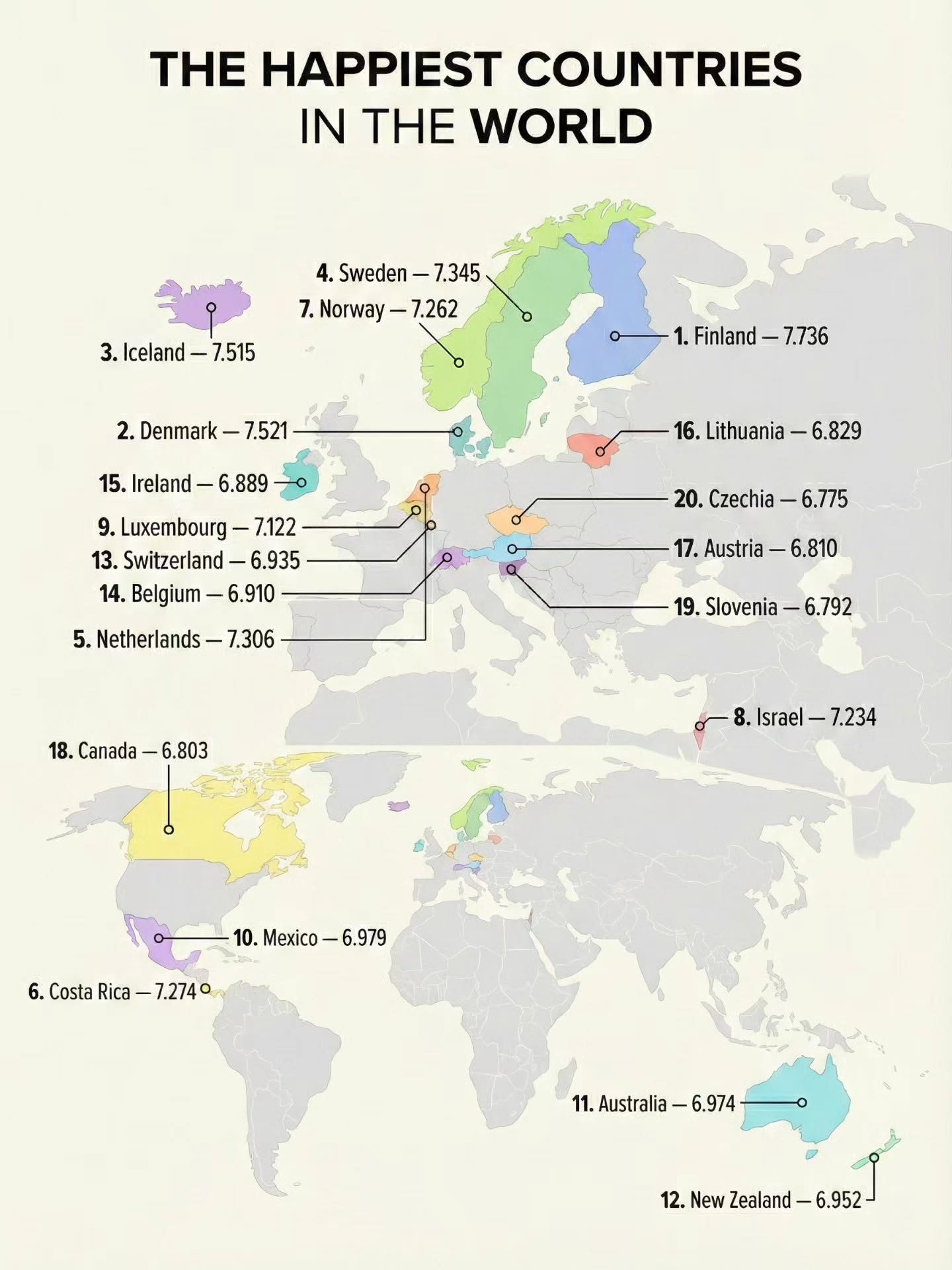
Happiest Countries in the World
Context
The concept of happiness in the modern world has evolved beyond personal satisfaction to become an indicator of a nation's health. The World Happiness Report, a landmark study, ranks countries based on factors that contribute to the overall well-being of their citizens. This ranking has become a crucial benchmark for understanding the social, economic, and political environments that foster happiness.
Why This Matters
Understanding which countries rank highest in happiness can provide valuable insights into what makes a society thriving. By examining the top countries, we can glean information about effective governance, social support, and quality of life. This knowledge is essential for policymakers, economists, and social scientists aiming to improve the well-being of their own populations.
Main Discussion
The Top Contenders
The happiest countries in the world, as per recent data, are Finland, Iceland, Sweden, and Netherlands. These nations consistently top the charts due to their robust social support systems, strong economies, and high levels of personal freedom. Finland, the top scorer, has a happiness score of 7.736, followed closely by Iceland with a score of 7.515. These scores are a testament to the effectiveness of their social policies and the overall well-being of their citizens.
The Role of Social Support
Social support, a key factor in the happiness index, refers to the availability of help from family, friends, and social networks. Countries with strong community ties and robust social welfare programs tend to have higher happiness scores. For instance, Finland's comprehensive social security system and strong sense of community contribute significantly to its top ranking.
Economic Stability and Personal Freedom
Economic stability and personal freedom are also crucial factors in determining a country's happiness score. Nations with stable economies and opportunities for personal growth tend to have higher happiness levels. Sweden, ranked fourth, has a score of 7.345, reflecting its robust economy and generous social welfare programs. The Netherlands, with a score of 7.306, benefits from a balanced approach to work-life integration and a strong emphasis on personal freedom.
The Impact of Quality of Life
Quality of life, encompassing aspects like healthcare, education, and work-life balance, plays a pivotal role in a nation's happiness score. Costa Rica, ranked sixth, has a score of 7.274, illustrating the impact of a high-quality healthcare system and a culture that prioritizes family and leisure. Similarly, Australia and New Zealand, with scores of 6.974 and 6.952 respectively, benefit from their focus on a balanced lifestyle and a strong sense of social cohesion.
Practical Tips
For Travelers
If you're planning a trip, consider visiting one of the happiest countries. Experiencing their cultures firsthand can provide a deeper understanding of what contributes to their high happiness scores. Engage with locals, explore their communities, and observe their daily routines. This immersion can offer unique insights into the factors that make these countries thriving.
For Policymakers
Learn from the policies and practices of the top-ranking countries. Implementing similar social support systems, economic stability measures, and quality of life improvements can significantly enhance the well-being of your own population. Study their governance models and adapt them to fit your local context for maximum impact.
Important Takeaways
The happiest countries in the world offer a blueprint for creating thriving societies. By prioritizing social support, economic stability, personal freedom, and quality of life, these nations have achieved high levels of citizen satisfaction. Understanding and replicating their successful strategies can help other countries improve their overall well-being and happiness.
Conclusion
The concept of happiness is multifaceted, encompassing social, economic, and personal aspects. The top-ranking countries demonstrate the effectiveness of comprehensive social support systems, stable economies, personal freedom, and a high quality of life. By studying and implementing the factors that contribute to their success, other nations can strive towards similar levels of well-being.
Questions readers ask
How is the World Happiness Report conducted and what factors are considered?
The World Happiness Report is based on global surveys where respondents evaluate their current lives on a scale of 0-10. Factors considered include GDP per capita, social support, healthy life expectancy, freedom to make life choices, generosity, and perceptions of corruption. These elements are aggregated to rank countries based on their overall well-being.
What are the top three countries on the list of the happiest countries in the world?
Based on the latest data, the top three happiest countries are Finland, Iceland, and Sweden. These countries have consistently ranked high due to their strong social support systems, economic stability, and high levels of personal freedom, which contribute to their citizens' well-being.
What role does economic stability play in the happiness rankings?
Economic stability is a key factor in the happiness rankings as it directly impacts the quality of life. Countries with stable economies tend to have lower unemployment rates, better healthcare, and more opportunities for personal and professional growth, all of which contribute to higher levels of happiness and well-being among their citizens.
How do social support systems influence the happiness of a nation?
Social support systems, such as strong community networks and accessible healthcare and social services, play a crucial role in a nation's happiness. These systems provide a safety net during challenging times, reducing stress and anxiety, and fostering a sense of belonging and security, which are essential for overall well-being.
What can other countries learn from the happiest countries in the world?
Countries can learn valuable lessons from the happiest countries in the world, particularly in areas such as governance, social programs, and economic policies. By studying their approaches, other nations can implement effective strategies to enhance social support, improve economic stability, and promote personal freedoms, thereby improving the quality of life for their citizens.
Related deep dives
Similar reads based on topic and creator.




Recent articles
Fresh deep dives from the latest Reels we unpacked.




Comments
Be the first to comment.