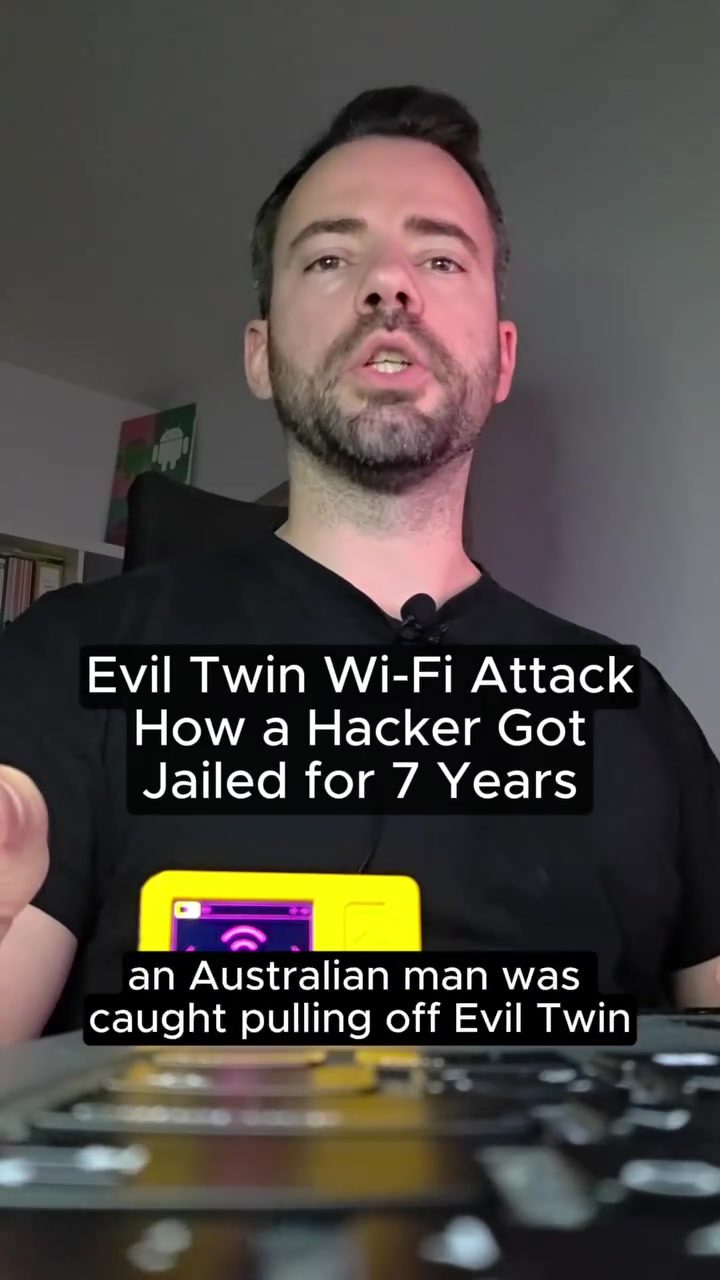
Wi-Fi hacking is a pressing issue that has become increasingly relevant in recent years, especially with the rise of public Wi-Fi networks in air travel. The case of an Australian man who was jailed for seven years in 2025 after pulling off an "Evil Twin" Wi-Fi attack on a plane highlights the dangers and intricacies of this method.
Context / Why this matters
The "Evil Twin" attack is a sophisticated technique used by hackers to mimic legitimate Wi-Fi networks, tricking users into connecting to a malicious network. This method has been used in various settings, from hotel Wi-Fi to airplane networks, and it poses a significant threat to user privacy and security.
Understanding the Evil Twin Attack
An Evil Twin attack involves creating a fake Wi-Fi network that closely resembles a legitimate one. This fake network, often named similarly to the official network, entices users to connect. Once connected, users are redirected to a captive portal, a fake login page that mimics the legitimate network's login page. Here, the hacker can launch phishing attacks, steal user credentials, and even access sensitive information such as social media accounts and banking details.
How the Attack Works
The attack begins with the hacker setting up a fake Wi-Fi network. This network is designed to look identical to the legitimate network, often using a similar SSID (Service Set Identifier). When users connect to this fake network, they are automatically redirected to a captive portal, which is a fake login page. This page is designed to mimic the legitimate network's login page, making it difficult for users to distinguish between the real and fake.
Once users enter their credentials on the fake login page, the hacker can intercept this information. This allows the hacker to access sensitive accounts, steal personal information, and even install malware on the user's device. In some cases, hackers can also exploit the connection to monitor and intercept other traffic, increasing the risk of data breaches and identity theft.
Real-World Examples
The technique is not new. In 2018, Russian spies used this method to hack into hotel Wi-Fi networks, allowing them to spy on diplomats by deploying malware, intercepting traffic, and grabbing sensitive information. The Australian man, who set up a fake Wi-Fi network on a plane in 2024, faced a similar situation. By creating an Evil Twin network that mimicked the plane's official Wi-Fi, he tricked passengers into connecting and subsequently stole their credentials. This led to his arrest and a seven-year prison sentence.
Practical Tips to Protect Yourself
Given the severity of the threat, it is essential to take proactive measures to protect yourself from Evil Twin attacks. Here are some practical tips to help you stay safe:
Avoid Logging into Sensitive Accounts on Free Wi-Fi
Free public Wi-Fi networks, especially those in airports, hotels, and coffee shops, are prime targets for hackers. Avoid logging into sensitive accounts such as email, social media, and banking while connected to these networks. If possible, use a virtual private network (VPN) to encrypt your data and protect your credentials.
Enable Multi-Factor Authentication
MFA adds an extra layer of security to your accounts. Even if a hacker steals your password, they will need additional verification, such as a code sent to your mobile device, to access your account. This makes it much harder for hackers to exploit stolen credentials.
Use Mobile Data When in Doubt
If you are unsure about the legitimacy of a Wi-Fi network, use your mobile data instead. This ensures that your data is not intercepted by a hacker, providing an additional layer of security.
Stay Aware and Updated
Hackers exploit convenience and lack of awareness. Staying informed about the latest security threats and best practices can help you avoid falling victim to these attacks. Regularly update your devices and applications to ensure you have the latest security patches.
Important Takeaways
The Evil Twin attack is a real and present danger, especially in public Wi-Fi networks. Understanding how this attack works and taking proactive measures can significantly reduce the risk of falling victim to it. By avoiding sensitive logins on free Wi-Fi, enabling multi-factor authentication, and using mobile data when in doubt, you can protect your credentials and personal information.
Conclusion
The case of the Australian hacker and the Russian spies demonstrates the seriousness and effectiveness of the Evil Twin attack. While this technique has been around for some time, it remains a significant threat to user privacy and security. By understanding the mechanisms of this attack and implementing the recommended security measures, you can protect yourself and your sensitive information from potential threats. Always stay vigilant and prioritize your digital security.
Questions readers ask
What exactly is an 'Evil Twin' Wi-Fi attack?
An 'Evil Twin' Wi-Fi attack is a type of hacking technique where a cybercriminal creates a fake Wi-Fi network that mimics a legitimate one, such as a public network offered on an airplane. The goal is to trick users into connecting to the fake network, allowing the hacker to intercept and steal sensitive information.
How did the Australian hacker execute the attack on a plane?
The Australian hacker set up a fake Wi-Fi network on a plane that closely resembled the legitimate airline Wi-Fi. Once passengers connected to this malicious network, the hacker could intercept their data, including login credentials and other sensitive information.
What are the risks of connecting to public Wi-Fi networks, especially on airplanes?
Connecting to public Wi-Fi, particularly on airplanes, poses significant risks. Hackers can exploit these networks to perform 'Evil Twin' attacks, leading to the theft of personal information, login credentials, and other sensitive data. It's crucial to be cautious and use protective measures when accessing public Wi-Fi.
How can passengers detect a fake Wi-Fi network on a plane?
To detect a fake Wi-Fi network, passengers should look for inconsistencies in the network name (SSID) and compare it with the official network provided by the airline. Additionally, using a VPN can help encrypt data and protect against potential 'Evil Twin' attacks. If unsure, it's always safer to use a personal mobile hotspot.
What measures can airlines take to enhance Wi-Fi security on their planes?
Airlines can implement several security measures, including using encrypted connections, enforcing strong authentication protocols, and regularly updating their network security systems. Regularly communicating with passengers about potential security risks and providing clear instructions on how to safely connect to the in-flight Wi-Fi can also be beneficial.
What penalties can hackers face for performing an 'Evil Twin' attack?
The penalties for performing an 'Evil Twin' attack can be severe, as illustrated by the Australian hacker's seven-year sentence. These penalties can include long jail terms, fines, and other legal consequences, depending on the jurisdiction and the extent of the damage caused by the attack.
Are there any effective techniques to prevent 'Evil Twin' attacks on mobile devices?
To prevent 'Evil Twin' attacks, users can employ techniques such as disabling automatic Wi-Fi connections, verifying network legitimacy, and using a trusted VPN. Additionally, always enable two-factor authentication and use secure, encrypted connections when accessing sensitive information.
Related deep dives
Similar reads based on topic and creator.




Recent articles
Fresh deep dives from the latest Reels we unpacked.




Comments
Be the first to comment.