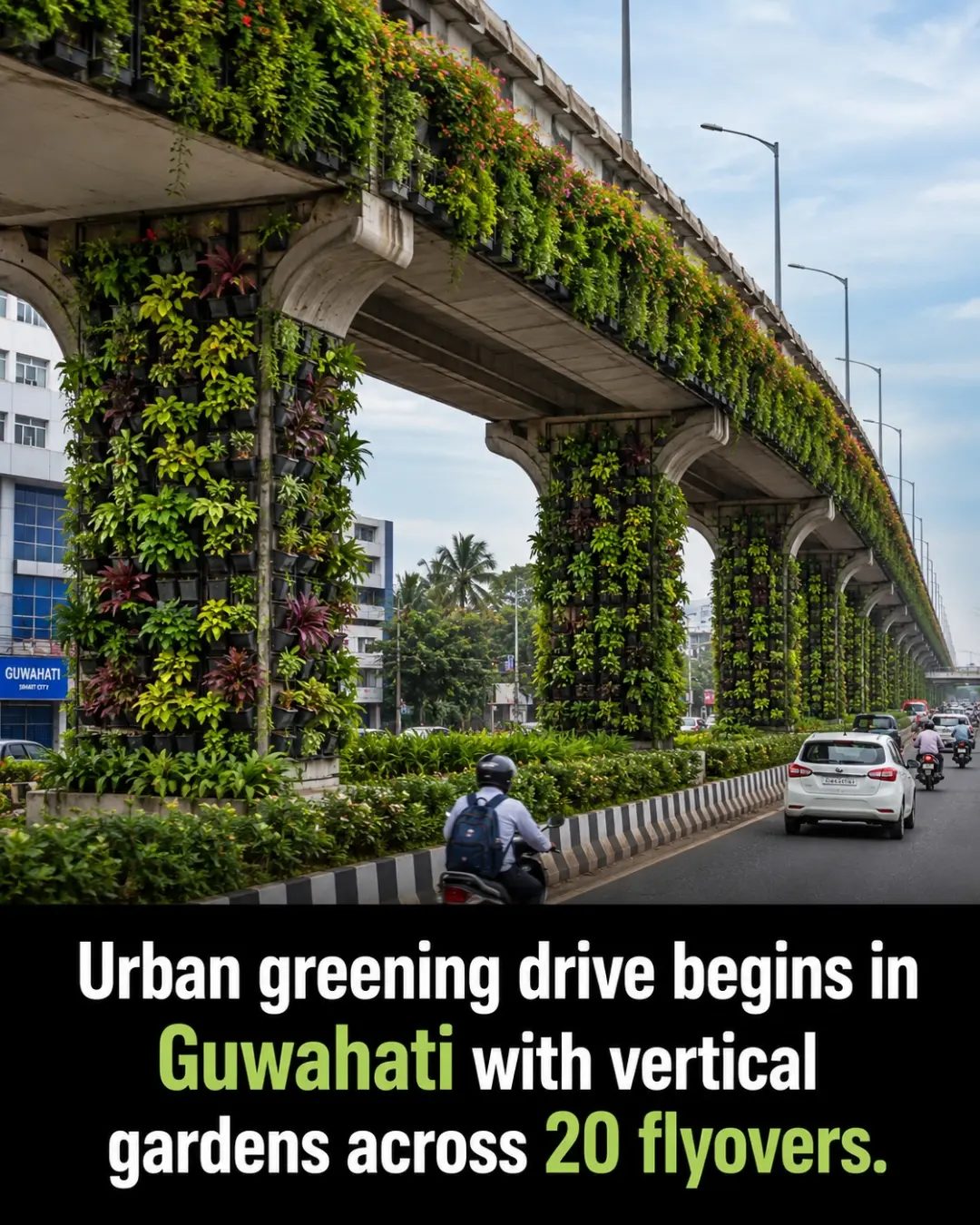
Urban Greening in Guwahati: Transforming Flyovers into Vertical Gardens
Guwahati, a bustling city in northeastern India, is making strides in urban development with an innovative greening project. This initiative involves the installation of vertical gardens on 20 flyovers, transforming these typically utilitarian structures into vibrant, eco-friendly landscapes.
Why This Matters
Urban greening projects are essential for improving air quality, mitigating urban heat island effects, and enhancing the aesthetic appeal of cities. By integrating vertical gardens into the cityscape, Guwahati is not only making its environment more visually appealing but also contributing to a greener future.
The Vision Behind the Greening Project
The urban greening project in Guwahati is a testament to the city's commitment to sustainable urban development. Vertical gardens, which are essentially gardens planted on vertical surfaces, are installed on the flyovers. These flyovers, once considered mere passageways for vehicles, are now being transformed into green corridors that have the potential to make a significant impact on the urban ecosystem.
Installation and Design
The installation of vertical gardens on flyovers is a meticulous process. The gardens are designed to be both visually striking and environmentally beneficial. The use of flyovers as the canvas for these gardens ensures that the greenery is not only integrated into the urban fabric but also visible from various vantage points, making a bold statement about the city's environmental priorities.
Environmental Benefits
Vertical gardens offer several environmental benefits. They help in reducing air pollution by absorbing harmful gases and particulate matter. Additionally, these gardens can mitigate the urban heat island effect, where urban areas are significantly warmer than their rural surroundings due to human activities and the prevalence of heat-absorbing surfaces. By providing shade and coolness, vertical gardens can help regulate the temperature in the surrounding areas, making the environment more comfortable for residents.
Social and Economic Impact
The greening project in Guwahati is not just an environmental initiative; it also has social and economic implications. The vertical gardens can serve as recreational spaces for residents, providing them with opportunities to connect with nature within the urban landscape. This can improve mental well-being and foster a sense of community.
Moreover, the installation of vertical gardens can also boost local businesses. The greenery can attract tourists and visitors, leading to increased foot traffic and economic activity in the area. Local businesses can benefit from this increased tourism by providing services and products to visitors.
Practical Tips for Urban Greening
The success of Guwahati's urban greening project highlights the potential of vertical gardens in transforming urban landscapes. Here are some practical tips for implementing similar projects:
- Choosing the Right Location: Select locations that are highly visible and have minimal structural constraints. Flyovers, bridges, and tall buildings are ideal candidates for vertical gardens.
- Selecting Plant Species: Choose plant species that are drought-resistant and can thrive in vertical conditions. Succulents, ferns, and climbing plants are good choices for vertical gardens.
- Ensuring Water Supply: Vertical gardens require a consistent water supply. Install an efficient irrigation system that uses recycled water to minimize water wastage.
- Maintenance: Regular maintenance is crucial for the longevity of vertical gardens. Ensure that the gardens are inspected regularly for any damage or pest infestation.
- Community Engagement: Involve the local community in the planning and maintenance of vertical gardens. This can foster a sense of ownership and ensure the project's long-term success.
Key Points
- Location: Guwahati, India
- Project Scope: 20 flyovers
- Benefits: Improved air quality, mitigation of urban heat island effect, enhanced aesthetic appeal
- Environmental Impact: Reduction in air pollution, regulation of urban temperature
- Social Impact: Enhanced recreational spaces, improved mental well-being
- Economic Impact: Increased tourism, boost to local businesses
Conclusion
Guwahati's urban greening project is a pioneering effort in sustainable urban development. By installing vertical gardens on flyovers, the city is transforming its urban landscape into a green and vibrant oasis. This initiative not only beautifies the city but also provides numerous environmental, social, and economic benefits. As more cities look for innovative solutions to address environmental challenges, Guwahati's approach serves as a model for urban greening initiatives worldwide.
Questions readers ask
What are the primary goals of Guwahati's flyover greening project?
The primary goals are to enhance air quality, mitigate urban heat, and improve the city's aesthetic appeal. By transforming 20 flyovers into vertical gardens, Guwahati aims to create more sustainable and visually pleasing urban spaces.
How many flyovers in Guwahati are being transformed into vertical gardens?
The initiative involves 20 flyovers across the city, making it one of the largest vertical garden projects in India.
What are some of the environmental benefits of vertical gardens in urban areas?
Vertical gardens can significantly improve air quality by absorbing pollutants, reduce urban heat island effects, and support local biodiversity. They also help to manage stormwater and reduce noise pollution.
What role do vertical gardens play in sustainable urban design?
Vertical gardens contribute to sustainable urban design by integrating greenery into the built environment, promoting biodiversity, and enhancing the overall quality of life for residents. They also help to reduce the environmental impact of urban infrastructure.
What are the expected outcomes of Guwahati’s vertical garden project on the city’s environment?
The expected outcomes include improved air quality, reduced urban heat, enhanced biodiversity, and a more visually appealing cityscape. These green corridors will also contribute to a more sustainable urban environment.
How do vertical gardens help in reducing urban heat island effects?
Vertical gardens help reduce urban heat island effects by providing shade and cooling the surrounding air through evapotranspiration. This process, where plants release water vapor, lowers local temperatures and creates a more comfortable urban microclimate.
Related deep dives
Similar reads based on topic and creator.




Recent articles
Fresh deep dives from the latest Reels we unpacked.




Comments
Be the first to comment.