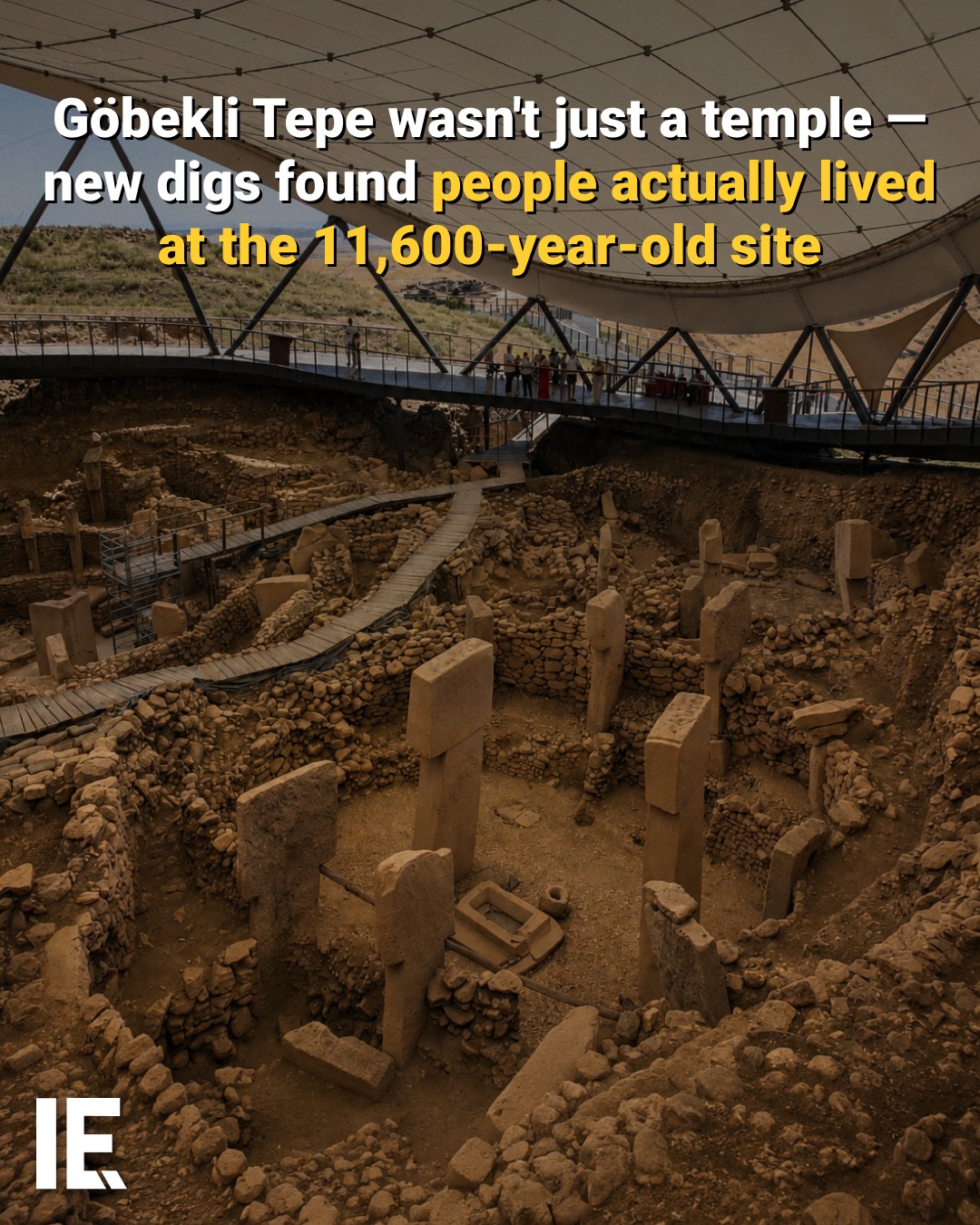
Göbekli Tepe's Recent Revelations
There’s a new revelation that's reshaping our understanding of Göbekli Tepe. Göbekli Tepe is an ancient site in Turkey that has long been known for its massive stone pillars and intricate carvings. It has long been regarded as a temple. However, archaeologists recently uncovered evidence that people actually lived at the 11,600-year-old site, drastically altering the narrative of this revered stone forest.
The Grand or Stone Forest
Situated in southeastern Turkey, Göbekli Tepe stands as one of the world’s most mysterious and oldest archaeological sites. Excavations have revealed monumental architectural structures known as T-shaped pillars, often topped with intricate carvings of animals. The distinctive features of Göbekli Tepe are not just the pillars but also the architectural complexity and the craftsmanship that went into creating them.
Göbekli Tepe and Human History
The recent discovery changes what we know about the site. Göbekli Tepe's rediscovery changes how we imagine the lives of ancient people. It begins to illustrate the transition from nomadic societies to stable settlements with a built environment that people lived within. The discovery that 11,600-year-old Göbekli Tepe was more than just a temple has profound implications for our understanding of human history. This site challenges the idea that large-scale architectural feats were created after the advent of agriculture. If people lived at Göbekli Tepe, it suggests that these structures may have been created by wandering populations.
Reshaped Understanding of Early Civilization
Göbekli Tepe’s complex design places it among the earliest and most remarkable examples of monumental architecture anywhere in the world. The discovery of settlement remnants shows that the community who built Göbekli Tepe had the sophistication to plan, construct, and maintain such a site well before the onset of agriculture.
Excavation Details
Göbekli Tepe has been the subject of scientific scrutiny for well over a century since its discovery. The site is structured with multiple layers of construction, each deeper layer dating from 11,600 to 9,600 years ago, revealing new details from different periods. Stone pillars are the central attraction, varying in height from 3 to 6 metres (10–20 feet). These pillars are notable for the carvings that adorn them, representations of wild animals, insects, and symbols.
The Role of T-Shaped Pillars
The pillar configuration is a common sight at Göbekli Tepe. These distinctive T-shaped pillars are often placed in pairs or groups around the edge of circular or oval-shaped structures. The interior of these structures sometimes contains benches or other architectural features.
The Encountering the Excavated Area
Visiting Göbekli Tepe today takes visitors right to the heart of the site, walking amidst the stone pillars and around the circular structures. It’s an immersive experience that gives a sense of the grandeur of the ancient builders. One can directly inspect the intricacies of the carvings and see the surrounding architecture firsthand.
Currently, hundreds of T-shaped megaliths—each weighing up to 10 tons— dot the landscape.
Making Your Visit
Wishing to experience the grandeur of Göbekli Tepe? This ancient site rich with mystery is situated in Şanlıurfa Province, Turkey. During your visit you'll need to trek along to where the stone pillars stand in the open air.
- Transportation: The closes airport is Şanlıurfa Gazi Airport, which is about 20 kilometers away. From there you can take a taxi or rent a car to reach Göbekli Tepe.
- Arrangement: Local tour operators offer guided tours that cover the main highlights of the site providing a deeper understanding of its history. They often combine the trip with a stop at a nearby town for lunch.
Worth Another Look
The latest findings at Göbekli Tepe are going to dominate the global headlines for good reason. This site is as much a matter of human history and the very origins of civilizations. 11,600 years is a very long time perhaps to know more of Göbekli Tepe—society, wealth, and culture.
Questions readers ask
What kind of evidence suggests that people lived at Göbekli Tepe?
The recent discovery of settlement remnants at Göbekli Tepe, such as architectural features and remnants of living spaces, provides the first evidence that people lived there. This includes benches and other structures found within the site's circular or oval-shaped spaces. These findings suggest that the site was more than just a ceremonial or religious center, but also a place where people resided.
How does the discovery of human habitation at Göbekli Tepe change our understanding of early human civilizations?
The discovery that Göbekli Tepe was a place of residence challenges the traditional narrative that large-scale architectural feats were only possible after the advent of agriculture. It suggests that nomadic populations may have had the capability to build and maintain such complex structures well before settling down into agricultural societies. This shifts our understanding of the timeline and capabilities of early human civilizations.
What are the T-shaped pillars at Göbekli Tepe, and why are they significant?
The T-shaped pillars are the most iconic features of Göbekli Tepe. These massive stone structures, often topped with intricate carvings of animals and symbols, are arranged in pairs or groups around circular or oval-shaped structures. Their significance lies in their architectural complexity and the craftsmanship that went into creating them, which suggests a high level of organization and skill among the ancient inhabitants.
Can visitors see the carvings and structures at Göbekli Tepe today?
Yes, visiting Göbekli Tepe today offers an immersive experience where visitors can walk amidst the stone pillars and around the circular structures. This allows for a firsthand inspection of the intricate carvings and the surrounding architecture, providing a sense of the grandeur and sophistication of the ancient builders.
How old is the site of Göbekli Tepe, and what does its age tell us about ancient civilizations?
Göbekli Tepe is approximately 11,600 years old, making it one of the oldest known archaeological sites with monumental architecture. Its age tells us that ancient civilizations had the capability to plan, construct, and maintain complex structures long before the advent of agriculture, challenging traditional views of early human societies.
What types of carvings are found on the T-shaped pillars at Göbekli Tepe?
The T-shaped pillars at Göbekli Tepe are adorned with a variety of carvings, including representations of wild animals, insects, and various symbols. These carvings provide valuable insights into the cultural and symbolic significance of the site for its ancient inhabitants.
Are there any other sites like Göbekli Tepe that offer similar insights into ancient human history?
While Göbekli Tepe is unique in its scale and complexity, there are other ancient sites that offer similar insights into early human history. Sites like Stonehenge in the UK and the megalithic temples of Malta also provide evidence of early human civilizations' architectural and symbolic capabilities.
Related deep dives
Similar reads based on topic and creator.




Recent articles
Fresh deep dives from the latest Reels we unpacked.




Comments
Be the first to comment.