Irish Mythology Meets Geology
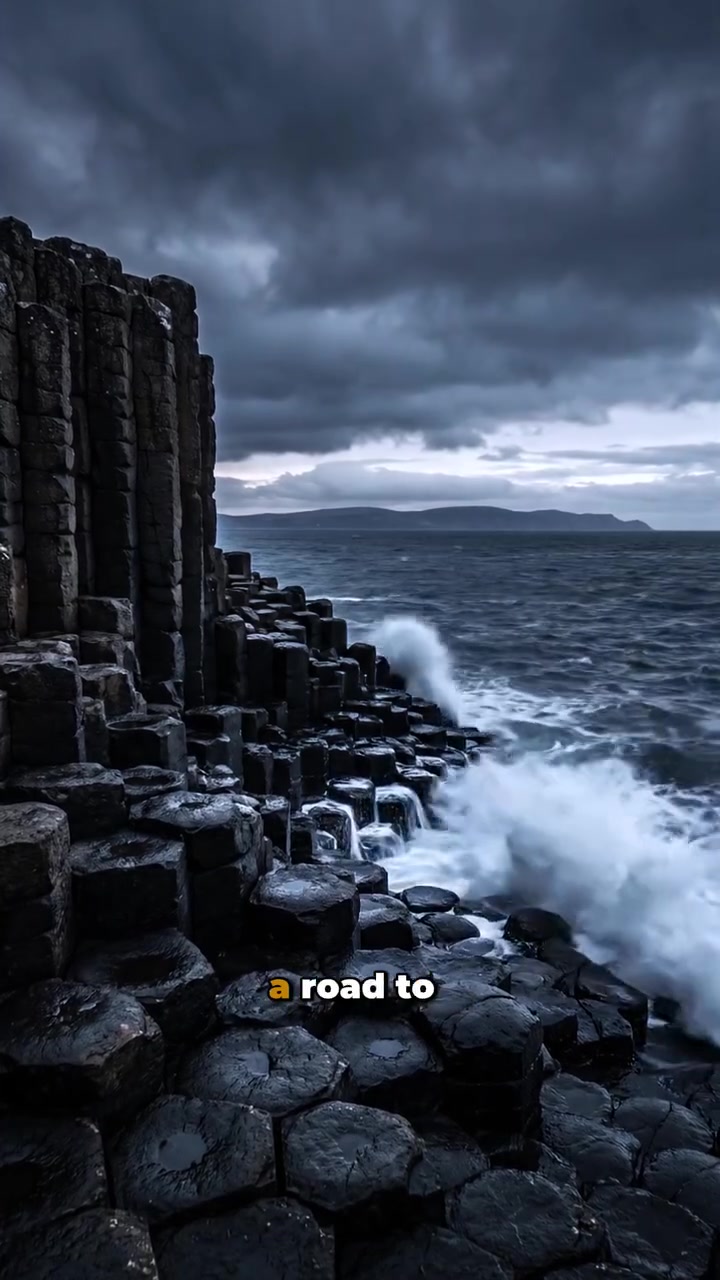
Beneath the waves and legend, the Giant’s Causeway is a road of heavy stone at the Northern Ireland coast. About 40,000 columns lock together with no more than six perfectly straight sides; the tallest stretch as high as 40 feet. Their uniformity has triggered myth, folklore, and archaeological findings. For centuries, local people credited the work to giants. Anyone approaching the Giant’s Causeway from stories knows the tale of a rival giant with long strides. Finn’s rival crossed the sea by using the column’s stones. Others heard that the sea stones once belonged to another world. The earth, volcanic lava, and ancient sea life may have crafted such a colossal sturcture. Both myth and science align neatly.
Shared heritage
This natural wonder is not an isolated feature; it extends across the sea. Families and historians share closely matching columns on Staffa, an island off the coast of Scotland. The expansive column ranges resemble a roadway of basalt. What appears to be two separate structures connects instead through a shared history. The northern island of Scotland and Giant's Causeway origins date back about 60 million years. The same underground event shaped both places—basalt columns form when lava flows cool and shrink into six-sided shapes as deep cracks form. The story of the causeway fits in the context of ongoing national identity debates, the geographical divide between Ireland and Scotland, and the political ticktock of British-Irish relations. For centuries, people from both islands embraced the tale of the giant’s bridge.
Looking down the cracks
Volcanic origin history
The Giant’s Causeway formed when the cooling of lava caused the rock to crack. The cracks tend to meet at repeating angles. The repeating patterns formed cracks. Volcanic events 60 million years ago froze into hexagonal rock along both coasts. As the lava flowed over the ground, it cooled, leaving the rock to crack and form thousands of interlocking columns. The rock columns create a road.
Pair of contrasts
The volcanic columns hold similarities. A quick look at the two sites shows visual differences. The columns in Giant’s Causeway align perpendicular to the Irish Sea. Fingal’s Cave's columns stand straight up and down. The separate volcanic events have left a clear mark on the world. No longer will anyone confuse them for mythical giants.
A geological blueprint revealed
The formation of the columns is a clear blueprint for the best geological conditions. The interaction of lava and water, the cooling process, and the development of cracks are all understood. The hexagonal rock formations attest to the hexagonal shape and geological processes. A hexagon has no seams. Volcanic rock cooled into hexagonal shapes and cracked into columns. The columnar joins produce a seamless finish and a seamless network. Surrounding basalt columns, the mold-preserved coats of the rocks show how the columns formed.
Journey to the Gaping spaces
A volcanic road trip
The mystery of the columns has sparked the imaginations of many people. The Giant's Causeway is a popular tourist destination. Fingal’s Cave 80 miles away, and features same hexagon columns. The area around Giant's Causeway has been protected from quarrying and other damage. The surrounding cliffs are a source of inspiration and education to locals and visitors. Public access means visitors can explore the site and marvel at the natural wonder.
The roots of 'stone stories'
The story behind the story
The story of the causeway has evolved over centuries. It began as a legend that giants had built the causeway. The Irish giant Finn MacCool’s story includes a bridge used to fight a Scottish rival giant. The story of the causeway’s origin has been passed down for generations. The story has continued to evolve over time. The story of the causeway has been told and retold in different forms. People have used the story to explain the causeway’s origins. Some people believe that the causeway was built by giants and some believe it was built by humans. The story of the causeway has been used to explain the causeway’s origins. The Giant’s Causeway is an enduring testament to the power of nature and the human imagination. The site is a popular tourist destination and is recognized as a UNESCO World Heritage Site. The columns are a geological wonder, and the story of their origin is a fascinating blend of myth and science. A visit to the Giant’s Causeway is a journey through time and a testament to the power of nature. The columns are a geological wonder, and the story of their origin is a fascinating blend of myth and science. The columns are a testament to the power of nature and the human imagination.
Questions readers ask
How exactly do the columns at the Giant's Causeway and Fingal's Cave differ in their orientation?
The columns at the Giant's Causeway are aligned perpendicular to the Irish Sea, while those at Fingal's Cave stand straight up and down. This difference in orientation is due to the distinct volcanic events that formed each site, making them easily distinguishable despite their similar geological origins.
What caused the hexagonal shape of the columns at the Giant's Causeway?
The hexagonal shape of the columns is a result of the cooling process of lava. As the lava flowed and cooled, it contracted and formed deep cracks at repeating angles, which naturally led to the formation of six-sided columns.
Are there any other places in the world with similar basalt column formations?
Yes, similar basalt column formations can be found in other parts of the world, including the island of Staffa off the coast of Scotland. These formations share a common geological history and are a result of volcanic activity.
Can visitors access both the Giant's Causeway and Fingal's Cave?
Yes, both sites are popular tourist destinations. The Giant's Causeway is located on the Northern Ireland coast and is easily accessible by road. Fingal's Cave, located on the island of Staffa, can be reached by boat tours from the nearby town of Mull.
Is it true that the Giant's Causeway and Fingal's Cave are connected by a shared geological history?
Yes, both the Giant's Causeway and Fingal's Cave are connected by a shared geological history. About 60 million years ago, the same underground volcanic events shaped both places, resulting in the formation of basalt columns.
How do the basalt columns at the Giant's Causeway and Fingal's Cave form a seamless network?
The basalt columns form a seamless network due to the way they interlock with each other. As the lava cooled and cracked, it formed columns with no more than six perfectly straight sides, which fit together tightly, creating a road-like structure.
Related deep dives
Similar reads based on topic and creator.



Recent articles
Fresh deep dives from the latest Reels we unpacked.




Comments
Be the first to comment.