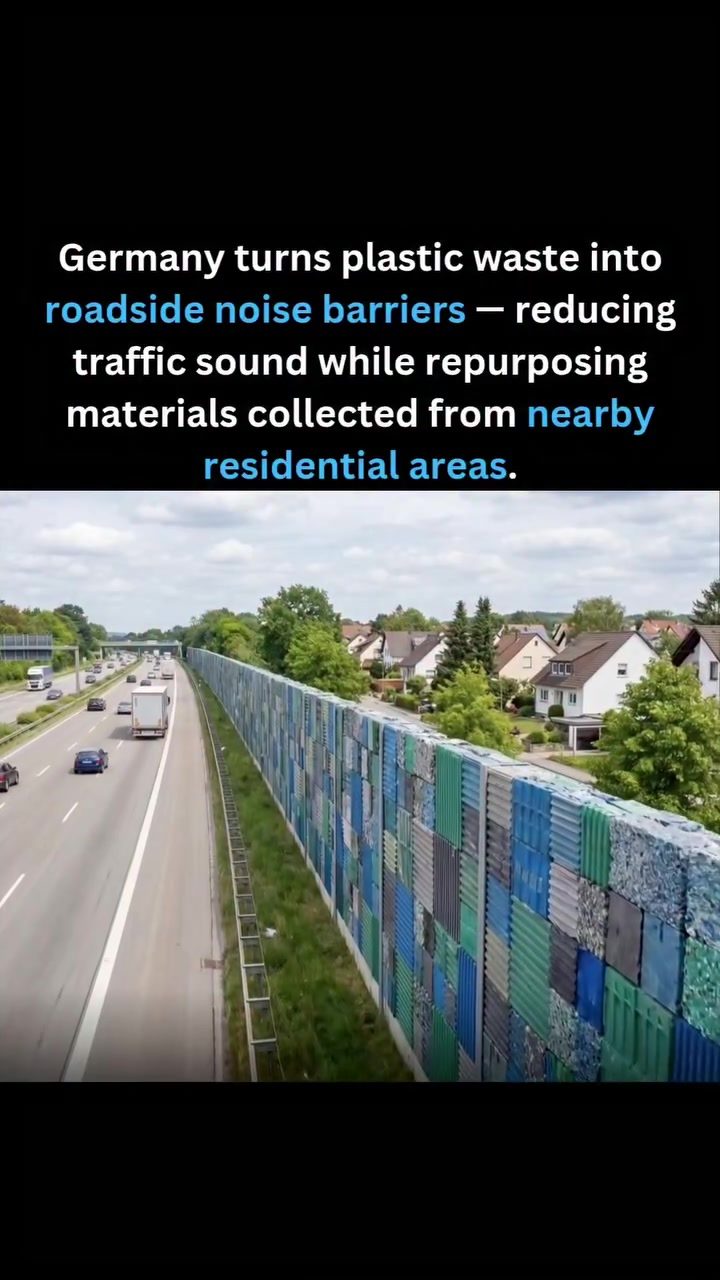
Plastic Waste Recycling in Germany
In Germany, plastic waste is being repurposed in an innovative way: as roadside noise barriers. This initiative not only helps to reduce traffic noise pollution but also provides a practical solution for managing plastic waste.
Why This Matters
Urban development often brings with it an increase in traffic, which in turn leads to higher levels of traffic noise—a significant source of environmental pollution. Noise pollution can have detrimental effects on the health and well-being of communities living near busy roads. It can cause stress, sleep disturbances, and even cardiovascular issues. Addressing this problem is crucial for maintaining the quality of life in residential areas. Additionally, plastic waste is a growing global concern, with millions of tons of it ending up in landfills and oceans each year. Finding innovative ways to repurpose this waste is essential for creating a more sustainable future.
Main Discussion
The Problem of Traffic Noise
Traffic noise is a pervasive issue in urban and suburban areas. The constant hum of engines, honking, and tire noise can be disruptive and harmful to residents. Traditional noise barriers often consist of concrete or metal, which, while effective, can be visually unappealing and do not address the issue of waste management.
The Solution: Plastic Waste as Noise Barriers
In Germany, a unique solution has been implemented: transforming plastic waste into roadside noise barriers. This initiative offers a two-pronged approach to addressing both traffic noise and plastic waste.
One of the key benefits of using recycled plastic for noise barriers is the material’s sound-absorbing properties. Plastic can help to dampen the high-frequency sounds typically associated with traffic, making it an effective noise-reducing material. Additionally, it's durable, weather-resistant, and maintains its performance over time.
The Recycling Process
The process of converting plastic waste into noise barriers begins with the collection of plastic materials from nearby residential areas. This local sourcing not only reduces transportation emissions but also encourages community involvement in waste management. The collected plastics are then cleaned, sorted, and processed into the panels that make up the noise barriers.
Community Impact
The installation of these barriers has been successful in reducing traffic noise, contributing to quieter, safer neighborhoods. Local residents have reported improved sleep quality and an overall reduction in noise-related stress. Moreover, the visually appealing tiled appearance of the barriers enhances the aesthetic value of the surrounding area, making them a welcome addition to the community.
The noise barriers made from recycled plastic are also designed to be safe and durable, providing long-term benefits to the community. They are resistant to weathering and require minimal maintenance, ensuring they remain effective for years to come.
Practical Tips for Implementing Similar Initiatives
The success of this initiative in Germany offers valuable insights for other regions looking to implement similar projects. Here are a few practical tips for getting started:
1. Community Engagement
Engage with local communities to identify areas most affected by traffic noise and to encourage participation in waste collection initiatives. Community support is crucial for the success of such projects.
2. Partner with Recycling Facilities
Collaborate with local recycling facilities to ensure a steady supply of plastic waste. Establishing partnerships can streamline the collection and processing of materials, making the project more efficient.
3. Ensure Durability and Safety
Choose recycled materials that are durable and safe for use in public spaces. The barriers should be designed to withstand weathering and provide long-term noise reduction benefits.
4. Enhance Aesthetics
Incorporate design elements that enhance the visual appeal of the barriers. Aesthetically pleasing designs can make the barriers more acceptable to the community and may even add to the neighborhood's character.
5. Evaluate Effectiveness
Regularly assess the effectiveness of the noise barriers and gather feedback from the community. This can provide valuable insights for future improvements and help ensure that the barriers continue to meet the needs of the community.
Important Takeaways
The initiative in Germany demonstrates the potential for repurposing plastic waste into functional and beneficial products. By addressing traffic noise pollution and managing plastic waste, communities can improve their quality of life while promoting sustainability.
Benefits of Recycled Plastic Noise Barriers
- Noise Reduction: Effectively dampens traffic noise, reducing its impact on nearby residential areas.
- Waste Management: Provides a practical solution for managing plastic waste, reducing the amount sent to landfills and oceans.
- Community Engagement: Encourages local involvement in waste management and environmental initiatives.
- Aesthetic Enhancement: Can improve the visual appeal of urban and suburban landscapes.
- Sustainability: Promotes a more sustainable future by repurposing waste materials.
Challenges and Considerations
While the benefits are clear, there are also challenges to consider:
- Initial Cost: The initial investment for setting up recycling infrastructure and producing the barriers can be significant.
- Maintenance: Ensuring the durability and maintaining the effectiveness of the barriers over time requires ongoing effort.
- Scalability: Expanding the initiative to larger areas or other regions may pose logistical challenges.
Conclusion
The transformation of plastic waste into roadside noise barriers in Germany offers a practical and innovative solution to two pressing environmental issues: traffic noise pollution and plastic waste management. By repurposing waste materials, communities can create quieter, safer neighborhoods while promoting sustainability. This initiative serves as a valuable model for other regions looking to tackle similar challenges. Through community engagement, strategic partnerships, and a focus on durability and aesthetics, similar projects can be successfully implemented elsewhere, contributing to a more sustainable and peaceful living environment.
Questions readers ask
How does Germany's use of plastic waste for noise barriers help the environment?
By repurposing plastic waste into roadside noise barriers, Germany reduces the amount of waste sent to landfills. This not only helps manage plastic waste but also decreases the environmental footprint of traffic noise pollution, making it a dual-benefit solution.
What are the health benefits of reducing traffic noise pollution?
Lowering traffic noise pollution can significantly improve the well-being of nearby residents. It helps mitigate stress, reduces sleep disturbances, and even lowers the risk of cardiovascular issues, enhancing overall community health.
How effective are the plastic roadside barriers in reducing noise?
Plastic roadside barriers have proven to be quite effective in reducing traffic noise. They help absorb and deflect sound waves, creating a quieter environment for nearby residents and mitigating the negative impacts of traffic noise pollution.
What types of plastic waste are used to create these noise barriers?
The noise barriers are typically made from a mix of recycled plastics, including materials like polyethylene and polypropylene. These plastics are chosen for their durability and sound-absorbing properties, making them ideal for this purpose.
Can other countries adopt this approach for managing plastic waste and noise pollution?
Yes, this approach can be adapted by other countries. By investing in the necessary infrastructure and technology for recycling plastic waste into noise barriers, other nations can also address both plastic waste management and traffic noise pollution.
Related deep dives
Similar reads based on topic and creator.




Recent articles
Fresh deep dives from the latest Reels we unpacked.




Comments
Be the first to comment.