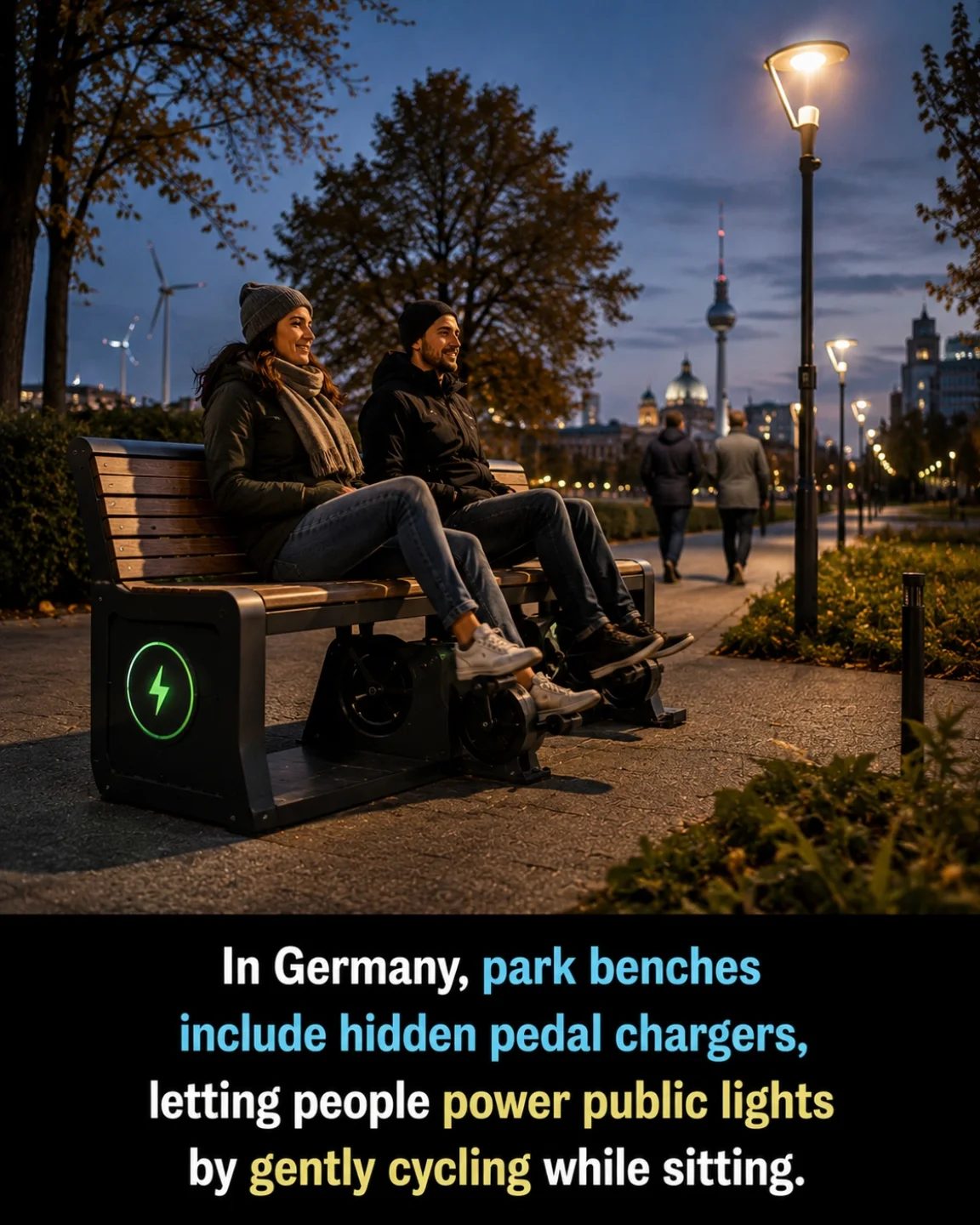
Kinetic Bench Chargers: Powering Public Spaces in Germany
Park benches are typically places to rest and relax, but in Germany, they're also becoming generators of clean, renewable energy. By incorporating hidden pedal chargers, these benches allow people to power public lights simply by sitting and gently cycling. This innovative design is a remarkable example of sustainable urban planning and interactive public spaces.
Why This Matters
In an era where sustainability is more than just a buzzword, finding practical ways to integrate green energy into daily life is crucial. Kinetic bench chargers represent a creative solution to harnessing human energy for public use. This concept not only promotes physical activity but also encourages a sense of community engagement and environmental responsibility.
The Science Behind Kinetic Bench Chargers
The idea behind kinetic bench chargers is straightforward yet ingenious. These benches are equipped with a mechanism that converts the mechanical energy generated by pedaling into electrical energy. The process involves:
- Mechanical Energy Conversion: When a person sits on the bench and starts pedaling, the motion is transferred to a dynamo or generator.
- Electrical Energy Generation: The generator converts the mechanical energy from pedaling into electrical energy.
- Power Storage and Distribution: The generated electricity is stored in a battery or directly used to power nearby public lights, contributing to the illumination of public spaces.
The Benefits of Kinetic Bench Chargers
Sustainability
Kinetic bench chargers are a prime example of sustainable urban design. They leverage human activity to produce clean energy, reducing the reliance on traditional power sources. This not only lowers carbon emissions but also promotes a greener, more eco-friendly urban environment.
Public Engagement
These benches encourage public engagement and interaction. By turning a simple act of sitting and relaxing into an energy-producing activity, people are more likely to engage with their surroundings. This can foster a sense of community and shared responsibility towards public spaces.
Energy Efficiency
The energy generated by these benches is directly used to power public lights, making the system highly efficient. There's minimal energy loss, as the power is generated and consumed in close proximity.
Practical Tips for Implementing Kinetic Bench Chargers
Site Selection
Choosing the right location is crucial for the effectiveness of kinetic bench chargers. High-traffic areas like parks, plazas, and busy pedestrian paths are ideal. These locations ensure that the benches will be used frequently, maximizing the energy output.
Design Considerations
The design of the bench should be ergonomic and user-friendly. The pedal mechanism should be easy to operate, and the bench should be comfortable for extended use. Additionally, the aesthetics of the bench should blend well with the surrounding environment to ensure it adds to the public space rather than detracts from it.
Maintenance and Upkeep
Regular maintenance is essential to keep the kinetic bench chargers functioning optimally. This includes checking the mechanical parts for wear and tear, ensuring the electrical components are working properly, and maintaining the cleanliness of the bench. Public awareness campaigns can also encourage users to report any issues they encounter.
Important Takeaways
- Innovative Design: Kinetic bench chargers are a creative solution to generating renewable energy in public spaces.
- Community Engagement: These benches encourage physical activity and foster a sense of community involvement.
- Environmental Benefits: By reducing reliance on traditional power sources, kinetic bench chargers contribute to a more sustainable urban environment.
- Efficiency: The direct use of generated energy for public lighting makes the system highly efficient.
Conclusion
Kinetic bench chargers in Germany represent a forward-thinking approach to urban design and sustainability. By turning everyday actions into a source of renewable energy, these benches not only power public spaces but also inspire a more interactive and eco-conscious community. As cities around the world look for innovative ways to integrate green energy, the concept of kinetic bench chargers offers a practical and engaging solution.
Questions readers ask
How do pedal-powered park benches generate electricity?
Pedal-powered park benches generate electricity through a mechanism hidden within the bench. When users sit and gently cycle the pedals, the kinetic energy produced is converted into electrical energy, which can power public lights and other amenities.
What are the benefits of renewable energy park spaces in Germany?
Renewable energy park spaces in Germany promote sustainability by reducing reliance on traditional power sources. These spaces also encourage physical activity, foster community engagement, and enhance public areas with interactive and eco-friendly features.
Can solar energy be combined with pedal power in park benches?
Yes, some designs incorporate both solar panels and pedal power to maximize energy generation. Solar panels can collect energy during the day, while pedal power can be used in the evenings or on cloudy days, ensuring a more consistent power supply.
How do pedal-powered benches contribute to interactive public spaces?
Pedal-powered benches create interactive public spaces by encouraging user participation. People are invited to engage with the benches, generating power and illuminating public areas. This interaction can make parks more dynamic and enjoyable.
Are there any other uses for the electricity generated by pedal-powered benches?
While the primary use is often for public lighting, the electricity generated can also power other amenities such as charging stations for mobile devices, information kiosks, or even small appliances, making public spaces more functional and appealing.
What impact do these benches have on promoting physical activity?
Pedal-powered benches subtly encourage physical activity by inviting users to cycle while they rest. This not only benefits individual health but also contributes to a more active and engaged community.
How do pedal-powered benches enhance sustainability in urban planning?
By harnessing human energy to generate power, pedal-powered benches reduce the carbon footprint of public spaces. They also demonstrate a creative approach to integrating renewable energy sources into everyday urban environments.
Related deep dives
Similar reads based on topic and creator.




Recent articles
Fresh deep dives from the latest Reels we unpacked.




Comments
Be the first to comment.