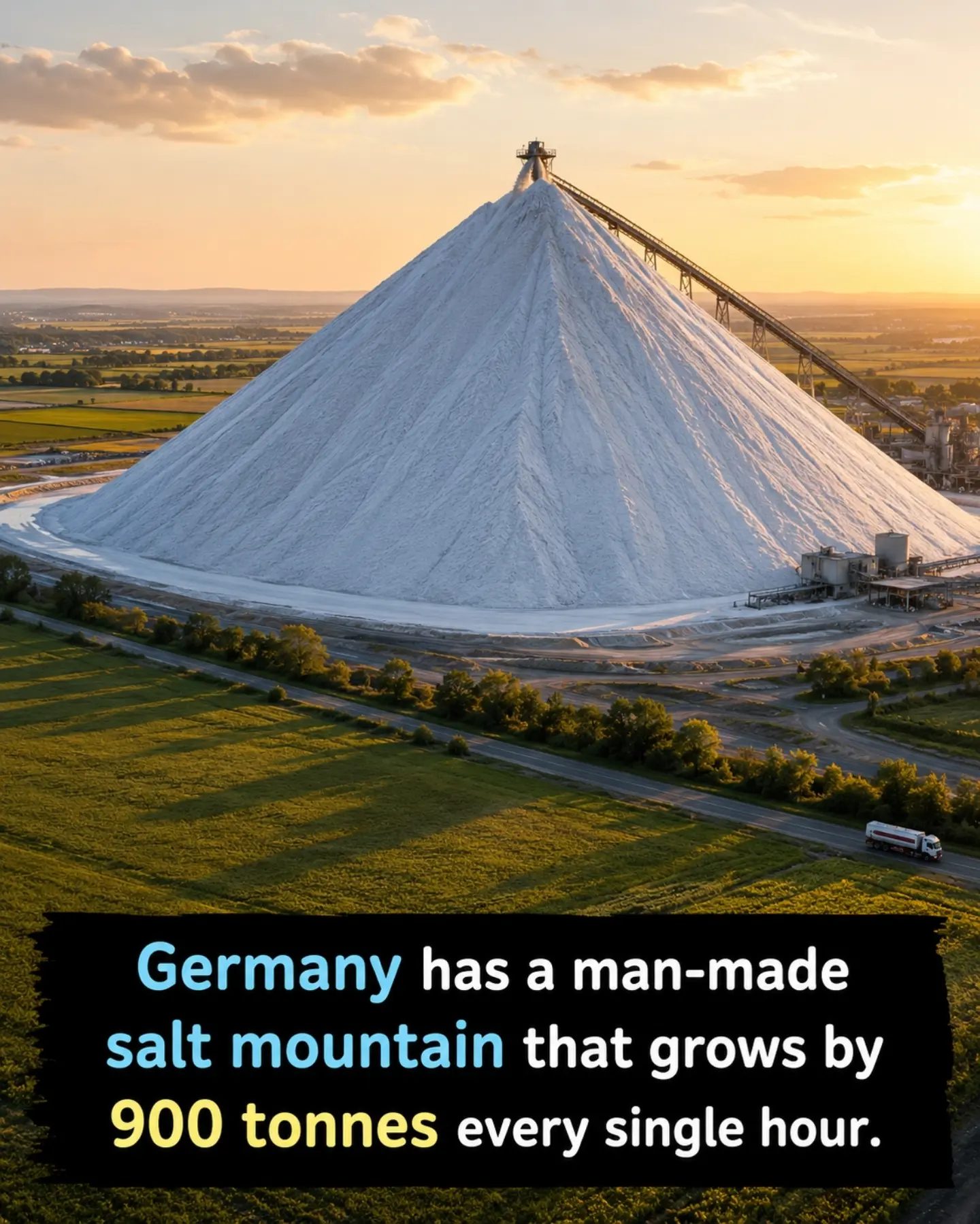
Germany's Man-Made Salt Mountain
Germany is home to a unique geological marvel: a man-made salt mountain that grows by 900 tonnes every hour. This astonishing feat of engineering and natural processes combines to create a landscape unlike any other.
Why This Mountain Matters
The existence of a man-made salt mountain in Germany is a testament to the country's rich history in salt mining and processing. Salt has been a valuable resource for centuries, used for everything from seasoning food to preserving it and even as a form of currency. Understanding how this mountain came to be and how it continues to grow provides insight into the industrial processes that have shaped Germany's landscape and economy.
The Formation and Growth of the Salt Mountain
Historical Context
The story of Germany's salt mountain begins with the country's extensive salt mining operations. Germany has a long history of salt extraction, with evidence of salt production dating back to at least the Bronze Age. Over time, as mining techniques advanced, the demand for salt increased, leading to the development of more efficient methods of extraction and processing.
The Mining Process
The salt mountain is a byproduct of modern salt mining and processing techniques. When salt is extracted from the ground, it is often in the form of rock salt, which is then refined into table salt or other forms of salt used in various industries. The process of refining salt involves separating the pure salt from impurities, which are typically discarded. However, in the case of Germany's salt mountain, these impurities are not discarded but instead are piled up to form a mountain.
The Growth Mechanism
The growth of the salt mountain is a continuous process. As new salt is extracted and refined, the impurities are added to the mountain, causing it to grow. The rate of growth is staggering, with the mountain increasing by 900 tonnes every hour. This growth is a result of the massive scale of salt production in Germany, where salt is extracted from underground mines and processed in large industrial facilities.
The Impact on the Local Environment
Landscape Changes
The presence of a salt mountain has significantly altered the landscape in the surrounding area. The mountain stands out against the backdrop of the sunset, creating a striking contrast between the white salt and the natural environment. This transformation has had both positive and negative impacts on the local ecosystem, with changes in soil composition and water flow patterns.
Environmental Concerns
While the salt mountain is a fascinating sight, it also raises concerns about environmental impact. The accumulation of salt and impurities in one location can have unforeseen consequences for the local environment. For instance, the leaching of salt into the soil and groundwater can affect plant growth and wildlife habitats. Additionally, the constant growth of the mountain requires careful management to prevent environmental degradation.
Practical Tips for Visiting
Best Time to Visit
If you plan to visit the salt mountain, the best time to do so is during the late afternoon or early evening. The sunset provides a beautiful backdrop, enhancing the visual appeal of the mountain. However, it's important to check the weather conditions before visiting, as rain can make the area slippery and dangerous.
What to Bring
When visiting the salt mountain, wear comfortable shoes suitable for walking on uneven surfaces. Bringing a camera is also a good idea, as the sight of the mountain against the sunset is a memorable experience. Additionally, consider carrying water and snacks, especially if you plan to stay for an extended period.
Safety Precautions
Safety is paramount when visiting the salt mountain. The mountain is an active industrial site, and visitors should follow all safety guidelines provided by the authorities. Stay on designated paths and avoid areas marked as off-limits. Be cautious of falling debris and keep an eye out for any signs of instability in the mountain's structure.
Important Takeaways
The man-made salt mountain in Germany is a fascinating example of how industrial processes can shape the landscape. Its growth by 900 tonnes every hour highlights the scale of salt production in the country and the engineering feats required to manage such a resource. Visiting the mountain provides a unique opportunity to witness this natural and industrial marvel firsthand, but it also serves as a reminder of the delicate balance between human activity and environmental sustainability.
Conclusion
Germany's man-made salt mountain is a remarkable sight, growing continuously due to the country's extensive salt production. Understanding its formation, growth, and impact on the environment provides valuable insights into the intersection of industry and nature. Whether you're visiting for its unique beauty or studying its environmental implications, the salt mountain is a testament to the complex relationship between human activity and the natural world.
Questions readers ask
How does Germany's man-made salt mountain grow at such a rapid rate?
The salt mountain in Germany grows due to the continuous deposition of salt from extensive mining and processing operations. As miners extract salt from underground deposits, the waste salt is piled up, creating a mountain that increases by 900 tonnes every hour.
What is the significance of the salt mountain to Germany's industrial landscape?
The salt mountain is a striking example of how industrial processes have altered Germany's landscape. It serves as a visual representation of the country's long history in salt mining and processing, which have significantly contributed to its economy and infrastructure.
How long has salt mining been a part of Germany's history?
Salt mining in Germany spans thousands of years, highlighting its historical importance. This industry has evolved over time, with modern techniques allowing for efficient extraction and processing, which in turn has led to the formation of unique geological features like the growing salt mountain.
What are the primary uses of salt that have driven Germany's mining industry?
Salt has been a crucial resource for centuries, used extensively for seasoning and preserving food, as well as in various industrial processes. It has also served as a form of currency, further underscoring its importance in Germany's economy and industry.
Can visitors experience the salt mountain firsthand?
While there may not be specific tours to the salt mountain, visitors can explore nearby salt mines and museums that offer insights into Germany's rich salt mining history. These sites often provide guided tours and exhibits that showcase the processes involved in salt extraction and production.
How has the salt mountain impacted Germany's economy?
The salt mountain is a byproduct of an industry that has historically driven Germany's economy. The extraction and processing of salt have created jobs, stimulated local economies, and contributed to the country's industrial growth, making it a notable feature of Germany's economic landscape.
What are some unique features or experiences related to the salt mountain?
While the salt mountain itself may not offer direct tours, visitors can enjoy the stunning landscapes it creates, especially during sunset. Additionally, nearby attractions often feature salt-themed activities, such as salt spas and salt mines that offer underground tours, providing a comprehensive experience of Germany's salt industry.
Recent articles
Fresh deep dives from the latest Reels we unpacked.




Comments
Be the first to comment.