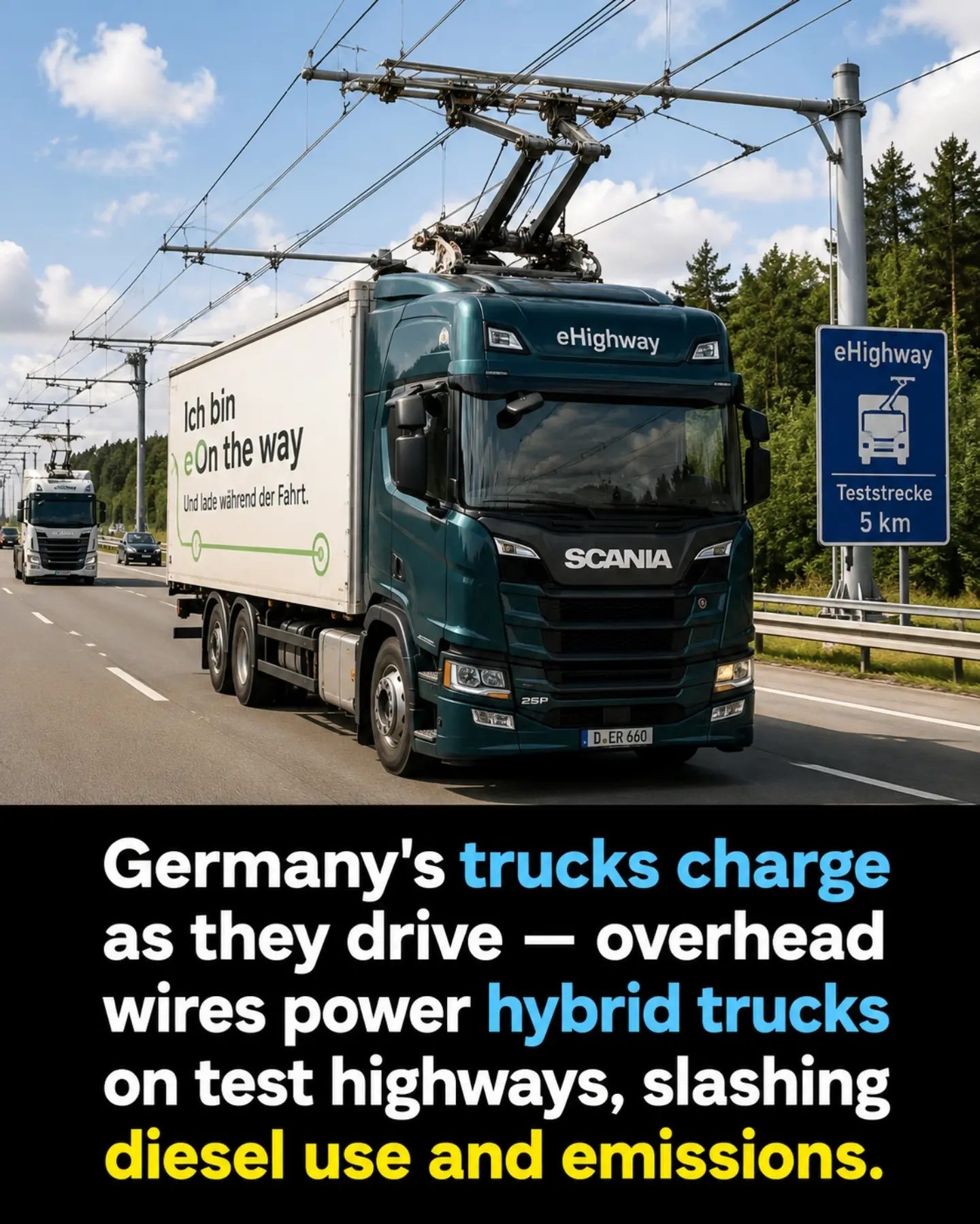
Electric Truck Charging
Electric and hybrid trucks are increasingly important in the transportation sector. One innovative approach to reducing emissions from heavy-duty trucks is the use of overhead power lines, a concept being tested in Germany. This technology, known as "eHighway," allows trucks to charge while they are in motion, significantly reducing the need for diesel fuel.
Context/Why This Matters
The transportation sector, particularly the trucking industry, is a significant contributor to global emissions. Traditional diesel-powered trucks emit large amounts of greenhouse gases and other pollutants. Transitioning to electric and hybrid trucks can help mitigate these environmental impacts. However, the range and charging infrastructure for electric trucks remain significant challenges. The eHighway system addresses these issues by providing a continuous power supply to electric trucks, allowing them to travel long distances without the need for frequent charging stops.
Main Discussion
The Concept of eHighway
The eHighway system involves installing overhead power lines along designated highways. These lines provide power to electric trucks equipped with a pantograph, a device that collects electricity from the overhead wires. This system allows trucks to charge while driving, effectively providing an unlimited range for electric vehicles. This concept is particularly useful for long-haul trucking, where the need for frequent charging can be a significant barrier to adopting electric vehicles.
How It Works
In the eHighway system, the trucks use a combination of electric power and diesel or hybrid systems. When the truck is on a designated eHighway, it can draw power from the overhead lines, minimizing the use of diesel. This hybrid approach ensures that the truck can still operate efficiently when not on the eHighway, providing flexibility and reliability.
The system is already being tested on a 5 km stretch of highway in Germany. The test stretch, known as "Teststrecke 5 km," allows researchers and engineers to gather data on the performance and efficiency of the eHighway system. The goal is to refine the technology and eventually expand it to longer stretches of highway, making it a viable option for commercial trucking.
The Role of SCANIA
SCANIA, a leading manufacturer of trucks and buses, is one of the companies involved in testing the eHighway system. The company has developed hybrid trucks that can draw power from the overhead wires, reducing their dependence on diesel. SCANIA's participation in the project underscores the potential of this technology and its commitment to sustainable transportation solutions.
Practical Tips
If you're interested in the potential of electric and hybrid trucks, consider the following tips:
Understand the Infrastructure
Before investing in electric or hybrid trucks, it's essential to understand the available charging infrastructure. While the eHighway system is still in the testing phase, it's important to stay updated on its development and potential expansion. Knowing the available charging stations and their capabilities can help you make informed decisions about adopting electric vehicles.
Consider the Benefits
Electric and hybrid trucks offer numerous benefits, including reduced emissions, lower fuel costs, and lower maintenance costs. By understanding these benefits, you can make a strong business case for adopting electric vehicles. Additionally, consider the potential for long-term cost savings and environmental benefits.
Stay Informed
The technology for electric and hybrid trucks is evolving rapidly. Stay informed about the latest developments and trends in the industry. This will help you make informed decisions about adopting electric vehicles and ensure that you are taking advantage of the latest innovations.
Important Takeaways
- The eHighway system allows trucks to charge while in motion, reducing the need for diesel fuel.
- The system is currently being tested in Germany on a 5 km stretch of highway.
- SCANIA is one of the companies involved in testing the technology, developing hybrid trucks that can draw power from overhead wires.
- The eHighway system offers numerous benefits, including reduced emissions, lower fuel costs, and lower maintenance costs.
Conclusion
The eHighway system represents a significant step forward in the development of sustainable transportation solutions. By allowing trucks to charge while in motion, the system can help reduce emissions and lower fuel costs. As the technology continues to evolve, it has the potential to revolutionize the trucking industry, making electric and hybrid trucks a viable option for long-haul transportation. Stay informed about the latest developments and consider the potential benefits of adopting electric vehicles for your business.
Questions readers ask
How does the eHighway system in Germany work?
The eHighway system in Germany uses overhead power lines to supply electricity to specially equipped trucks. These trucks are fitted with a pantograph, similar to those used on electric trains, which connects to the power lines, allowing the trucks to charge while driving. This setup enables continuous electric power supply, reducing the need for diesel fuel and lowering emissions.
What are the benefits of the eHighway system for the environment?
The eHighway system helps reduce greenhouse gas emissions and other pollutants generated by diesel-powered trucks. By providing a continuous electric power supply, it decreases the dependence on fossil fuels, contributing to a cleaner and more sustainable transportation sector.
Which company is involved in the eHighway project in Germany?
SCANIA is one of the key companies involved in the eHighway project in Germany. They have developed and tested electric trucks equipped with pantographs that can connect to the overhead power lines, enabling them to charge on the move.
Can all trucks use the eHighway system?
Not all trucks can use the eHighway system. Only trucks that are specially equipped with a pantograph can connect to the overhead power lines. These trucks are designed to handle the electrical power supply while in motion, making them compatible with the eHighway infrastructure.
What happens when a truck reaches the end of the eHighway?
When a truck reaches the end of the eHighway, it typically disengages from the power lines and continues to run on battery power or diesel, depending on the truck's specifications. Alternatively, some trucks might switch to a different mode of operation, such as hybrid mode, to ensure they can complete their journey efficiently.
What are the plans for the future of the eHighway system in Germany?
The future plans for the eHighway system in Germany involve expanding the network of electric highways to cover more routes, encouraging more truck manufacturers to develop compatible vehicles, and integrating the system with other green technologies. The ultimate goal is to create a more sustainable and efficient trucking sector across the country.
Related deep dives
Similar reads based on topic and creator.

Recent articles
Fresh deep dives from the latest Reels we unpacked.




Comments
Be the first to comment.