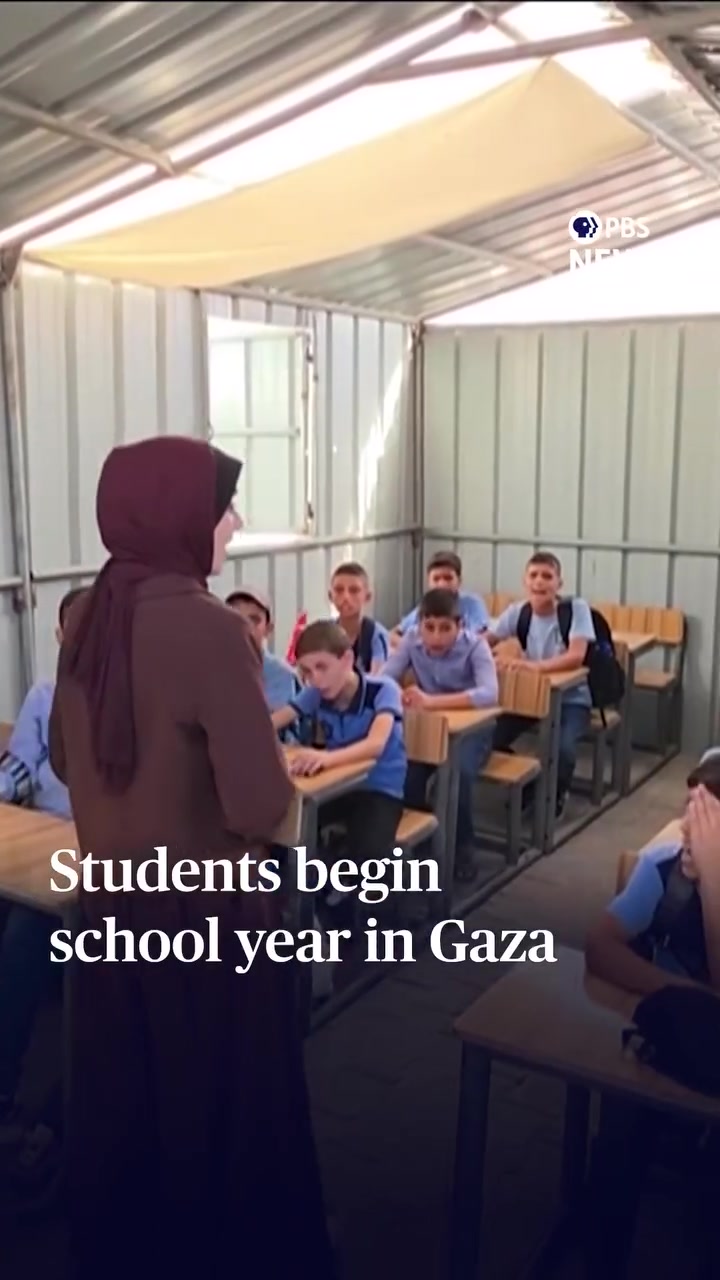
Many students attend school in tents — an adaptation born of necessity. In Gaza, more than 280,000 children began the new school year in tents in place of classrooms. The change is not a choice but a necessity of a reality where fewer than 5% of school buildings remain.
The Tent School Phenomenon
The tents serve as makeshift classrooms, replacing the schools lost to bombardment and war. They are part of a larger effort to patch together an educational environment that barely resembles what it was three years ago. The tents are used as classrooms, but also as shelters where displaced people sleep. The task is to restore education to its pre-war state by adapting to a harsh new reality. Given this it is remarkable to see the efforts to organize school life, with morning assemblies and hopeful wanting of normalcy. Students reflect that their past school experiences were disrupted and then replaced with "stray bullets, rockets, strikes, everything." Emotional effects of war are evident and the environment is also missing some basics such as desks, necessary stationery, and schoolbooks. More than 95% of UNRWA schools have been lost, leaving the remaining schools to be used by displaced people. The students who have been out of school for three years experience significant learning loss. However, the community's commitment to education endures. Inside these tents, students are seen as hopeful and willing to continue their education.
An Answer to Conflict and Displacement
The tent schools of Gaza are a tangible answer to the challenges of conflict and displacement. Education is a fundamental right, but in Gaza, it has become a battleground. Students must navigate their education while learning amidst war which drains basic learning tools. Normal school supplies are difficult to obtain, and the infrastructure of schools themselves may be completely gone. For those who are displaced, gaining access to education can be in tents, treated as shelters. The school tent and tents as classrooms are a first step to solutions often driven by organizations like the UNRWA. Organisations often funnel their efforts into seeking building materials and supporting teachers who attempt to rebuild their curriculums. It is not the idealized educational experience, but it is an endeavor towards rebuilding a normal life.
Standing Up to Loss
In the early hours of dawn, the children of Gaza wake up and attend their classes in tents. They have learned to greet their school lives with hope, despite the war around them. Difficulties are starting to be addressed — PTSD, new methods of learning, and restoring educational supplies. They have missed "many things" like morning assemblies, desks, stationery, station books, and teachers. The students are missing, then, the basics of a normal, pre-war school life. The loss is manifold. Three years ago, UNRWA had 182 fully equipped schools, but more than 95% have been lost. The transition to tents is not a temporary fix but a reality.
Where Does Fund Allocation Go?
The schools in Gaza operate in the face of severe fiscal challenges. Only a few of them are equipped to house the students comfortably. The very few that remain must cohabit with displaced people. The supply lines for necessities such as school books and stationery are often cut off due to the war. It is no surprise that UNRWA needs more support; these resources, when available, are used to make up for the learning loss. This involves more than just classes in tents. It involves learning through phones and manuals so that students can continue their education.
Making Friends Amidst Adversity
Despite the harsh wartime conditions, the educational system in Gaza thrives on a sense of community and resilience. Students welcome the new school year with hope, the school tent education is not ideal but they still hope to find more machinery to sustain their dreams. The fires of war are a backdrop, and their stories are marked by displacement, loss, and trauma. But the collective spirit of education and resilience is strong. It is a testament that the determination in students remains that they, “want to achieve [their] dream from before the war, and to start all over again. Make friends, participate with others, and God willing, we will rise higher.”
Advocating For Change
Those who want to help the education system in Gaza can support several initiatives. The struggle for basic needs like a school tent, building materials, and educational supplies is perennial. Financial support can help the UNRWA to rebuild and support more schools. The challenge is compounded by funding that is necessary for necessities.
- Donate Financially: Support organizations providing educational supplies, rebuilding efforts, and teacher training in Gaza.
- Advocate for Policy Change: Raise awareness and push for policies that prioritize the rebuilding and protection of educational infrastructure in conflict zones.
- Volunteer Resources: Offer specialized skills, such as teaching or construction expertise, to aid in the rebuilding and educational efforts.
- Join Awareness Campaigns: Participate in and amplify campaigns that highlight the importance of education in conflict zones and the challenges faced by students in Gaza.
A Tent School's Enduring Legacy
Gaza's tent schools are a testament to resilience and hope. They are a beacon for thousands of displaced youth, offering a glimmer of hope for a better future. The tent classrooms are not just a physical space but a symbol of a community's unwavering commitment to education. At the end of what is recognised as a normal day, students can be in the same room as their peers. They can start their lessons with their teachers, and look forward to a brighter tomorrow.
Questions readers ask
Why did students in Gaza have to start attending school in tents?
Due to the extensive damage caused by war, only 5% of school buildings in Gaza remain. This forced students to use makeshift tents as classrooms, as over 280,000 children began the new school year in these temporary spaces.
How are these tent schools organized and what do they lack?
The tent schools serve as both classrooms and shelters for displaced people. They lack basic amenities like desks, stationery, and schoolbooks. The tents are part of a broader effort to maintain education in a war-torn region, with students participating in morning assemblies and other school routines.
What role do organizations like the UNRWA play in Gaza's tent schools?
Organizations like the UNRWA are crucial in supporting the tent schools. They help provide building materials, support teachers in rebuilding curriculums, and are a key part of the efforts to restore education to its pre-war state, despite the challenges.
How has the war affected the emotional well-being of Gaza's students?
The war has had a significant emotional impact on the students. Many have experienced PTSD and have had their past school experiences disrupted by violence. Despite these challenges, the students remain hopeful and committed to continuing their education.
What specific challenges do students face in these tent schools, and how do they cope?
Students face a multitude of challenges, including the loss of basic educational supplies, disrupted learning, and the emotional toll of living in a war zone. They cope by maintaining a sense of normalcy through routines like morning assemblies and by showing resilience in their commitment to education.
How has the educational infrastructure in Gaza changed since the start of the war?
Before the war, UNRWA had 182 fully equipped schools, but more than 95% have been destroyed. The transition to tents is not temporary but a new reality, with students attending classes in makeshift shelters.
What efforts are being made to address the learning loss experienced by students who have been out of school for three years?
Efforts are being made to address learning loss through adapted curriculums and the support of organizations like UNRWA. The focus is on rebuilding education in the face of severe challenges, with the aim of restoring a sense of normalcy and continuity in the students' educational experience.
Related deep dives
Similar reads based on topic and creator.


Recent articles
Fresh deep dives from the latest Reels we unpacked.




Comments
Be the first to comment.