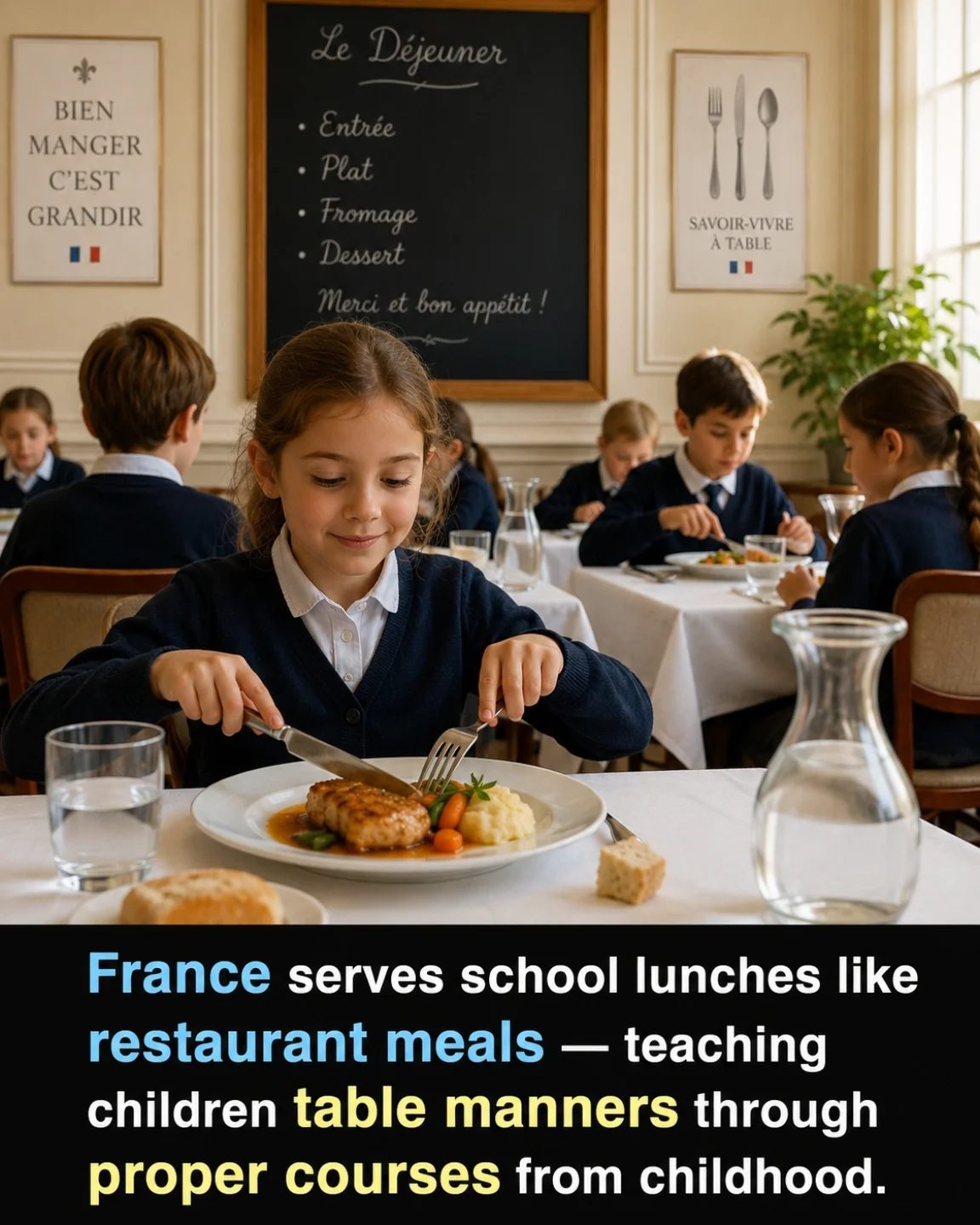
French School Lunch Etiquette
French school lunches are renowned for their structured approach to teaching children table manners, which are integral to the broader French tradition of dining etiquette. This structured approach is deeply rooted in the belief that learning proper etiquette from a young age is crucial for personal development and social integration. Unlike many other countries where school meals are often simple, quick, and less structured, France serves school lunches in a manner similar to a restaurant. Children in France learn to appreciate and respect the dining experience through a multi-course meal served in a formal setting.
Why This Matters
Etiquette education in France is not just about teaching children how to hold a fork correctly; it is about instilling a culture of respect, discipline, and refinement. This approach to schooling has significant implications for the overall development of children, as it helps shape their behavior and social interactions from an early age. Understanding why France places such importance on these structured lessons can offer valuable insights into the broader cultural values and educational philosophy of the country.
Main Discussion
The Structure of French School Lunches
French school lunches are meticulously planned and executed, often involving multiple courses. The dining environment resembles that of a restaurant, with children seated at tables, awaiting the arrival of dishes prepared by trained cafeteria staff. The structure of these meals is designed to instill a sense of discipline and respect for the dining process.
Multi-Course Meals
A typical French school lunch consists of multiple courses, including starters, main dishes, and desserts. This format allows children to become familiar with various types of food and the appropriate utensils for each course. For example, they learn to use a fork for the main course, a spoon for soups, and even a knife and fork for cutting meat. This hands-on experience with different types of foods and utensils helps children develop fine motor skills and a deeper appreciation for different types of cuisine.
Table Setting and Manners
In addition to the multi-course format, French schools place a strong emphasis on proper table setting and manners. Children are taught how to set the table correctly, including the placement of utensils, glasses, and napkins. They are also taught how to handle utensils properly, how to chew with their mouths closed, and how to keep their elbows off the table.
The Role of Teachers
Teachers play a crucial role in this structured approach to dining. They are often involved in teaching table manners and etiquette through dedicated courses. These courses are designed to reinforce the importance of respect, patience, and discipline. Teachers use various methods, including role-playing and guided practice, to teach children the nuances of proper dining etiquette.
The Importance of Etiquette Education
In France, etiquette is not just about manners; it is about social norms and cultural values. Teaching children proper etiquette from a young age helps them integrate into society more smoothly. It also fosters a sense of respect and consideration for others. Children who learn these skills early on are more likely to carry them into adulthood, contributing to a more harmonious and respectful society.
Practical Tips
At-Home Practice
For those looking to incorporate similar practices into their daily routines, teaching children table manners at home can be a beneficial exercise. Start with simple lessons, such as correct utensil use and proper table setting. Gradually introduce more complex skills, like using a knife and fork correctly and understanding the sequence of a multi-course meal.
Role-Playing
Engage in role-playing activities to make the learning process more enjoyable. Pretend to be in a restaurant setting and practice ordering food, placing orders correctly, and handling different types of utensils and dishes. This method not only teaches children the necessary skills but also makes the process fun and engaging.
Encourage Independence
Allow children to set the table and serve themselves, encouraging independence and responsibility. This approach helps them understand the importance of each role in a structured dining environment. It also promotes a sense of ownership and pride in their actions.
Important Takeaways
-
Early Learning: The importance of teaching children proper table manners from a young age cannot be overstated. This early education helps shape their behavior and social interactions throughout their lives.
-
Structured Environment: The structured approach to dining in French schools, which includes multi-course meals and proper table setting, is a key factor in the success of this educational method.
-
Cultural Significance: Etiquette education in France goes beyond mere manners; it is deeply rooted in cultural values and social norms, contributing to a more respectful and harmonious society.
Conclusion
The French tradition of structured school lunches serves as a powerful example of how education can shape children's behavior and social interactions. From the multi-course meals to the emphasis on table manners and proper table setting, every aspect of this practice is designed to instill values of respect, discipline, and refinement. By adopting similar practices at home and in educational settings, parents and educators can help children develop a deeper appreciation for dining etiquette and the broader cultural values it represents.
Questions readers ask
Why do French schools serve multi-course meals to students?
French schools serve multi-course meals to students to mimic a restaurant dining experience, and to teach children how to appreciate and respect the dining process. This approach also helps children learn discipline and patience, as well as to develop a broader understanding of food and its preparation.
At what age do French children begin learning dining etiquette at school?
French children typically begin learning dining etiquette at school around the age of three, when they start attending maternelle (preschool). This early start is designed to instill good habits and foster a sense of discipline from a young age.
How does the structured dining approach in French schools benefit children?
The structured dining approach in French schools benefits children by teaching them essential life skills, such as the importance of patience, discipline, and respect for others. It also encourages them to try new foods and fosters a sense of independence and responsibility.
What is the role of teachers in enforcing dining etiquette in French schools?
Teachers in French schools play a crucial role in enforcing dining etiquette by modeling proper behavior, teaching children the correct use of utensils, and ensuring that meals are served in a structured, multi-course format. They also help to create a calm and respectful environment during mealtime.
How does the French school lunch routine differ from that of other countries?
Unlike many other countries, French school lunches are designed to resemble a restaurant dining experience, with a focus on proper etiquette and a structured, multi-course meal. This approach emphasizes discipline, respect, and personal development, reflecting broader French cultural values.
Are there specific rules for a child's behavior during a school lunch in France?
Children in France are expected to follow specific rules during school lunches, such as standing when an adult enters the room, sitting up straight and keeping elbows off the table, remaining seated while eating, and asking for permission to leave the table. These rules help to create a formal and respectful dining environment.
What are the broader benefits to a structured school lunch program?
A structured school lunch program, like the one in France, helps children develop a deeper appreciation for food, understand the importance of a balanced diet, and learn how to navigate social settings with confidence and grace. The structured approach encourages mindfulness, communication, and a sense of community, all of which are essential for a child's overall development.
Related deep dives
Similar reads based on topic and creator.




Recent articles
Fresh deep dives from the latest Reels we unpacked.



Comments
Be the first to comment.