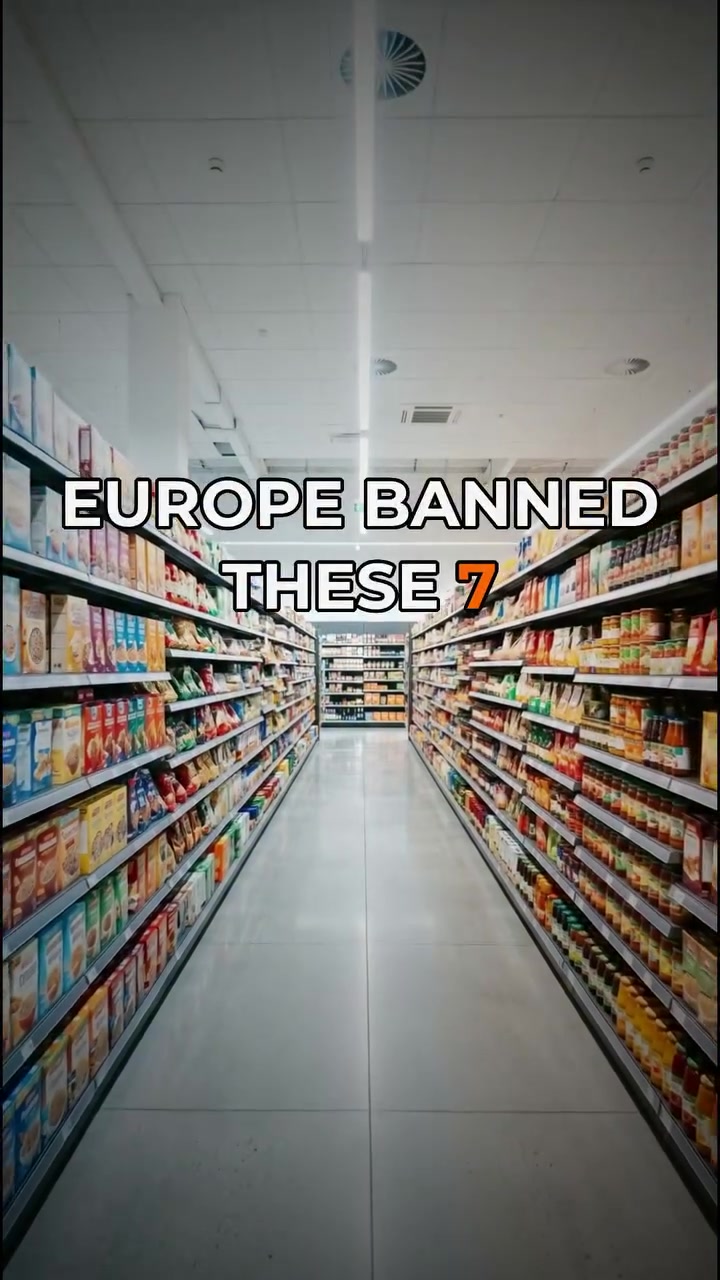
Banned in Europe, Legal in the US
The European Union and the United States have starkly different opinions on what goes into food. In the US, several ingredients banned in Europe — as well as the UK — are still used in American products. These ingredients are present in everyday items from packaged cakes and kids' sweets to fizzy drinks, all approved by the FDA despite potential health concerns. These differing regulations highlight a broader issue: what constitutes safe food in the US vs Europe. From additives like potassium bromate to chemical preservatives, the US allows a variety of substances American consumers might want to scrutinize.
The Transatlantic Foods Banned on Europe's Shelves
Europe’s food regulations are notably stricter than those in the US, many concerning additives and preservatives that were originally banned due to suspected carcinogenic risks in animals.
- Potassium bromate softens bread dough and strengthens it before baking. Though the US Food and Drug Administration (FDA) keeps it legal, readily available in shop-breads, the EU and the UK recognized it as carcinogenic in 1990.
- Propyl paraben, a preservative in packaged cakes, which gives it a fresh appearance for weeks, was banned from food in 2006 by the EU. The FDA still allows it.
- Azodicarbonamide (used in yoga mats) was banned across Europe, but still in American breads.
- Titanium dioxide, a factor in making kids’ sweets whiter, was banned in the EU in 2022 — yet the FDA considers it safe.
- The FDA approved growth hormone in American milk after Europe banned it in 1990 over cows’ health risks.
- Brominated vegetable oil, something that keeps fizzy drinks from separating, was banned in Britain in 1970. America didn't follow suit until 2024.
- European countries restricted Red dye 3 for decades. The FDA banned it in January 2025.
Europe's Zero Tolerance for Certain Additives
A significant difference between the two continents is the strictness in tolerable limits of carcinogens.
The 1990s and Europe’s Strict Carcinogen Limits
The European Union took a strong stance in the 1990s. It banned potassium bromate — found in breads — in 1990. Twenty-two years later, the EU also outlawed propyl paraben, a chemical preservative in packaged cakes. It had also banned the use of azodicarbonamide, a banned polymer and dough conditioner in bread.
The EU vs FDA on Titanium Dioxide
The EU banned Titanium dioxide, a whitener, as of 2022. The FDA’s stance was different. The FDA announced it would not ban titanium dioxide (E171) until there's further research. Its use as a food additive is “generally recognized as safe.” Nonetheless, it’s been linked to cancer in animal testing.
A Long, Slow Shift in America
- Red Dye 3 has been on the US market since the 1800s; Europe banned it in 1976, but the FDA only caught up in 2025. Similarly, America is 54 years behind on Brominated vegetable oil regulations, Britain outlawed it in 1970 and the FDA in 2024.
Legality vs Safety
There are interesting discussions about safety in the US. The FDA’s 1990 approval of recombinant bovine somatotropin (rBST) over Europe’s ban of it since 1990. rBST, a growth hormone used to increase milk production in dairy cows. The FDA deemed Red 3 safe despite studies in the 1970s linking it to cancer in mice. The agency changed its stand in 2025, following Europe’s footsteps.
Which Stores Protect Their Shoppers?
Despite the FDA's final word on additives, food-store chains vary in their labelling practices.
Discriminating Shoppers: Natural vs GMO
Products labelled as natural, organic or GMO-free start from scratch: no synthetic additives. They're cheaper in countries like the EU. The strict regulations there lead to organic labels on products. Brands stay transparent on countries.
- Kroger offers organic labels and checks for every banned additive.
- Target mandates food-safety checks, but labels are vague.
So, What's in Your Groceries?
Potassium bromate, titanium dioxide, propylparaben, azodicarbonamide, brominated vegetable oil, growth hormones, and red dye 3: You may be consuming these, even though Europe has banned them.
7 Reported on Ingredients
Potassium Bromate
- Ingredients: All-Purpose Flour, Unbleached Enriched White Bread Flour, Bleached Wheat Flour, Self-Rising Flour.
- Chemical: Enhances dough elasticity. Often found in "bleached" flour.
- Status: Illegal in the EU. Legal in the U.S.
- Alternatives: Yeast, salt, and gluten.
Propyl Paraben
- Ingredients: Chocolate Glazed Lemon Cake:
- Chemical: Preservative with multiple health risks.
- Status: Illegal in Europe, legal in America.
Azodicarbonamide
- Ingredients: Softened Bread, Frozen Bread, Cactus Bread.
- Chemical: Banned by the EU, it is a dough conditioner and polymerization accelerator used in plastics (like yoga mats).
- Status: Illegal in Europe, legal in America.
Titanium Dioxide
- Ingredients: Canned Beans, Snack Bars, Yogurt.
- Chemical: Dioxide present in many kinds of white powder.
- Status: Illegal in Europe, legal in America. Causes cancer in animals.
Brominated vegetable oil
- Ingredients: To prevent separation in drinks like Mountain Dew.
- Chemical: Thought to reduce fertility and brain development.
- Status: Illegal in the EU and U.S. until 2024.
Growth Hormone
- Ingredients: Dairy Products.
- Chemical: Used to spike milk production in cows.
- Status: Illegal in Europe but legal in the US.
Red 3
- Ingredients: Pastries, Cake, Ice Cream.
- Chemical: Thought to cause cancer (though mice data doesn't align with humans).
- Status: Illegal in Europe and the U.S. since 2025. Legal in the U.S. for decades.
Shopping Smarter
- Diet: going organic is the best way to avoid harmful chemicals.
- Purchasing: Reading ingredient lists on food packaging gives consumers valuable info. Packaging lists allergens and ingredients; products in the EU frequently display additives. When in doubt, check ingredient labels.
- Sustainability: Organic, local foods often avoid artificial additives. The ingredients have cleaner labels and often fewer chemicals.
Questions readers ask
Why are there so many additives in American food that are banned in Europe?
The US and Europe have different regulatory standards for food additives. The US FDA approves many additives that the EU has banned due to potential health risks, including carcinogenic concerns. This discrepancy is partly due to differing interpretations of scientific research and varying levels of consumer protection prioritization.
What are some specific examples of additives banned in Europe but allowed in the US?
Some notable examples include potassium bromate, which is used in bread dough, and propyl paraben, a preservative in packaged cakes. Other additives like azodicarbonamide, titanium dioxide, and brominated vegetable oil are also allowed in the US but banned in Europe due to health concerns.
Is it safe to consume foods with these additives if I'm in the US?
The safety of these additives is a matter of debate. The FDA considers many of them safe, but European regulations are stricter due to potential health risks. If you're concerned, it's a good idea to check ingredient labels and opt for products that avoid these additives.
Why did the FDA take so long to ban certain additives like Red Dye 3 and Brominated vegetable oil?
The FDA's process for evaluating and regulating food additives can be lengthy. It involves reviewing scientific research and considering potential health risks. In the case of Red Dye 3 and Brominated vegetable oil, the FDA took decades to catch up with European regulations, which had already banned these additives due to health concerns.
What can I do if I want to avoid these additives in my diet?
To avoid these additives, you can start by reading food labels carefully and choosing products that do not contain them. Additionally, opting for organic or non-GMO products can sometimes help, as these products often have stricter standards for additives and preservatives.
Why does the US allow growth hormones in milk while Europe does not?
The US FDA approved recombinant bovine somatotropin (rBST), a growth hormone, in 1990. This decision was based on research indicating it is safe. However, Europe banned it due to concerns about the health of cows and potential risks to human health.
What are the potential health risks associated with these additives?
The potential health risks vary by additive. For example, potassium bromate and titanium dioxide have been linked to cancer in animal testing. Propyl paraben and azodicarbonamide have also raised concerns due to their chemical properties and potential health impacts. It's important to note that the FDA considers these additives safe within certain limits, but European regulations are more cautious.
Related deep dives
Similar reads based on topic and creator.


Recent articles
Fresh deep dives from the latest Reels we unpacked.


Comments
Be the first to comment.