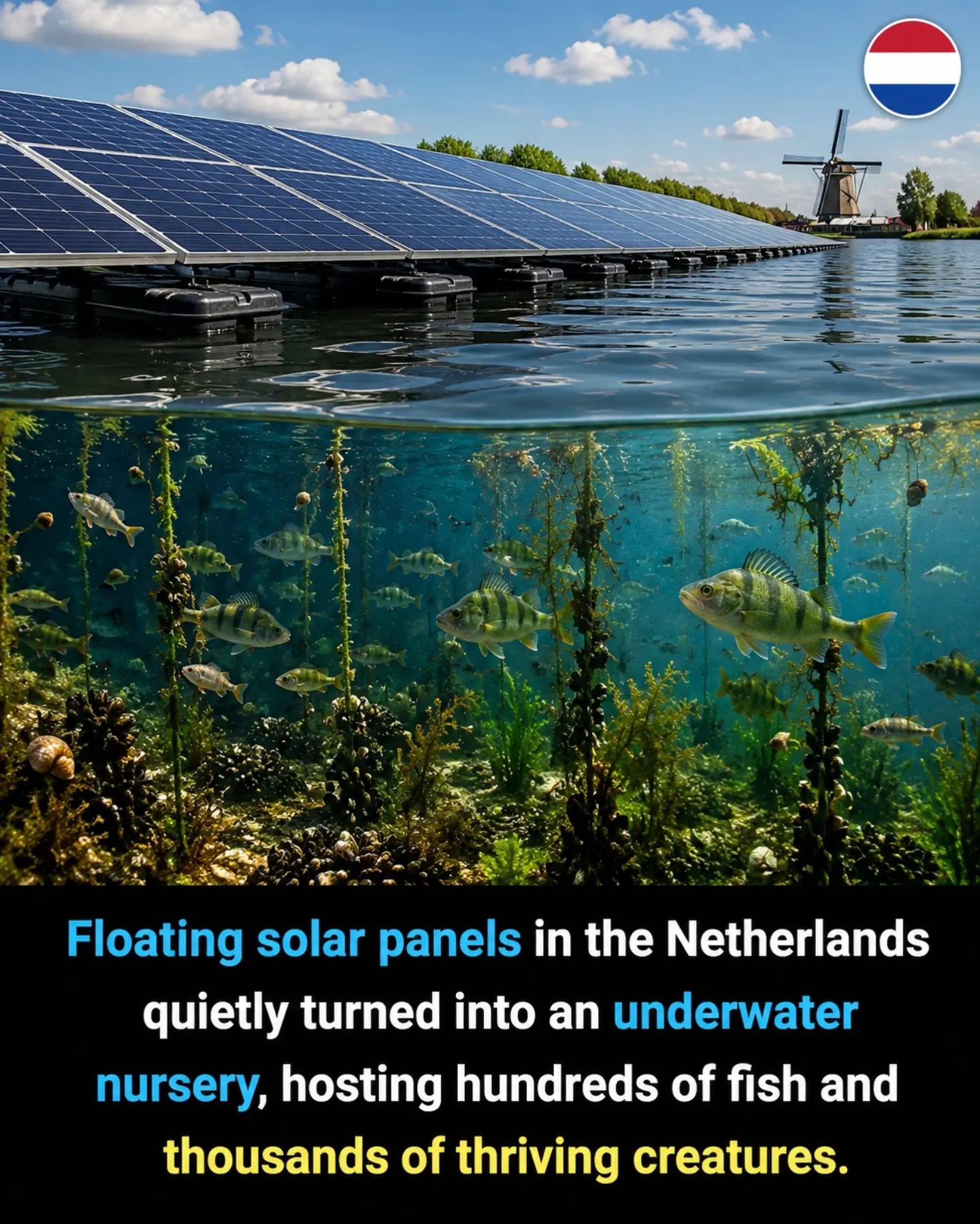
Floating Solar Panels and Underwater Ecosystems
Floating solar panels, also known as floatovoltaics (FPV), are increasingly being recognized for their dual benefits in renewable energy generation and environmental conservation. Recent innovations in the Netherlands showcase a unique application of these panels, where they not only generate clean energy but also foster a thriving underwater ecosystem.
Context/Chronology
Floating solar technology has seen significant growth in recent years as a response to the increasing demand for renewable energy and the need to conserve land. These systems typically involve placing solar panels on water bodies such as reservoirs, lakes, and even the sea. The Netherlands, known for its innovative approaches to sustainability, has implemented several of these projects, demonstrating the versatility and environmental benefits of FPV systems.
Unlike traditional ground-mounted or rooftop solar panels, floating solar panels offer several unique advantages. They reduce evaporation from water bodies, which can help conserve water. They also reduce the amount of land required for solar farms, minimizing the impact on local ecosystems. However, the recent discoveries in the Netherlands reveal an additional, unexpected benefit: the creation of underwater habitats for marine life.
Main Discussion
Environmental Impact
The floating solar panels in the Netherlands have inadvertently created an underwater nursery, hosting hundreds of fish and thousands of thriving aquatic creatures. This discovery highlights the positive environmental impact of these installations. The panels provide shade, which can help regulate water temperature and reduce algae blooms. Additionally, the structures offer shelter and breeding grounds for various aquatic species, contributing to biodiversity.
Economic and Social Benefits
Beyond their environmental advantages, floating solar panels offer economic and social benefits. By harnessing solar energy on water bodies, these systems can help reduce reliance on fossil fuels, contributing to energy security and reducing greenhouse gas emissions. Furthermore, the creation of underwater ecosystems can enhance local fisheries, providing additional economic benefits to nearby communities.
Technological Innovations
The successful implementation of floating solar panels in the Netherlands is a testament to advancements in renewable energy technology. These systems are designed to withstand harsh aquatic environments, ensuring durability and reliability. Innovations in panel materials, mounting structures, and mooring systems have made floating solar panels a viable option for various water bodies, including those with strong currents and wave action.
Challenges and Considerations
Despite their numerous benefits, floating solar panels present some challenges. Factors such as maintenance, water quality, and the potential impact on local ecosystems need careful consideration. Regular maintenance of the panels is crucial to ensure their longevity and efficiency. Cleaning and repairing the panels can be more challenging in an aquatic environment compared to traditional solar installations. Additionally, the impact of floating solar panels on water quality and local ecosystems requires ongoing research and monitoring.
Practical Tips
Planning and Design
When planning a floating solar project, it's essential to conduct a thorough site assessment. Factors such as water depth, current strength, wave action, and local weather patterns should be considered. The design of the floating solar system should also account for accessibility for maintenance and potential future expansions.
Installation
The installation of floating solar panels should be carried out by experienced professionals. Proper installation ensures the durability and efficiency of the system. Key considerations include the selection of appropriate mounting structures, mooring systems, and electrical connections.
Maintenance
Regular maintenance is crucial for the long-term success of floating solar projects. This includes cleaning the panels to remove any buildup of algae or debris, inspecting the mooring systems, and performing routine checks on the electrical components. Regular inspections can help identify potential issues early, preventing costly repairs and extending the lifespan of the system.
Monitoring and Evaluation
Ongoing monitoring and evaluation are essential for assessing the performance and environmental impact of floating solar panels. This includes tracking energy production, water quality, and the health of local ecosystems. Data from these assessments can inform future projects and help optimize existing installations.
Important Takeaways
Floating solar panels offer a versatile and environmentally friendly solution for renewable energy generation. Their unique benefits, such as water conservation and the creation of underwater habitats, make them an attractive option for countries like the Netherlands. By embracing innovative technologies and conducting thorough assessments, we can maximize the benefits of floating solar projects while minimizing their potential drawbacks.
Conclusion
The successful implementation of floating solar panels in the Netherlands demonstrates the potential of this technology to contribute to sustainable development. By understanding the environmental, economic, and social benefits, as well as the challenges and considerations, we can harness the full potential of floatovoltaics to create a greener, more sustainable future.
Questions readers ask
How do floating solar panels benefit underwater ecosystems?
Floating solar panels, or floatovoltaics, enhance underwater ecosystems by providing habitats for marine life, regulating water temperature, and conserving water. The shade created by the panels can help to stabilize and improve water quality.
What are the advantages of installing floating solar panels over land-based solar panels?
Floating solar panels offer several advantages, including reduced land use, conservation of water through decreased evaporation, and improved efficiency due to the cooling effect of water. Additionally, they can help mitigate algae blooms by reducing sunlight exposure to the water.
Can floating solar panels support marine life?
Yes, floating solar panels can support marine life by creating new habitats. The structures can attract various species, including fish and invertebrates, which thrive under the shaded and cooler environment provided by the panels.
How do floating solar panels help regulate water temperature?
Floating solar panels help regulate water temperature by providing shade, which reduces the amount of sunlight that directly hits the water's surface. This shading effect can help mitigate the impact of rising temperatures and prevent excessive evaporation.
What are some innovative implementations of floating solar panels?
The Netherlands has pioneered innovative implementations of floating solar panels, including large-scale solar farms on reservoirs and lakes. These installations not only generate clean energy but also contribute to the local ecosystem by supporting marine life and improving water quality.
Related deep dives
Similar reads based on topic and creator.




Recent articles
Fresh deep dives from the latest Reels we unpacked.



Comments
Be the first to comment.