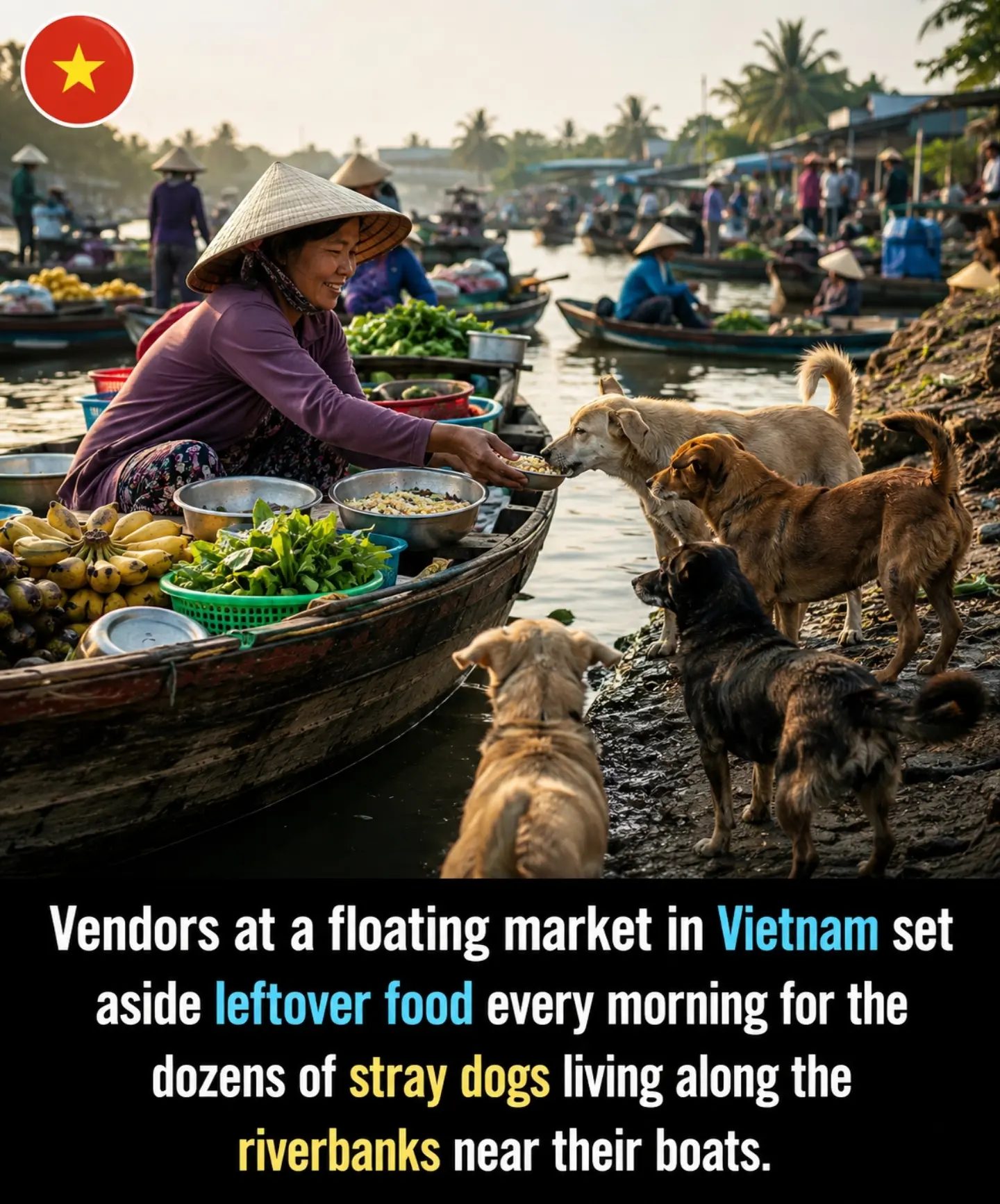
Floating markets are a vibrant and essential part of Vietnamese culture, offering a unique blend of commerce and community. These markets, where vendors sell goods directly from their boats, are not just a way of life but a spectacle that attracts both locals and tourists alike. The interaction between humans and animals in these markets is particularly noteworthy, with vendors often setting aside leftover food for stray dogs living along the riverbanks.
Why This Matters
Floating markets are more than just a sightseeing attraction; they are a lifeline for many communities in Vietnam. They provide a crucial source of income for vendors and a convenient marketplace for locals. Understanding the dynamics of these markets offers insights into the local culture, economy, and the unique bond between humans and animals in these settings.
The Role of Floating Markets in Vietnamese Culture
A Traditional Way of Life
Floating markets have been a traditional form of commerce for centuries. These markets are not just a means of trade but a pivotal part of the social fabric of rural and riverine communities. The markets operate on a schedule, often opening early in the morning, and vendors arrive with boats laden with fresh produce, seafood, and household goods. The hustle and bustle of these markets create a lively atmosphere that is both chaotic and charming.
The Daily Routine
Every morning, vendors set aside leftover food for the numerous stray dogs that inhabit the riverbanks. This practice is not just an act of kindness but an integral part of the market's daily routine. The dogs, accustomed to this routine, gather around the market area, awaiting their daily meal. This practice showcases the interconnectedness of humans and animals in these communities, where mutual coexistence is a norm rather than an exception.
The Interaction Between Humans and Animals
Feeding the Strays
The sight of stray dogs eagerly gathering around the market boats is a common and heartening one. Vendor's routine of setting aside food for these animals highlights a deep-rooted cultural practice. It's a practice that not only ensures the well-being of the strays but also reflects the vendors' sense of responsibility towards the community, even its unspoken members.
A Symbiotic Relationship
The relationship between the vendors and the dogs is symbiotic. The vendors benefit from having the dogs around, as they act as a natural deterrent against pests and rodents. In return, the dogs are provided with a daily meal, ensuring their survival in the bustling market environment. This mutual dependence is a testament to the harmonious coexistence of different species in these markets.
The Economic Significance
A Lifeline for Vendors
For many vendors, floating markets are the primary source of income. The ability to sell goods directly from their boats eliminates the need for costly storefronts, making it a more affordable and accessible way to conduct business. This affordability ensures that even those from marginalized backgrounds can participate in the market economy, contributing to the local and national economy.
Attracting Tourists
The unique appeal of floating markets has also made them a significant tourist attraction. Visitors from around the world flock to these markets, providing an additional revenue stream for vendors and contributing to the local economy. The influx of tourists also fosters a cultural exchange, allowing visitors to experience a way of life that is vastly different from their own.
Practical Tips for Visiting a Floating Market
What to Expect
Visiting a floating market can be a sensory overload, with the cacophony of voices, the scent of fresh produce, and the sight of boats bustling with activity. It’s essential to be prepared for the experience, both physically and mentally. Dress comfortably and wear sturdy shoes, as you may need to navigate narrow paths and uneven surfaces.
What to Buy
Floating markets are a treasure trove of fresh produce, seafood, and local crafts. From vibrant fruits and vegetables to freshly caught fish, the variety is vast. Engage with the vendors, ask about their produce, and don’t be afraid to bargain. It’s part of the market culture and can lead to some fantastic deals.
Etiquette and Responsibility
Respect the environment and the animals. While the vendors feed the strays, visitors should avoid interacting with the dogs unless the vendors permit it. Maintain a clean space, especially as you navigate through the market. Be mindful of the local customs and respect the vendors' way of life.
Important Takeaways
Floating markets in Vietnam are a blend of commerce and community, showcasing a unique way of life that has been sustained for centuries. The practice of vendors feeding stray dogs is a heartening example of the coexistence of humans and animals in these markets. These markets are not just a traditional form of trade but a significant contributor to the local economy, providing a livelihood for many and attracting tourists from around the world.
Conclusion
Floating markets in Vietnam are a vibrant and essential part of the country's cultural and economic landscape. They offer a glimpse into a way of life that is both traditional and forward-thinking, where commerce, community, and nature coexist in harmony. Whether you're a local or a visitor, a trip to a floating market is a journey into the heart of Vietnam’s rural culture.
Questions readers ask
What are floating markets and where can I find them in Vietnam?
Floating markets in Vietnam are bustling trading hubs where vendors sell goods directly from their boats. You can find these vibrant markets in various riverine communities, with some of the most famous ones located in the Mekong Delta region, such as in Can Tho. These markets offer a unique shopping experience where you can find fresh produce, local delicacies, and more.
How do floating markets support local economies in Vietnam?
Floating markets play a vital role in supporting local economies by providing a primary source of income for vendors. They also offer locals a convenient way to shop for daily necessities. These markets facilitate trade and commerce, contributing to the economic stability of riverine communities.
What is the significance of the bond between humans and animals in these markets?
In Vietnamese floating markets, the bond between humans and animals is particularly strong. Vendors often share leftover food with stray dogs that live along the riverbanks. This practice not only highlights the compassion within these communities but also showcases the unique relationship between residents and animals.
What kinds of goods can I expect to find at a floating market in Vietnam?
At a floating market in Vietnam, you can expect to find a variety of goods, ranging from fresh fruits and vegetables to local delicacies and handmade crafts. These markets are known for their vibrant displays of produce and the opportunity to sample authentic local cuisine.
How are stray dogs treated in areas surrounding floating markets in Vietnam?
Stray dogs in areas surrounding floating markets in Vietnam are often treated with kindness by the local vendors and residents. It's common for vendors to set aside leftover food for these dogs, demonstrating a sense of care and community. This practice is a testament to the harmonious coexistence between humans and animals in these riverine environments.
What are some common practices among vendors at floating markets in Vietnam?
Vendors at floating markets in Vietnam often employ unique techniques to attract customers, such as displaying their goods prominently on their boats and calling out their prices in a rhythmic manner. The sight of boats filled with vibrant produce and other goods is a common experience.
How can tourists best experience a floating market in Vietnam?
For tourists, the best way to experience a floating market in Vietnam is by taking a boat tour. This allows you to navigate through the market, observe the lively commerce, and even purchase goods directly from the vendors. Many tours also offer insights into the local culture and traditions, enhancing the overall experience.
Related deep dives
Similar reads based on topic and creator.


Recent articles
Fresh deep dives from the latest Reels we unpacked.

Comments
Be the first to comment.