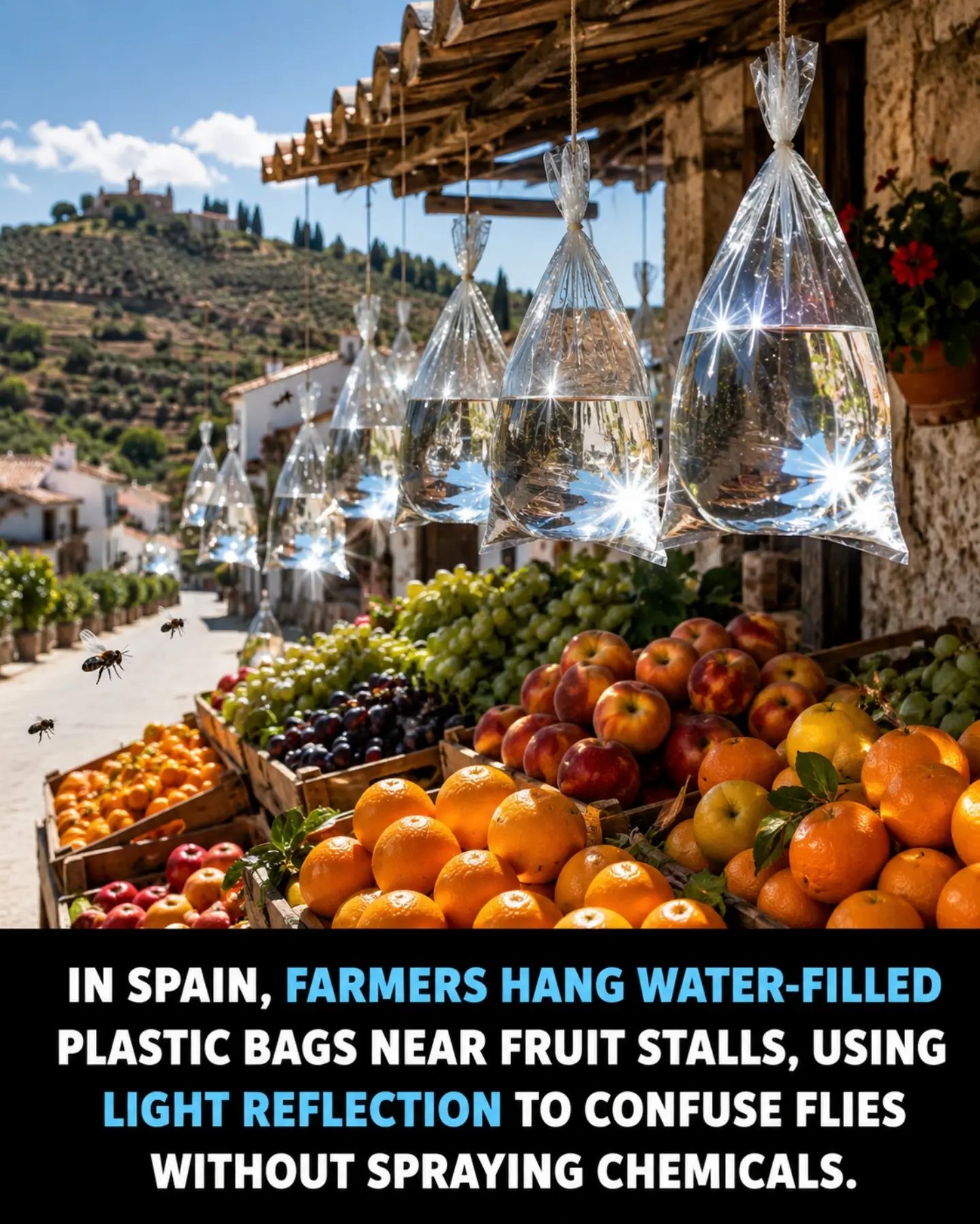
Innovative Fly Control: Spain's Unique Approach to Fly Control in Agriculture
Farmers across agricultural regions often face a problem: controlling flies while ensuring the safety and quality of produce. Traditional methods often involve the use of chemicals that can have negative effects on the environment and the crops themselves. Recently, a unique and effective solution has emerged: the method of using water-filled plastic bags to deter pests.
Context: Why this matters
In Spain, farmers have devised a simple, yet ingenious way to keep flies at bay. This method not only keeps the flies away but helps avoid the use of chemicals. It’s a technique that can be implemented on a small scale, but it has the potential to significantly impact larger farming operations.
Main discussion
The technique
The technique involves hanging water-filled plastic bags near fruit stalls. The water inside the bags reflects light, creating a confusing environment for the flies. This reflection of light is enough to deter the flies from landing on the fruit. It works on the principle of disorientation: the reflected light confuses the flies, so they avoid the area altogether.
Benefits of the method
-
Eco-friendly: One of the primary benefits of this method is that it is entirely eco-friendly. Since it doesn’t involve the use of chemicals, it preserves the natural ecosystem around the fruit stalls. This is a major advantage over traditional methods that often rely on harmful pesticides and insecticides.
-
Cost-effective: This technique doesn’t require any expensive equipment or supplies. Water-filled plastic bags are inexpensive and readily available, making this a cost-effective solution.
-
Effective: The technique has proven effective in deterring flies. The reflection of light is a constant deterrent that keeps the flies away without the need for frequent applications of repellents.
How to implement the method
Implementing this method is straightforward. The steps involved are quite simple:
-
Prepare the bags: Fill plastic bags with water. The size of the bags can vary depending on the requirements and the structure of the fruit stalls.
-
Hang the bags: Suspend the water-filled bags from the structure of the fruit stalls. Ensure that they are placed in such a way that the reflected light effectively covers the area.
-
Monitor and maintain: Regularly check the bags to ensure they remain filled with water. Empty bags will not have the same effect.
Practical tips
-
Placement: Place the bags at strategic points where flies are likely to congregate. This will maximize the effectiveness of the method.
-
Use clear bags: Clear plastic bags work the best for reflecting light. Colored bags may absorb more light, reducing the effectiveness of the technique.
-
Tie securely: Ensure the bags are securely tied to avoid spillage and keep them in place for a longer duration.
Important takeaways
The method of using water-filled plastic bags to deter flies is a practical and effective solution for farmers in Spain. It’s a technique that’s not only effective but also environmentally friendly and cost-effective. This method is an excellent example of how simple, innovative solutions can address common problems in agriculture.
Conclusion
The use of water-filled plastic bags to control flies in agricultural settings is a testament to the power of simple, innovative solutions. By leveraging the natural properties of light reflection, farmers in Spain have found an effective way to keep flies away from their produce without resorting to harmful chemicals. The method is easy to implement, cost-effective, and eco-friendly, making it a valuable technique for any farmer looking to control flies naturally.
Questions readers ask
How do water-filled plastic bags help in fly control?
Water-filled plastic bags act as a physical deterrent by reflecting light in a way that confuses flies. The movement and light play tricks on the flies, making them believe it is a threat or an obstacle, ultimately keeping them away from the crops.
Can this method be used for other types of pests?
While this method is specifically designed to deter flies, it may also confuse other pests that are sensitive to light and movement. However, its effectiveness against other types of pests is not yet proven.
Is this method safe for the environment?
The plastic bag method is eco-friendly because it eliminates the need for chemical pesticides, which can harm the environment. Plastic bags themselves are recyclable, making their environmental impact minimal.
How effective is this method compared to traditional chemical methods?
The plastic bag method can be highly effective in controlling flies, and it offers the added benefit of being chemical-free. However, its effectiveness can vary, and it may not be as immediately powerful as chemical pesticides, which act directly on pests.
Can this method be scaled up for larger farming operations?
Yes, the plastic bag method is versatile and can be used on a small or large scale. For larger farms, more bags can be deployed across the fields to ensure maximum coverage and fly deterrent.
What are the cost implications of using water-filled plastic bags for fly control?
The cost of implementing this method is low. Plastic bags are inexpensive, and water is readily available, making this a cost-effective solution for farmers.
Are there any downsides or limitations to this method?
While the water-filled plastic bag method is effective, it relies on specific weather conditions and may not work as well in windy or stormy conditions. Additionally, it requires regular maintenance to ensure the bags remain full and properly positioned.
Related deep dives
Similar reads based on topic and creator.



Recent articles
Fresh deep dives from the latest Reels we unpacked.



Comments
Be the first to comment.