The Magnificent Pirangi Cashew Tree: A Natural Wonder in Brazil
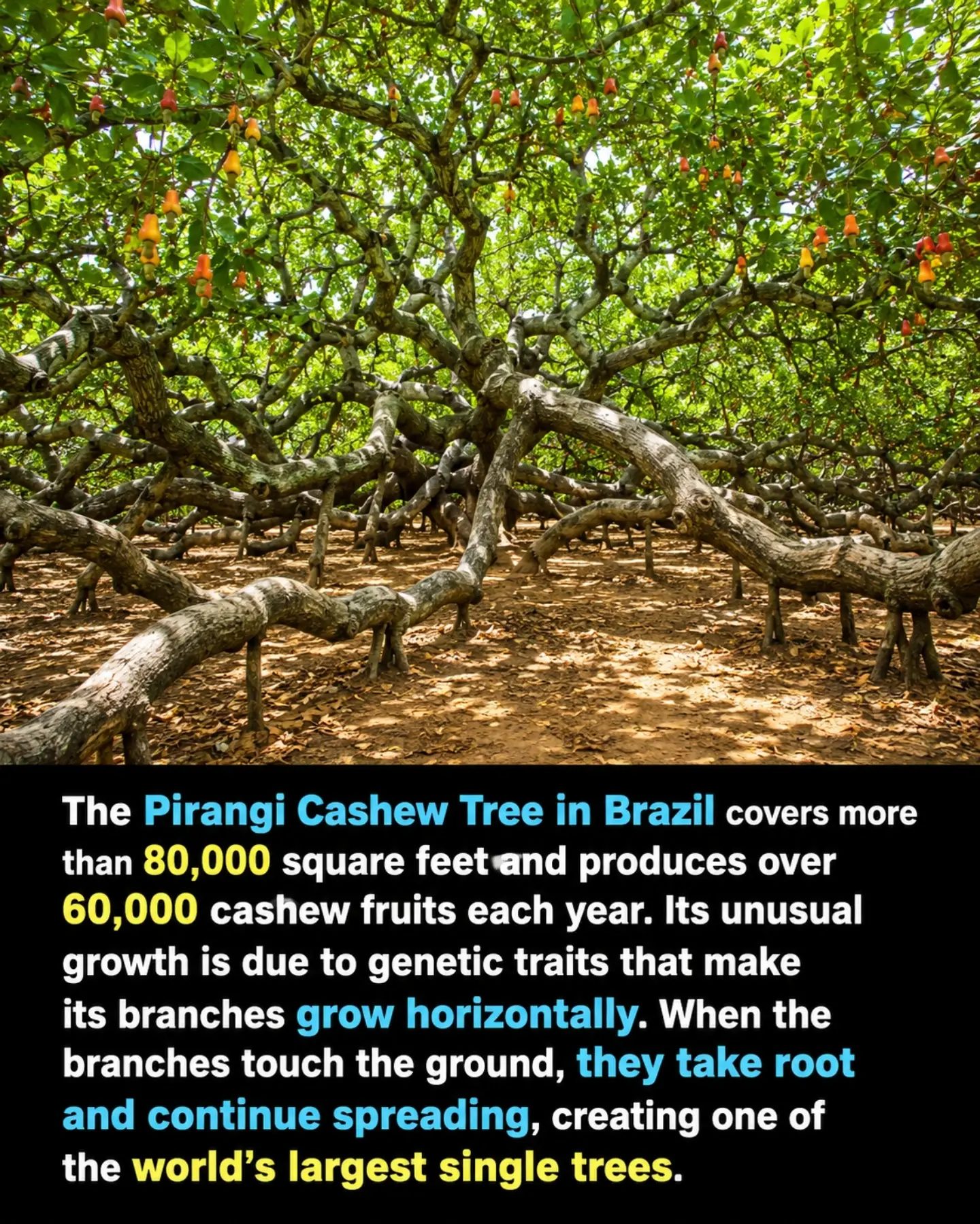
The Pirangi Cashew Tree in Brazil stands as a testament to nature's extraordinary capabilities. Covering an astonishing 80,000 square feet, this tree is not just a remarkable specimen; it is a symbol of Brazil's natural heritage. Its size and productivity make it a unique subject of interest for nature enthusiasts and scientists alike.
Why This Matters
The Pirangi Cashew Tree is more than just a giant; it is a living example of how genetic traits can influence the growth and shape of a plant. Understanding this tree can provide insights into the potential of cashew trees and other plants, as well as the broader ecosystems they inhabit.
Unique Genetic Traits
The tree's extraordinary size is not just a fluke of nature; it is the result of specific genetic traits. These traits cause the branches to grow horizontally rather than vertically. When the branches touch the ground, they take root and continue spreading, creating a vast, interconnected network of branches and roots. This unusual growth pattern is what allows the tree to cover such a large area.
Productivity and Environmental Impact
Beyond its size, the Pirangi Cashew Tree is also notable for its productivity. It produces over 60,000 cashew fruits each year. This prolific production has significant environmental and economic implications. The cashew fruits provide a valuable resource for locals and contribute to the ecosystem's biodiversity.
The Pirangi Cashew Tree's Growth Patterns
Horizontal Branch Growth
The horizontal growth pattern of the Pirangi Cashew Tree is its most distinctive feature. Unlike typical trees that grow upward, the Pirangi Cashew Tree's branches spread outwards, creating a wide canopy. This growth pattern is facilitated by its genetic makeup, which allows the branches to take root when they touch the ground.
Root Systems and Spread
The ability of the branches to take root and continue spreading is a key factor in the tree's enormous size. This process creates a dense root system that supports the tree's structure and allows it to absorb nutrients and water efficiently. The interconnected root system also helps to stabilize the soil, preventing erosion and promoting the growth of other plants in the area.
Ecological and Economic Significance
Biodiversity and Habitat
The Pirangi Cashew Tree serves as a habitat for various species of birds, insects, and other animals. Its massive canopy provides shelter and food for many creatures, making it a vital part of the local ecosystem. The tree's fruit production also attracts a wide range of animals, further enhancing the biodiversity around it.
Economic Benefits
The large quantity of cashew fruits produced by the tree has significant economic benefits. Cashews are a valuable commodity, and the Pirangi Cashew Tree's annual yield contributes to the local economy. The fruits are used for various purposes, including direct consumption, processing into cashew nuts, and the production of cashew apple juice.
Practical Tips for Cashew Cultivation
While the Pirangi Cashew Tree is a unique natural wonder, there are practical tips that can be applied to cashew cultivation more generally. Understanding the growth patterns and genetic traits of the Pirangi Cashew Tree can provide insights into how to cultivate cashew trees more effectively.
Selecting the Right Variety
Choosing the right variety of cashew tree is crucial for successful cultivation. While the Pirangi Cashew Tree's unique genetic traits are rare, selecting a variety known for its productivity and adaptability can yield similar benefits. Look for varieties that are resistant to pests and diseases and have a good track record in your local climate.
Soil and Nutrient Management
Proper soil and nutrient management is essential for the health and productivity of cashew trees. The Pirangi Cashew Tree's dense root system highlights the importance of a well-nourished soil environment. Regularly test the soil to ensure it has the necessary nutrients, and consider using organic fertilizers to promote healthy growth.
Watering and Irrigation
Cashew trees require consistent watering, especially during the early stages of growth. While the Pirangi Cashew Tree benefits from its vast root system, smaller trees will need regular watering to establish a strong root system. Implementing efficient irrigation systems can help ensure that the trees receive the right amount of water without waste.
Pruning and Maintenance
Pruning is crucial for maintaining the health and productivity of cashew trees. Regular pruning helps to remove dead or diseased branches, promotes healthy growth, and ensures that the tree has a strong structure. The Pirangi Cashew Tree's horizontal growth pattern shows the importance of strategic pruning to encourage healthy branch development.
Important Takeaways
The Pirangi Cashew Tree in Brazil offers valuable lessons in plant biology, ecology, and cultivation. Its unique growth patterns and genetic traits make it a subject of fascination and study. The tree's productivity and ecological significance highlight the importance of preserving and studying such natural wonders. By understanding the Pirangi Cashew Tree, we can gain insights into the potential of cashew trees and other plants, as well as the ecosystems they support.
Conclusion
The Pirangi Cashew Tree is more than just a giant; it is a living example of nature's incredible capabilities. Its unique growth patterns, prolific fruit production, and ecological significance make it a subject of great interest. By studying this natural wonder, we can gain valuable insights into plant biology, ecology, and cultivation. The tree's story serves as a reminder of the importance of preserving and studying the natural world, as it holds countless secrets and lessons for us to discover.
Questions readers ask
How big is the Pirangi Cashew Tree in Brazil?
The Pirangi Cashew Tree spans an impressive 80,000 square feet, making it the largest cashew tree in the world. To put this into perspective, it covers an area roughly the size of two football fields.
What makes the Pirangi Cashew Tree unique?
The Pirangi Cashew Tree is unique due to its extraordinary size and prolific fruit production. Its growth patterns and genetic traits offer valuable insights into the potential of cashew trees and broader ecosystems.
Where exactly is the Pirangi Cashew Tree located?
The Pirangi Cashew Tree is located in Pirangi, a coastal town in the state of Rio Grande do Norte, Brazil. It is a prominent natural attraction in the region, drawing visitors from around the world.
What can we learn from studying the Pirangi Cashew Tree?
Studying the Pirangi Cashew Tree can provide insights into genetic traits that influence plant growth and productivity. Scientists can use this knowledge to better understand and potentially enhance the growth of other plants and ecosystems.
How does the Pirangi Cashew Tree benefit the local ecosystem?
The massive tree provides a significant habitat for a variety of local wildlife. It also contributes to the local environment through its extensive canopy, which can influence soil quality, moisture retention, and microclimate.
Are there other large trees in Brazil like the Pirangi Cashew Tree?
While the Pirangi Cashew Tree is unique in its size and type, Brazil is home to many other large and notable trees. Some of these include the Angelim tree and the Jatobá tree, both of which are known for their impressive dimensions and cultural significance.
Can visitors access the Pirangi Cashew Tree for tours or visits?
Yes, the Pirangi Cashew Tree is accessible to visitors and is often a popular tourist attraction. Visitors can explore the tree and learn more about its unique characteristics through guided tours or self-guided visits. Local guides and tourism agencies often provide detailed information and experiences for those interested in the world's largest cashew tree.
Related deep dives
Similar reads based on topic and creator.



Recent articles
Fresh deep dives from the latest Reels we unpacked.




Comments
Be the first to comment.