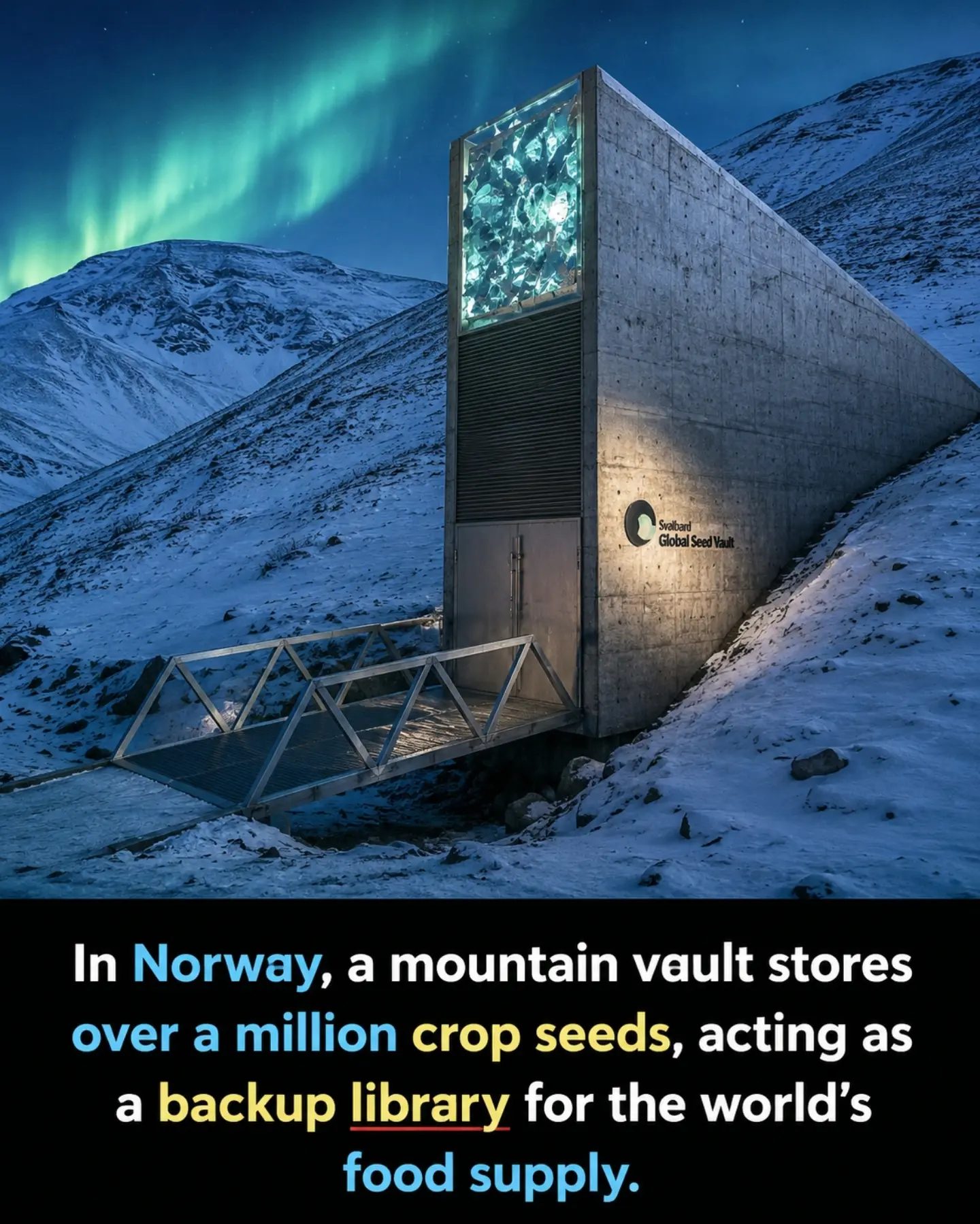
The Svalbard Global Seed Vault: A Fortress for the World's Food Security
The Svalbard Global Seed Vault is a unique and critical facility nestled deep within the Arctic Circle in Norway. More than just a storage unit, it serves as a global insurance policy for the world's food supply. The vault is designed to preserve a vast collection of seeds from around the globe, acting as a backup library in case of regional or global catastrophes.
Context: Why This Matters
In an era marked by climate change, natural disasters, and geopolitical instability, the importance of food security cannot be overstated. The Svalbard Global Seed Vault plays a pivotal role in safeguarding the future of agriculture by preserving the genetic diversity of our crops. This ensures that even if crops are lost due to pests, diseases, or environmental changes, humanity can still rely on the stored seeds to restore them. The vault is a testament to international cooperation, with seeds contributed by various countries and organizations, reflecting a shared commitment to food security and agricultural diversity.
The Svalbard Global Seed Vault: A Deep Dive
Location and Design
The Svalbard Global Seed Vault is strategically located on the Norwegian archipelago of Svalbard, about 800 miles from the North Pole. This remote and inhospitable location was chosen for several reasons: its perennial permafrost, which creates a naturally cold environment ideal for seed preservation, and its isolation, which minimizes the risk of accidents or malicious intent. Built within a mountain, the vault is designed to withstand extreme conditions and potential natural disasters, ensuring the safety of the seeds it holds.
Inside the Vault
The vault itself is a marvel of engineering. Seeds are stored in airtight containers and placed in underground chambers that maintain a consistent temperature of around -18 degrees Celsius. The facility is designed to withstand significant changes in temperature and humidity, ensuring that the seeds remain viable for centuries. Each seed box is meticulously labeled with information about the species, country of origin, and year of deposit, making it easy for researchers and farmers to access specific seeds when needed.
The Seed Collection
The vault currently holds over a million crop seeds, representing a diverse range of plant species from around the world. These seeds are not just any seeds; they are chosen for their genetic diversity and importance to food security. The collection includes everything from staple crops like wheat, rice, and maize, to more specialized crops and wild relatives that could be crucial for future breeding programs. The seeds stored in the vault are duplicates of those held in gene banks around the world, providing an additional layer of security.
The Role of the Vault in Global Food Security
The primary purpose of the Svalbard Global Seed Vault is to serve as a backup for the world's food supply. It ensures that even if a catastrophic event destroys a country's crops or gene banks, the seeds can be retrieved and used to restore agricultural production. This backup system is particularly critical in regions prone to natural disasters, conflict, or environmental degradation, where the loss of crop diversity could have devastating consequences.
Management and Operations
The vault is managed by the Norwegian government in collaboration with the Global Crop Diversity Trust and the Nordic Gene Bank. Access to the vault is strictly controlled, with only authorized personnel allowed entry. The management team ensures that the seeds are carefully monitored and maintained, and that the facility is ready to be activated in case of an emergency. The vault's operations are funded through international donations and contributions, reflecting a global commitment to food security.
Practical Tips for Engaging with Seed Vaults
While most people will never have the opportunity to visit the Svalbard Global Seed Vault, there are ways to engage with and support the mission of seed conservation:
Support Local Gene Banks
Local gene banks often work in tandem with global initiatives like the Svalbard Global Seed Vault. Supporting these institutions, whether through donations or volunteering, can help preserve local crop diversity and ensure that seeds are available for future generations.
Advocate for Seed Conservation
Raising awareness about the importance of seed conservation can inspire others to take action. Share information about seed vaults and gene banks with friends, family, and community groups to foster a greater appreciation for agricultural diversity.
Participate in Community Gardens
Community gardens and seed exchanges are excellent ways to connect with local plant species and promote biodiversity. By participating in these activities, you can help preserve local crop varieties and contribute to the overall health of the ecosystem.
Educate Yourself and Others
Learning more about seed conservation and gene banks can empower you to make a difference. Whether through online resources, educational programs, or community events, expanding your knowledge can inspire action and encourage others to get involved.
Important Takeaways
The Svalbard Global Seed Vault is a critical component of global food security, safeguarding over a million crop seeds and ensuring that humanity has a reliable backup in case of catastrophe. Its strategic location, advanced design, and meticulous management make it a fortress of agricultural diversity, capable of withstanding even the most extreme conditions. By supporting local gene banks, advocating for seed conservation, participating in community gardens, and educating ourselves and others, we can contribute to the ongoing effort to preserve the world's crop diversity and secure our food future.
The Svalbard Global Seed Vault is more than just a repository; it is a symbol of international cooperation and a commitment to safeguarding the planet's food supply for future generations.
Questions readers ask
What is the primary purpose of the Svalbard Global Seed Vault?
The primary purpose of the Svalbard Global Seed Vault is to serve as a global food insurance policy. It safeguards crop diversity by storing a wide variety of seeds from around the world, ensuring that these can be used to restore agriculture in the event of large-scale catastrophes, such as natural disasters or climate change impacts.
Where is the Svalbard Global Seed Vault located and why was this site chosen?
The Svalbard Global Seed Vault is located in the Arctic Circle, specifically on the Norwegian island of Spitsbergen. This site was chosen for its remote location, stable geology, and naturally cold temperatures, which are ideal for long-term seed preservation without the need for extensive use of power.
How does the Svalbard Global Seed Vault contribute to food security?
The vault contributes to food security by acting as a backup for the world's crop diversity. In the face of regional or global crises, such as wars, natural disasters, or climate change, the seeds stored in the vault can be used to re-establish food crops, helping to prevent famine and maintain food supplies around the world.
What kinds of seeds are stored in the Svalbard Global Seed Vault?
The vault stores a vast collection of seeds from various crops, including staple grains, vegetables, and other important agricultural plants from around the world. These seeds are provided by different countries and international seed banks, ensuring a wide range of genetic diversity.
Can the seeds from the Svalbard Global Seed Vault be accessed by anyone?
Access to the seeds is strictly controlled. The seeds are stored as a backup for other seed banks and can only be withdrawn by their depositors. The vault is designed to be a last-resort option, and the process for withdrawing seeds involves international oversight to ensure they are used responsibly and for the benefit of food security.
How does climate change impact the need for a facility like the Svalbard Global Seed Vault?
Climate change increases the likelihood of extreme weather events and other environmental changes that can threaten global food supplies. By preserving a wide range of crop seeds, the vault helps to ensure that agricultural diversity can be maintained and even restored, providing a buffer against the risks posed by climate change.
Related deep dives
Similar reads based on topic and creator.



Recent articles
Fresh deep dives from the latest Reels we unpacked.

Comments
Be the first to comment.