Mysterious Footprints Across Asia
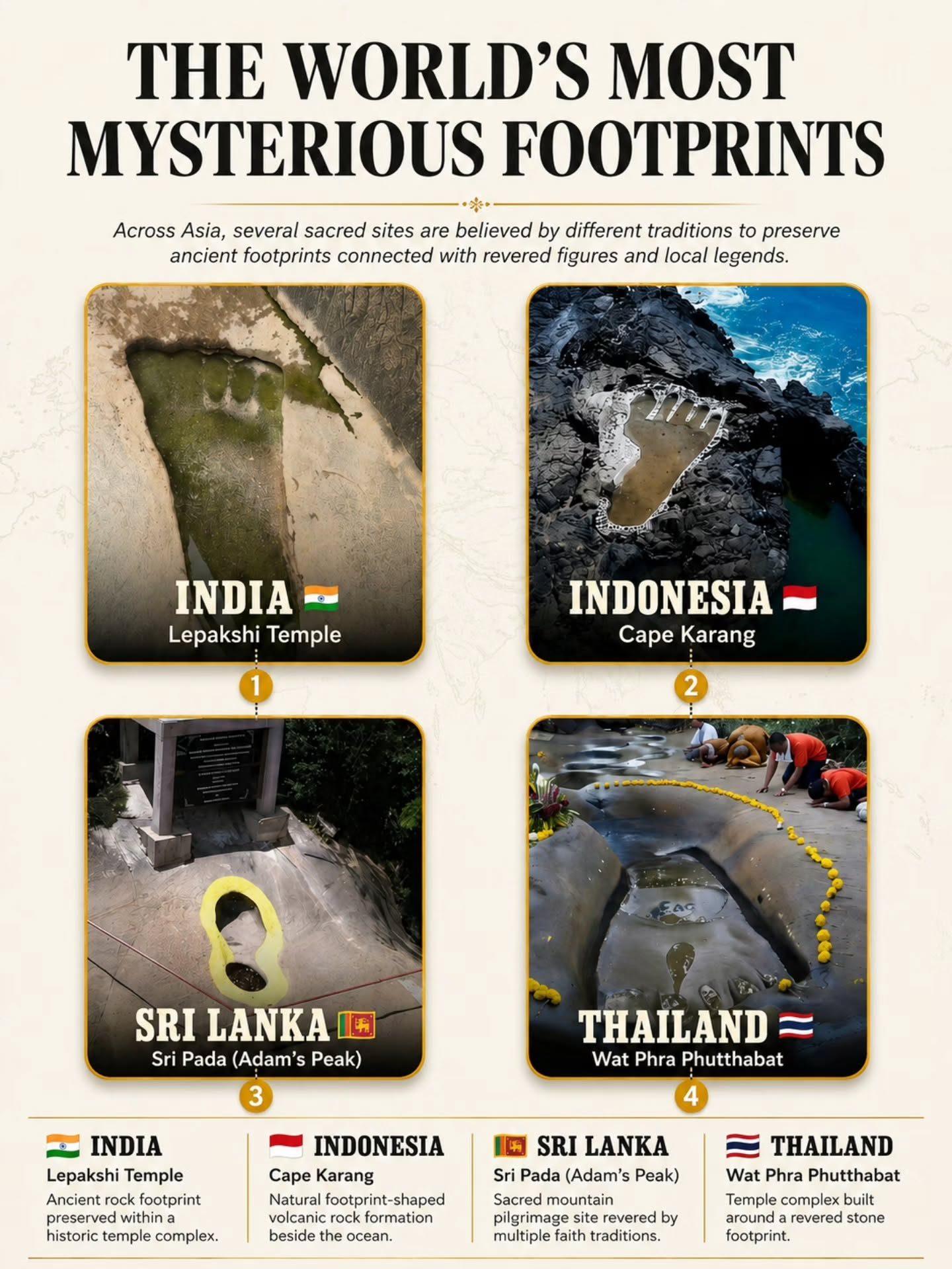
Across Asia, several sacred sites are believed by various traditions to preserve ancient footprints connected to revered figures and local legends. These enigmatic prints have captivated the imaginations of pilgrims, historians, and travelers alike. While the origins and authenticity of these footprints are often shrouded in mystery, their significance in cultural and religious contexts is undeniable.
Why This Matters
The footprints found in these sacred sites are more than just geological curiosities; they are deeply intertwined with the spiritual and cultural fabric of Asia. Understanding these sites and their significance provides a unique window into the region's rich history and diverse belief systems. Whether they are seen as signs of divine presence, historical artifacts, or natural wonders, these footprints continue to attract devotees and curiosity seekers from around the world.
Main Discussion
The Footprints of Lepakshi Temple in India
One of the most renowned sites featuring a mysterious footprint is the Lepakshi Temple in India. This historic temple complex is home to an ancient rock footprint, believed to be an imprint of the feet of Lord Vishnu. The footprint is meticulously preserved within the temple's premises, attracting pilgrims and tourists who come to pay their respects and marvel at the site's historical significance.
Cape Karang in Indonesia
Indonesia, a country known for its diverse landscapes and rich cultural heritage, is home to another intriguing footprint site, Cape Karang. Located in the eastern part of the island of Java, Cape Karang features a natural footprint-shaped rock formation. The footprint is revered by local traditions and is believed to hold special powers and significance. This site is a testament to the natural beauty and cultural depth of Indonesia.
Sri Pada (Adam's Peak) in Sri Lanka
In Sri Lanka, the sacred mountain known as Sri Pada, or Adam's Peak, is a revered pilgrimage site for multiple faith traditions. The mountain is home to an ancient rock footprint believed to be the footprint of the Buddha, Adam, or Shiva, depending on the tradition. Pilgrims from various faiths undertake the arduous journey to the summit to venerate the footprint, making it a site of profound spiritual significance. The footprint is embedded within a historic temple complex, adding to its historical and cultural value.
Wat Phra Phuttabat in Thailand
Thailand's Wat Phra Phuttabat is another notable site featuring a revered footprint. The temple complex is built around a footprint believed to be an imprint of the Buddha. The footprint is preserved within a sacred space, and the temple attracts numerous devotees and visitors who come to pay their respects and seek blessings. Wat Phra Phuttabat is a testament to the deep-rooted spiritual traditions and cultural heritage of Thailand.
Practical Tips
If you plan to visit these sacred sites, here are some practical tips to enhance your experience:
- Respect the Sites: These locations are places of worship and cultural significance. Be mindful of local customs and traditions, and dress appropriately.
- Plan Your Visit: Some of these sites, like Sri Pada, require physical endurance and proper planning. Research the best times to visit and any necessary preparations.
- Engage with Locals: Engaging with local guides and devotees can provide deeper insights into the significance of these footprints and the stories surrounding them.
Important Takeaways
- Cultural Significance: These footprints hold deep cultural and spiritual significance for various communities across Asia.
- Historical Value: The footprints are often associated with revered figures and historical events, adding to their historical value.
- Natural Wonders: Some of these footprints are natural rock formations that have captivated the imagination of many over the centuries.
- Tourism Potential: These sites attract visitors from around the world, contributing to the tourism and cultural heritage of their respective countries.
Conclusion
The mysterious footprints found in these sacred sites across Asia are more than just geological curiosities. They are testament to the rich cultural and spiritual heritage of the region. Whether you are a history enthusiast, a spiritual seeker, or simply a curious traveler, these footprints offer a unique opportunity to explore the depth and diversity of Asia's cultural landscape.
Questions readers ask
What are some of the most notable sacred sites with mysterious footprints in Asia?
Some of the most notable sites include the Lepakshi Temple in India, which features intricate carvings and a large footprint believed to be that of the Hindu god Vishnu. Indonesia's Cape Karang is another significant site, known for its mystical footprints that attract many pilgrims. Additionally, Sri Lanka's Sri Pada, or Adam's Peak, is famed for a large footprint at its summit, revered by multiple religions.
What is the significance of these footprints to Asia's cultures and religions?
The footprints hold deep spiritual significance, often seen as evidence of divine visitation or the presence of revered figures. They serve as important pilgrimage destinations and are integral to various religious practices, ceremonies, and local legends, making them crucial to the cultural and religious heritage of Asia.
Are there any sacred footprints in Thailand?
Yes, Thailand is home to several sacred sites with mysterious footprints. One notable example is the footprint at the Phra Phuttha Chai Nat Buddhist temple, believed to be the footprint of the Buddha.
How do these footprints contribute to Asia's historical and religious tapestry?
The footprints are intertwined with ancient legends, religious beliefs, and cultural practices, providing a tangible link to historical events and myths. They offer insights into the diverse belief systems and traditions that have shaped Asia over centuries, making them important markers in the region's historical and religious landscape.
Can visitors access these sacred sites?
Many of these sites are open to visitors, including pilgrims and travelers. However, it is essential to respect local customs and guidelines when visiting. Some sites may have specific rituals or dress codes that visitors should be aware of. Guided tours and local resources can often provide a more immersive and respectful experience.
Related deep dives
Similar reads based on topic and creator.




Recent articles
Fresh deep dives from the latest Reels we unpacked.



Comments
Be the first to comment.