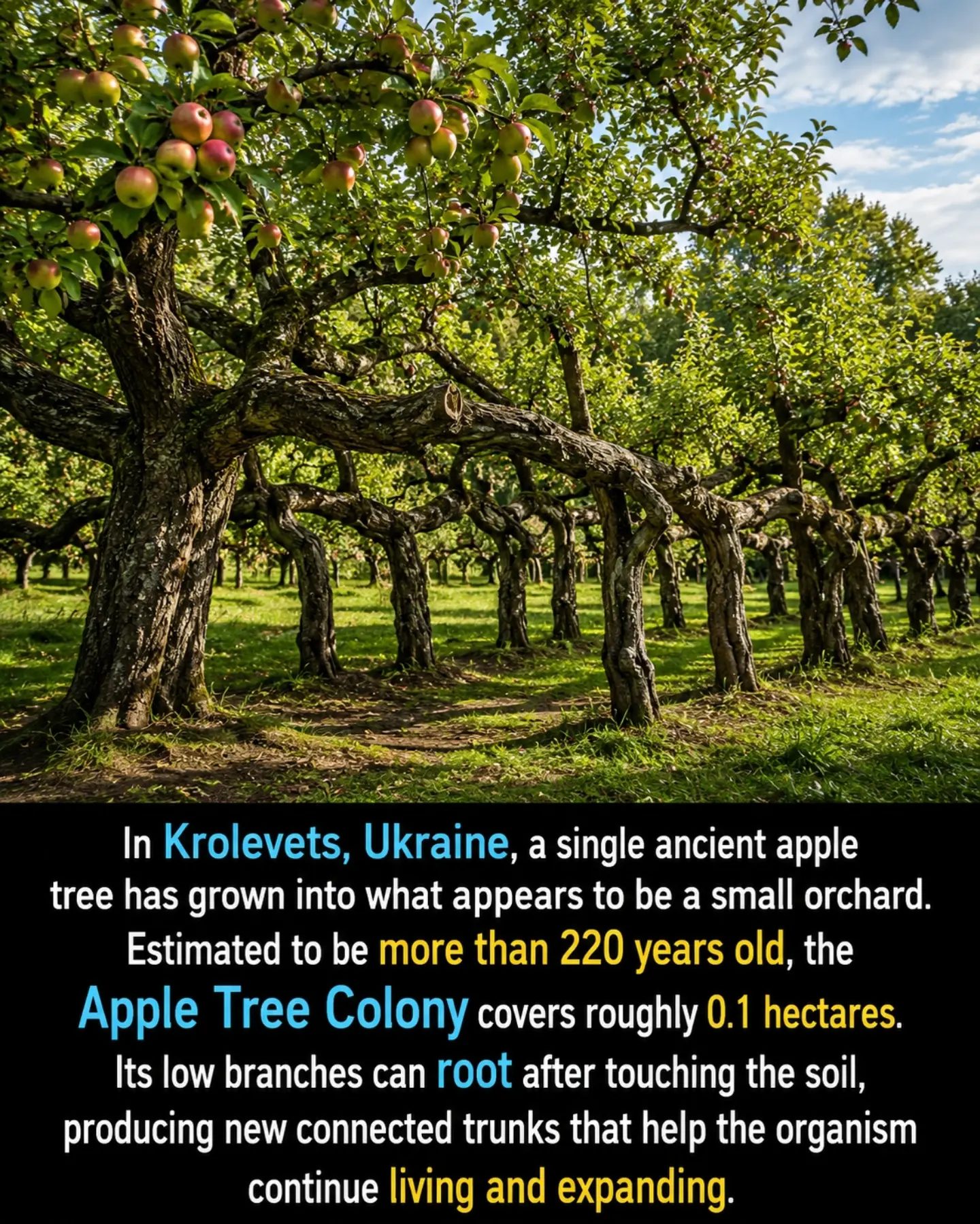
Ancient Apple Tree Colony in Krolevets, Ukraine
Nestled in the heart of Krolevets, Ukraine, lies a natural wonder: an ancient apple tree colony that has captivated both locals and visitors alike. This unique formation, often referred to as the Apple Tree Colony, is a testament to the resilience and adaptability of nature. Estimated to be over 220 years old, this colony covers roughly 0.1 hectares and presents a fascinating display of natural propagation.
Why This Matters
Understanding the Apple Tree Colony in Krolevets provides valuable insights into the natural processes that drive the growth and expansion of plant life. It also offers a glimpse into the unique ecological balances that can exist in natural, largely undisturbed environments. This ancient colony has become a symbol of natural sustainability and a living example of how plants can adapt to their surroundings.
The Unique Characteristics of the Apple Tree Colony
Historical Context
The Apple Tree Colony in Krolevets is believed to have originated from a single ancient apple tree. Over the course of more than two centuries, this tree has grown and expanded, creating a dense network of interconnected trunks and branches. The colony's longevity and expansive growth can be attributed to the tree's ability to propagate through its branches, which root and form new trunks when they touch the soil.
Growth and Propagation
The most remarkable aspect of the Apple Tree Colony is its unique propagation method. The low branches of the tree have the ability to root and expand when they come into contact with the soil. This process results in the formation of new connected trunks, which continue to grow and spread. As these new trunks develop, they contribute to the overall expansion and longevity of the colony, creating a vast and interconnected organism.
Ecological Benefits
The Apple Tree Colony plays a crucial role in the local ecosystem. The dense network of trees provides habitat and shelter for numerous species of birds, insects, and small mammals. The colony's extensive root system also helps to prevent soil erosion and maintains soil health, contributing to the overall ecological balance of the area.
Cultural and Historical Significance
Beyond its natural significance, the Apple Tree Colony holds cultural and historical value for the people of Krolevets. It serves as a living monument to the region's agricultural heritage and a reminder of the enduring connection between humans and nature. The colony has become a popular destination for locals and tourists, who come to marvel at its beauty and learn about its unique characteristics.
Practical Tips for Visiting the Apple Tree Colony
Best Time to Visit
The best time to visit the Apple Tree Colony is during the spring and summer months when the trees are in full bloom. This period offers a vibrant display of colors and provides an opportunity to witness the colony's natural beauty in its full glory. However, autumn also presents a unique charm, with the changing leaves adding a different dimension to the landscape.
What to Bring
Visitors should come prepared with comfortable walking shoes, as the area can be uneven and may require some level of physical activity. A camera or smartphone is also a must for capturing the breathtaking scenery. Additionally, bringing water and snacks can enhance the overall experience, especially for those planning to spend a few hours exploring the colony.
Important Takeaways
The Apple Tree Colony in Krolevets, Ukraine, is a remarkable example of natural propagation and expansion. Its unique ability to root and form new trunks from its branches has resulted in a vast and interconnected organism that covers roughly 0.1 hectares. This colony offers valuable insights into the natural processes that drive plant growth and provides a glimpse into the unique ecological balances that can exist in natural environments.
Conclusion
The ancient Apple Tree Colony in Krolevets, Ukraine, is a testament to the resilience and adaptability of nature. This unique formation, estimated to be over 220 years old, showcases the natural ability of a single apple tree to propagate and expand, creating a connected organism that plays a crucial role in the local ecosystem. Whether you are a nature enthusiast, a historian, or simply looking for a unique travel destination, the Apple Tree Colony is a must-see. It offers a profound connection to the natural world and a deeper understanding of the complex interplay between plants and their environment.
Questions readers ask
How old is the ancient apple tree colony in Krolevets, Ukraine?
The ancient apple tree colony in Krolevets, Ukraine, is estimated to be over 220 years old. This makes it one of the oldest known natural formations of its kind in the region.
What is the size of the ancient apple tree colony in Krolevets, Ukraine?
The ancient apple tree colony in Krolevets, Ukraine covers approximately 0.1 hectares. This might seem small, but it's a vast network of interconnected trunks and branches.
How did the ancient apple tree colony in Krolevets, Ukraine form?
The colony formed from a single ancient apple tree. Branches from this tree touched the ground and began to grow roots, eventually leading to the formation of a vast network of interconnected trunks and branches.
What can visitors expect to see at the ancient apple tree colony in Krolevets, Ukraine?
Visitors can expect to see a unique and fascinating display of natural propagation, with a vast network of interconnected trunks and branches all originating from a single ancient apple tree.
Is the ancient apple tree colony in Krolevets, Ukraine a man-made formation?
No, the ancient apple tree colony in Krolevets, Ukraine is a natural formation. It is a result of the adaptability of plant life and the natural propagation process of this ancient apple tree.
Why is the ancient apple tree colony in Krolevets, Ukraine significant?
The ancient apple tree colony in Krolevets, Ukraine is significant because it offers insights into the resilience and adaptability of plant life. It also provides a glimpse into the unique ecological balances that can exist in natural, largely undisturbed environments.
What is the Apple Tree Colony in Krolevets, Ukraine known for?
The Apple Tree Colony in Krolevets, Ukraine is known for being a living monument to nature's tenacity. It showcases how a single tree can grow into a vast network of interconnected trunks and branches, all from roots sprouting as branches touch the ground.
Related deep dives
Similar reads based on topic and creator.




Recent articles
Fresh deep dives from the latest Reels we unpacked.



Comments
Be the first to comment.