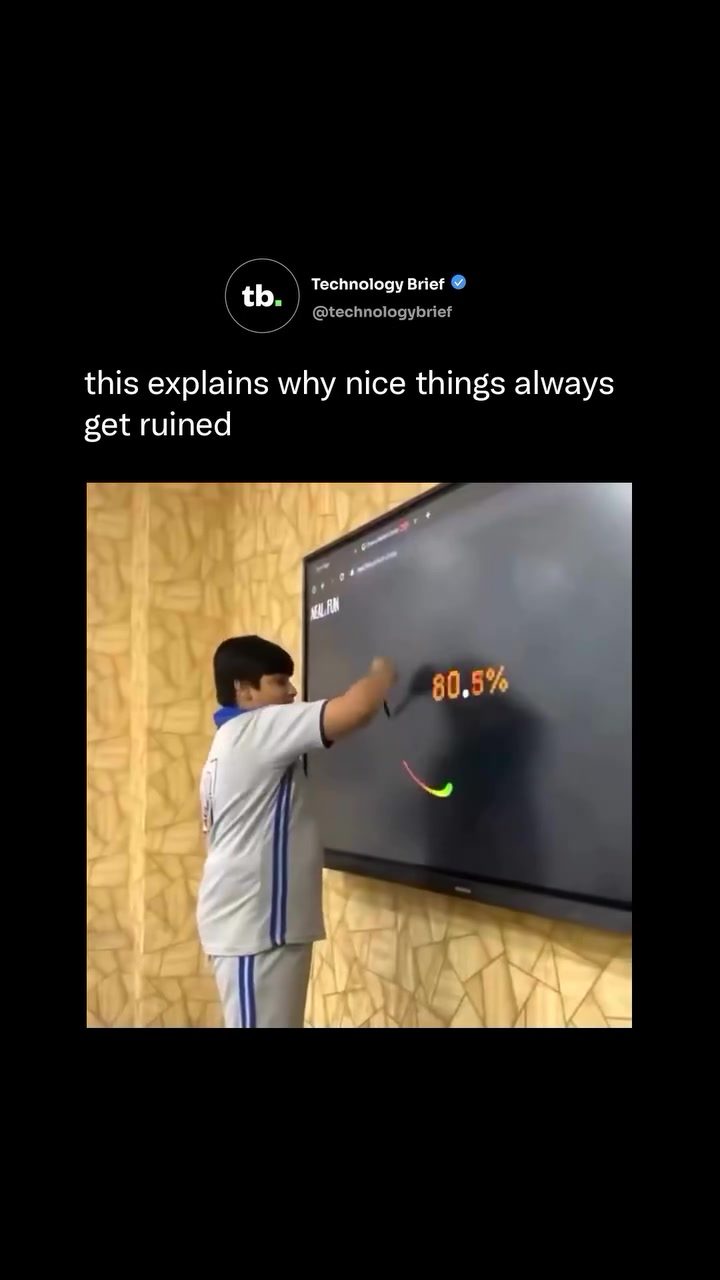
The “Draw a Perfect Circle” Game: A Surprising Challenge
The “Draw a Perfect Circle” game, created by developer Neal Agarwal, is a simple yet surprisingly engaging challenge. The game invites players to draw a freehand circle on a screen, and an algorithm instantly scores their accuracy from 0 to 100%. The scoring mechanism evaluates smoothness, symmetry, and how evenly the curve closes around a center point. Most players typically score between 40 and 80%, making high scores a noteworthy achievement.
Context / Why this matters
This game has gained significant popularity, especially in educational and group settings, for several reasons. Firstly, it's instantly understandable, making it accessible to players of all ages. Secondly, it takes only seconds per attempt, fitting perfectly into short breaks or as a quick icebreaker. Lastly, the competitive nature of the game turns a simple geometric challenge into an exciting event, fostering a sense of camaraderie and friendly rivalry.
Main discussion
The Algorithm Behind the Game
The accuracy scoring system, developed by Neal Agarwal, is a sophisticated algorithm that considers several factors:
- Smoothness: The algorithm evaluates how smooth the drawn circle is. Sharp turns or jagged lines can lower the score.
- Symmetry: A perfectly symmetrical circle is more likely to achieve a higher score. The closer the circle's shape is to a true circle, the better the score.
- Center Point: The algorithm measures how evenly the curve closes around a center point. A circle drawn with a consistent distance from the center point will score higher.
Scores and Progression
Scores in the "Draw a Perfect Circle" game range from 0 to 100%. Typically, most players achieve scores between 40 and 80%. However, scores above 90% are considered exceptional. Achieving a score above 90% places a player in the top 3% of all attempts worldwide, highlighting the difficulty of the task.
Players taking turns on a large interactive display branded HEAL.FUN have shown impressive scores. For instance, a score of 95.7% and a new session best of 96.2% demonstrate the potential for high performance. The interactive display allows for a more impressive visual representation, enhancing the competitive spirit.
Strategies to Improve Scores
Several strategies can help improve a player's score in the "Draw a Perfect Circle" game:
- Practice: Like any skill, practice can improve performance. Repeated attempts can help players understand their strengths and weaknesses.
- Drawing Angle: Changing the drawing angle or body position can help steady the hand. For example, an adult who laid flat on the floor set a new session best at 96.2%, demonstrating the effectiveness of this strategy.
- Mindset: Approach the challenge with a calm and focused mindset. Avoid rushing and take the time to draw the circle carefully.
Practical tips
Optimizing Your Attempts
- Warm-Up: Before making an attempt, try a few quick, warm-up circles to get a feel for the screen and your drawing hand.
- Angle Variations: Experiment with different angles and positions to find what works best for you. Some players find that drawing from a lower angle or even lying down helps.
- Consistent Pressure: Maintain consistent pressure on the drawing device to ensure smooth and even lines. Shaky or inconsistent pressure can lower your score.
Group Play
When playing in a group or classroom setting, consider the following:
- Turn-Based: Take turns to ensure everyone gets a fair chance. This also builds anticipation and excitement as each player awaits their turn.
- Encourage Competition: Foster a friendly competitive spirit by keeping track of the highest scores and celebrating the top performers.
Fun Variations
- Time Challenges: Introduce a time limit to add an extra layer of challenge. This can make the game more exciting and fast-paced.
- Themed Sessions: Create themed sessions, such as "Sports Day" or "Halloween Challenge," to make the activity more engaging and memorable.
Important takeaways
- Accessibility: The game is simple to understand and play, making it suitable for all ages and settings.
- Instant Feedback: The real-time scoring system provides immediate feedback, which keeps players engaged and motivated.
- Competitive Nature: The competitive aspect of the game turns a simple task into an exciting challenge, fostering a sense of camaraderie and friendly rivalry.
- Skill Improvement: With practice and the right strategies, players can significantly improve their scores.
Conclusion
The "Draw a Perfect Circle" game is a testament to how a simple concept can be transformed into an engaging and competitive activity. Whether played solo or in a group, the game offers a unique challenge that tests hand-eye coordination and precision. The real-time scoring, combined with the visual representation, keeps players engaged and motivated. By understanding the scoring algorithm and employing effective strategies, players can enhance their performance and enjoy the thrill of achieving a high score. So, the next time you encounter this game, remember to take a deep breath, steady your hand, and draw your best circle. You might just surprise yourself with your score!
Questions readers ask
What are the key factors that determine my score in the Draw a Perfect Circle game?
The scoring is based on three main factors: smoothness, symmetry, and the consistency of the curve around the center point. The algorithm evaluates these aspects to provide an instant score out of 100%.
Why do most players typically score between 40 and 80% in the Draw a Perfect Circle game?
Most players score within this range because drawing a perfectly smooth, symmetrical, and consistent circle freehand is surprisingly challenging. Achieving a high score requires a steady hand and precise control.
How can I improve my scores in the Draw a Perfect Circle game?
To improve, practice steady hand movements and focus on maintaining a consistent pace. Start by drawing smaller circles and gradually increase the size as you gain control. Additionally, try to keep your wrist stable and avoid sudden movements.
Is the Draw a Perfect Circle game suitable for group settings?
Yes, the game is particularly popular in group settings due to its quick gameplay and competitive nature. It's a fun way to engage with friends, family, or colleagues, with each turn taking only seconds to complete.
What happens if I ruin my perfect circle attempt in the Draw a Perfect Circle game?
Ruin attempts contribute to the game’s fun. If you ruin a circle, the algorithm will still score it based on what you’ve drawn. You can learn from each attempt which can help you make improvements.
Can I play the Draw a Perfect Circle game on any device?
The game is designed to be accessible on various devices, including smartphones, tablets, and computers. As long as you have a touchscreen or a mouse, you can enjoy the challenge of drawing a perfect circle.
Recent articles
Fresh deep dives from the latest Reels we unpacked.




Comments
Be the first to comment.