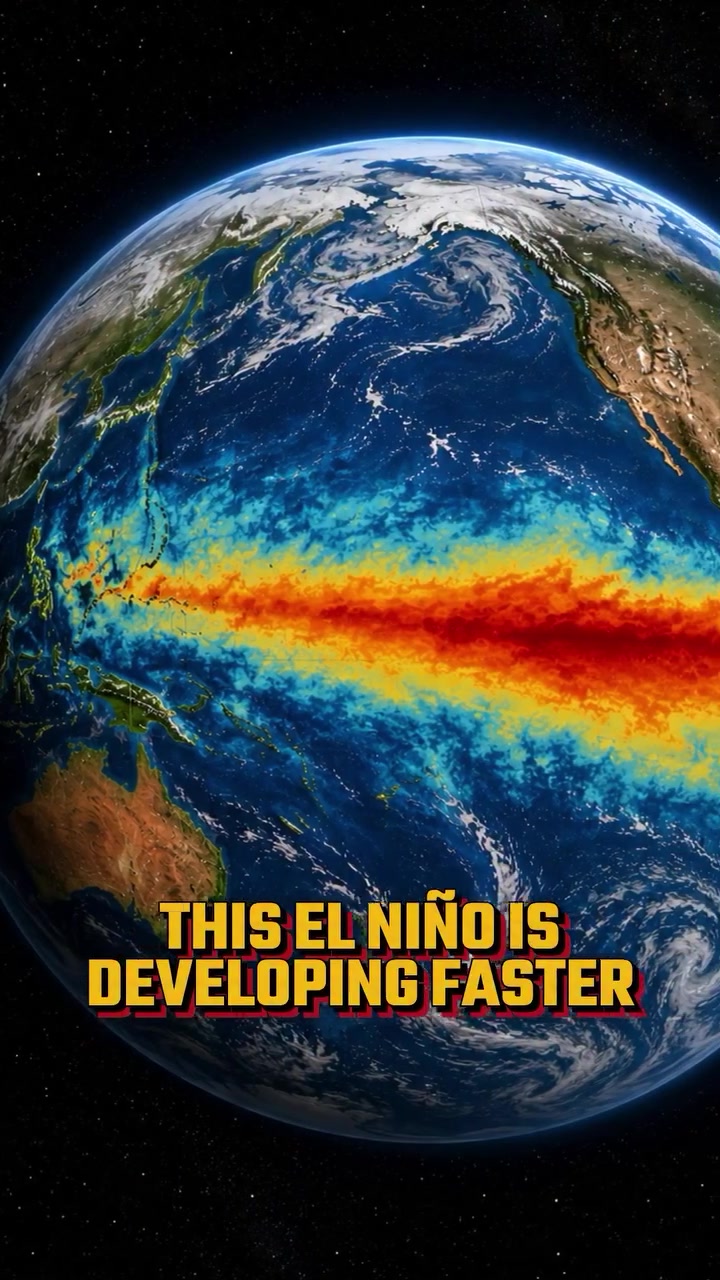
Record-breaking climate shift
The current El Niño is racing ahead of predictions, outpacing past records and potentially reaching unprecedented temperatures. The event is being monitored with urgency and the Nino 3.4 index, already over 2.1 degrees Celsius. This surpasses the rapid onset in 1997. The index is the standard for measuring the ocean surface temperature in the central equatorial pacific, where the Niño develops. Projections for its peak exceeding 3.6 degrees — a measurement that would classify it as the strongest El Niño — continue to climb. Several models suggest that El Niño is likely to become the strongest ever recorded, according to the available data.
What this means for tropical storms
Rising temperatures in the Pacific will likely reshape weather patterns worldwide. Scientists are already observing changes. Rains and floods are intensifying in South America and Asia, while Australia faces hotter and drier conditions. North America is bracing for heat waves. The Atlantic hurricanes are expected to become stronger. This is due to the increased moisture and energy in the atmosphere, both factors that fuel storm activity. The shifts in precipitation and temperature patterns pose significant challenges. These changes disrupt agriculture, water availability, and ecosystem balance.
Rapid development
The rapid development might help to understand its impact. The current event appears to be setting new benchmarks for intensity and rapidity, hinting at worries about a more unstable climate in the future. It is now moving into a stronger global phase. This development, faster than previous major events, poses challenges for researchers trying to predict its future course. Every day, the event validates more of the models that project its evolution. The implications of this event extend far beyond immediate weather predictions. They provide researchers with a unique opportunity to study and better understand the intricacies of this complex weather phenomenon and emphasize the urgency of climate change mitigation efforts.
Recent articles
Fresh deep dives from the latest Reels we unpacked.



Comments
Be the first to comment.