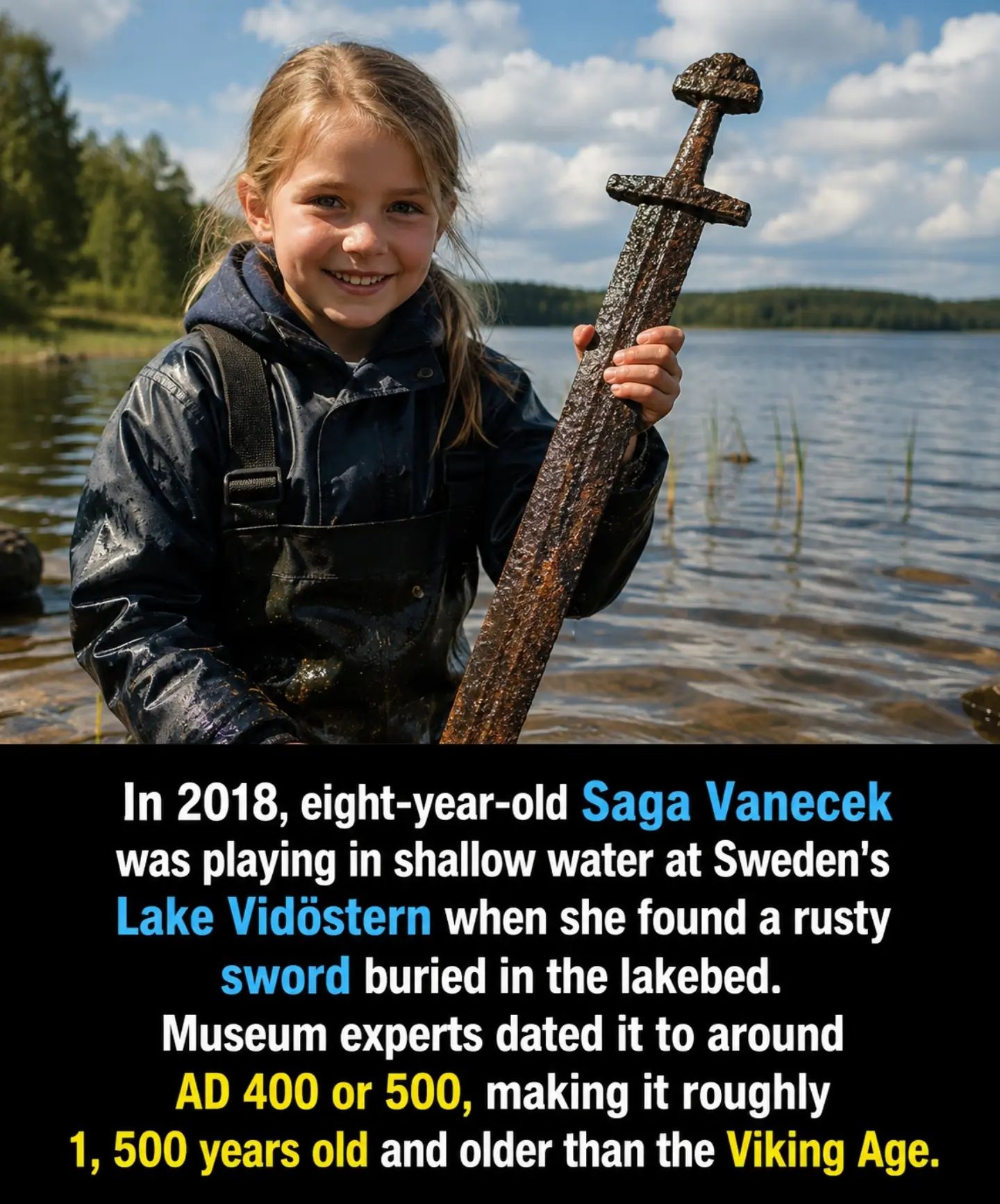
Viking Age Sword Discovery
In 2018, an extraordinary discovery was made in the shallow waters of Lake Vidöstern, Sweden. An eight-year-old girl named Saga Vanacek stumbled upon a rusty sword buried in the lakebed. This ancient artifact, estimated to be around 1,500 years old, has captivated historians and enthusiasts alike. The sword predates the Viking Age, offering a rare glimpse into the early medieval period.
Context: The Significance of the Find
The sword's age and condition provide valuable insights into the cultural and technological advancements of the time. Dating back to around AD 400 or 500, this artifact is a tangible link to a period often overshadowed by the more famous Viking era. Understanding this sword helps contextualize the transition from late antiquity to the early Middle Ages, a time of significant change in Europe.
The Discovery and Its Context
Saga Vanacek's Remarkable Find
Saga Vanacek, an eight-year-old girl, made the discovery while playing in the shallow waters of Lake Vidöstern. Her serendipitous find has since garnered attention from historians and archaeologists. The sword, encapsulated in sediment, was preserved remarkably well considering its age. This preservation is a testament to the unique conditions of the lakebed, which acted as a natural time capsule.
Dating the Sword
Museum experts have dated the sword to around AD 400 or 500, making it roughly 1,500 years old. This period is crucial for understanding the transitional phase between the late Roman Empire and the early medieval period. The sword's design and craftsmanship offer clues about the technological and cultural developments of the time.
The Significance of the Period
The 5th and 6th centuries in Europe were marked by significant cultural and political upheavals. The fall of the Western Roman Empire and the subsequent rise of various Germanic tribes led to a period of instability and change. The sword from Lake Vidöstern serves as a physical artifact that can help historians reconstruct the movements, interactions, and technological advancements of these early medieval societies.
The Artifact
Craftsmanship and Design
The sword, though rusty, retains enough structural integrity to reveal details about its craftsmanship. The design elements, such as the hilt and blade shape, can be compared with other known artifacts from the same period. This comparison helps in understanding the evolution of sword-making techniques and the cultural exchanges that occurred during this time.
Historical and Cultural Implications
The discovery of the sword in Lake Vidöstern underscores the importance of preserving natural environments. Lakes and other bodies of water often act as natural repositories for historical artifacts, protecting them from degradation and destruction. The preservation of such environments is crucial for future discoveries and for understanding our shared history.
The Role of Preservation
Museums and archaeological institutions play a vital role in preserving and studying such artifacts. The experts who dated the sword used advanced techniques to analyze its composition and age. This process involves not just physical examination but also chemical and radiological analyses to determine the exact age and origin of the artifact.
Practical Tips for Aspiring Treasure Hunters
While Saga Vanacek’s discovery was a remarkable stroke of luck, there are practical steps that can be taken to increase the chances of finding historical artifacts.
Safety First
Always prioritize safety when exploring natural areas. Wear appropriate gear and be aware of your surroundings. Lakes, rivers, and other bodies of water can harbor hidden dangers, so it's essential to be cautious.
Environmental Responsibility
Respect the environment and follow local regulations. Unauthorized excavation can damage the ecosystem and destroy potential historical sites. Always obtain permission before conducting any form of excavation or exploration.
Important Takeaways
The discovery of the 1,500-year-old sword by Saga Vanacek is a fascinating reminder of the hidden treasures that lie beneath the surface of our natural environments. It also highlights the importance of preserving such environments for future discoveries and for maintaining our historical and cultural heritage.
Historical Insights
This sword provides valuable insights into the technological and cultural developments of the early medieval period. Understanding these developments helps us appreciate the complexities and nuances of our shared history.
Environmental Stewardship
The preservation of natural areas like Lake Vidöstern is crucial for maintaining our historical heritage. These environments act as natural time capsules, preserving artifacts and providing valuable contexts for our understanding of the past.
Conclusion
The discovery of the rusty sword in Lake Vidöstern by Saga Vanacek is a testament to the wonders that can be found in our natural environments. This artifact, dating back to around AD 400 or 500, offers a unique glimpse into the early medieval period, shedding light on the cultural and technological advancements of the time.
Exploring and preserving our natural environments are not just recreational activities; they are essential for understanding our history and cultural heritage. By respecting the environment and following safety guidelines, we can uncover more of these hidden treasures and deepen our appreciation for the rich tapestry of human history.
Questions readers ask
How old is the sword that Saga Vanacek found?
The sword found by Saga Vanacek is approximately 1,500 years old, dating back to around AD 400 or 500, which is the early medieval period.
Where was the 1,500-year-old sword discovered?
The ancient sword was discovered in Lake Vidöstern, Sweden, in the shallow waters near the lakebed.
What makes this sword significant to historians?
The sword's significance lies in its age and condition, providing a unique window into the early medieval period which captures the transition from late antiquity to a time of significant cultural and technological change.
Why is the discovery of the sword important beyond the newspaper headlines?
This discovery is important as it sheds light on the lesser-known period before the Viking Age, offering a tangible link to a time that is often overshadowed by the Viking era.
How did Saga Vanacek find the ancient sword?
Saga Vanacek discovered the sword while exploring the shallow waters of Lake Vidöstern in Sweden. The rusty sword was buried in the lakebed near the shore.
What does the discovery of this sword tell us about the early medieval period?
The discovery of this 1,500-year-old sword provides insights into the technological and cultural advancements of the early medieval period. The artifact exemplifies the advancements in weaponry and societal changes during this era.
Related deep dives
Similar reads based on topic and creator.




Recent articles
Fresh deep dives from the latest Reels we unpacked.



Comments
Be the first to comment.