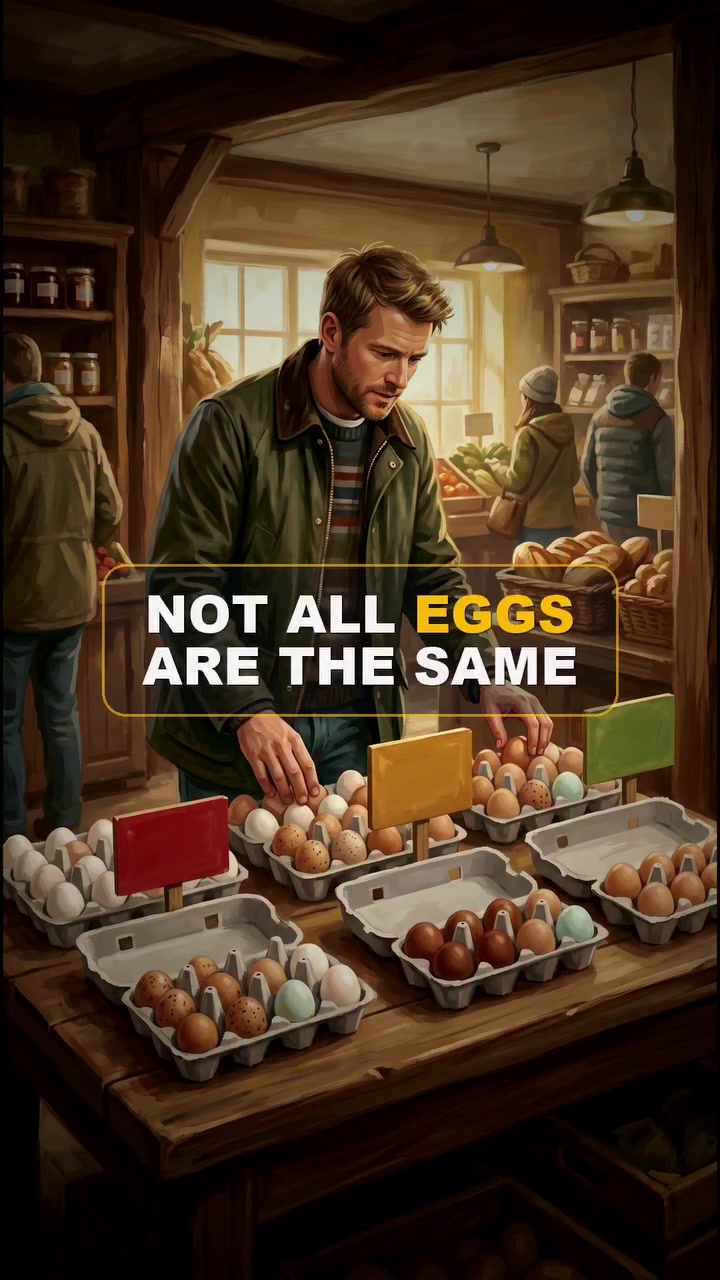
The egg carton isn’t telling the whole truth
Shopping for eggs can be a confusing and inefficient process, especially because of how egg producers use labels. The truth about hen living conditions, standards of welfare, and health benefits is often buried in vague terms. Nutritional content, however, depends on how the hens live. Consistently, the most impactful factor is the hens' diet, movement, and overall living environment.
The problem with egg labeling
Egg labels can be highly deceptive. Terms such as "cage-free" and "free-range" are often used to give the impression of better animal welfare, without clearly defining what these terms represent. For instance, "cage-free" only means that hens are not kept in cages, but it does not specify the amount of space they have or whether they have access to the outdoors. This lack of clarity is what often leaves consumers with an incomplete understanding of the product they are purchasing. "Caged" eggs come from hens packed into battery cages, where each hen has less space than a sheet of paper. "Cage-free" ensures no cages, but hens might still be crammed indoors. "Free-range" is tricky: in the U.S., it can mean one small door to a concrete yard. There is no guarantee that hens use the door or the yard, so they still might not get any real outdoor access. In the UK and EU, the terms are stricter, meaning the methods are closer to "pasture-raised," but not quite.
The power of the pasture
Pasture-raised and the health benefits
The distinction between various egg types lies in more than the living conditions of the hens. Pasture-raised eggs come from hens that enjoy the most natural living conditions: hens out on grass, pecking insects, and eating the diet they are actually built for. The nutritional profile of pasture-raised eggs is significantly different from conventional eggs. This is the primary advantage of pasture-raised eggs. Studies suggest they have up to twice the omega-3s, three times the vitamin E, and far more vitamin D. The exact comparisons are not clear, but it is clear that hens are healthier, and their eggs are more nutritional.
Pasture-raised and the difference in flavor
Titling pasteurized eggs as the standard does not mean they are the most tasty. The natural-acting hens are a sign of flavor differences. The flavor of an egg is influenced by a variety of factors, including the hen's diet and living conditions. Pasture-raised hens, for example, have access to a varied diet, including insects and greens, which can impart a richer, more complex flavor to their eggs. "Adding value" to eggs refers to the additional qualities that certain eggs possess, such as better nutrition, flavor, and color.
Pasture-raised and animal welfare
Pasture-raised hens also experience greater welfare than conventional hens. Studies suggest they enjoy better quality of life. Pasture-raised eggs often come from farms that prioritize animal welfare. These hens have more space to move around, access to the outdoors, and a more natural diet. This can lead to lower stress levels and a better overall quality of life. Many pasture-raised egg producers emphasize not just the nutritional benefits for consumers, but the ethical considerations for the hens themselves. This is a concept that is direct-to-consumer on social media.
Where to find them
Finding pasture-raised eggs might not be as straightforward as opting for the first "free-range" label you see. Local farmers' markets and specialty grocers often carry them. Many consumers find that the best way to support pasture-raised eggs is to buy directly from local farms. This not only ensures that you are getting quality and nutrition, but it also supports local agriculture.
Health benefits and the diet of hens
Pasture-raised eggs differ from conventional eggs in their nutritional profile. Studies suggest they have up to twice the omega-3s, three times the vitamin E, and far more vitamin D. These nutrients are crucial for a healthy diet.
What do we look for in the egg cartons
Nailing the labels:
Understanding how different labels impact the hens' diet is critical for selecting quality eggs. Pasture-raised eggs, for example, come from hens that have access to the outdoors and a more natural diet, including insects and greens. This can impart a richer, more complex flavor to their eggs, giving the eggs a more satisfying flavor overall. Even better, you can use nutritional labels to identify pasture-raised eggs.
Identifying the source
Consumers are increasingly interested in knowing the source of the eggs they purchase. Some producers go the extra mile to provide this information. Another way is by visiting local farmers' markets and specialty grocers, this is usually where you can find pasture-raised eggs. The "farm-to-table" movement has gained traction in recent years, with many consumers valuing the transparency and quality that comes with knowing the source of their food.
The difference in color:
The color of an egg yolk can also indicate the diet of the hen. Typically, hens that are fed a diet rich in pigments and nutrients tend to lay eggs with a deeper, more vibrant yolk color. This is an effective method for any consumer looking for quality eggs.
How to identify pasture-raised eggs and buy with confidence
If a consumer sees the label "pasture-raised" on the egg carton, know that this is the real standard. Look for the term "pasture-raised" on the egg carton. This indicates that the hens have been raised on pastures. The description should also emphasize that the hens have direct access to pastures, which is essential to the hens' overall quality of life. This is essential in identifying pasture-raised eggs.
- Take a look at the label. Is "pasture-raised" there?
- If yes, it means that the hens have been raised on pastures. This is the key to the hens' overall quality of life.
- If yes, also look for the statement "hens raised on pastures."
- Look for the term "pasture-raised."
- The term is specifically certified and there are strict rules about using it.
- This guarantees that the hens have direct access to pastures.
- It also guarantees that the hens are afforded the opportunity to roam and forage.
- This is essential in identifying pasture-raised eggs.
Questions readers ask
What exactly does 'cage-free' mean for the hens' living conditions?
'Cage-free' simply means that hens are not kept in cages, but it doesn't specify the amount of space they have or whether they have access to the outdoors. So, while they might not be in cages, they could still be cramped indoors with little room to move around.
How do pasture-raised eggs differ from conventional eggs in terms of nutrition?
Pasture-raised eggs come from hens that have a more natural diet and living conditions, which results in a significantly different nutritional profile. These eggs can have up to twice the omega-3s, three times the vitamin E, and more vitamin D compared to conventional eggs.
How are egg labeling standards different in the UK and EU compared to the U.S.?
In the UK and EU, the terms like 'free-range' are stricter and closer to 'pasture-raised' standards. This means hens have more access to the outdoors and better living conditions compared to the U.S., where 'free-range' can simply mean a small door to a concrete yard.
What makes pasture-raised eggs taste different from other types of eggs?
The flavor of an egg is influenced by the hen's diet and living conditions. Pasture-raised hens have access to a varied diet, including insects and greens, which can impart a richer, more complex flavor to their eggs. This natural diet and outdoor access contribute to the unique taste of pasture-raised eggs.
Why are pasture-raised eggs often considered better for animal welfare?
Pasture-raised hens enjoy greater welfare because they have more space to move around, access to the outdoors, and a more natural diet. These conditions can lead to lower stress levels and a better overall quality of life, making pasture-raised eggs a more ethical choice for consumers concerned about animal welfare.
How can consumers ensure they are buying eggs from hens with better living conditions?
To ensure better living conditions for hens, consumers should look for labels like 'pasture-raised,' which indicate that hens have access to the outdoors and a more natural diet. It's also helpful to research specific brands and farms to understand their practices and commitment to animal welfare.
Are there any regulations ensuring the accuracy of egg labels?
Currently, there are few regulations ensuring the accuracy of egg labels like 'cage-free' and 'free-range.' This lack of clarity often leaves consumers with an incomplete understanding of the product they are purchasing. It's important for consumers to do their own research and look for third-party certifications that verify the living conditions of the hens.
Related deep dives
Similar reads based on topic and creator.




Recent articles
Fresh deep dives from the latest Reels we unpacked.




Comments
Be the first to comment.