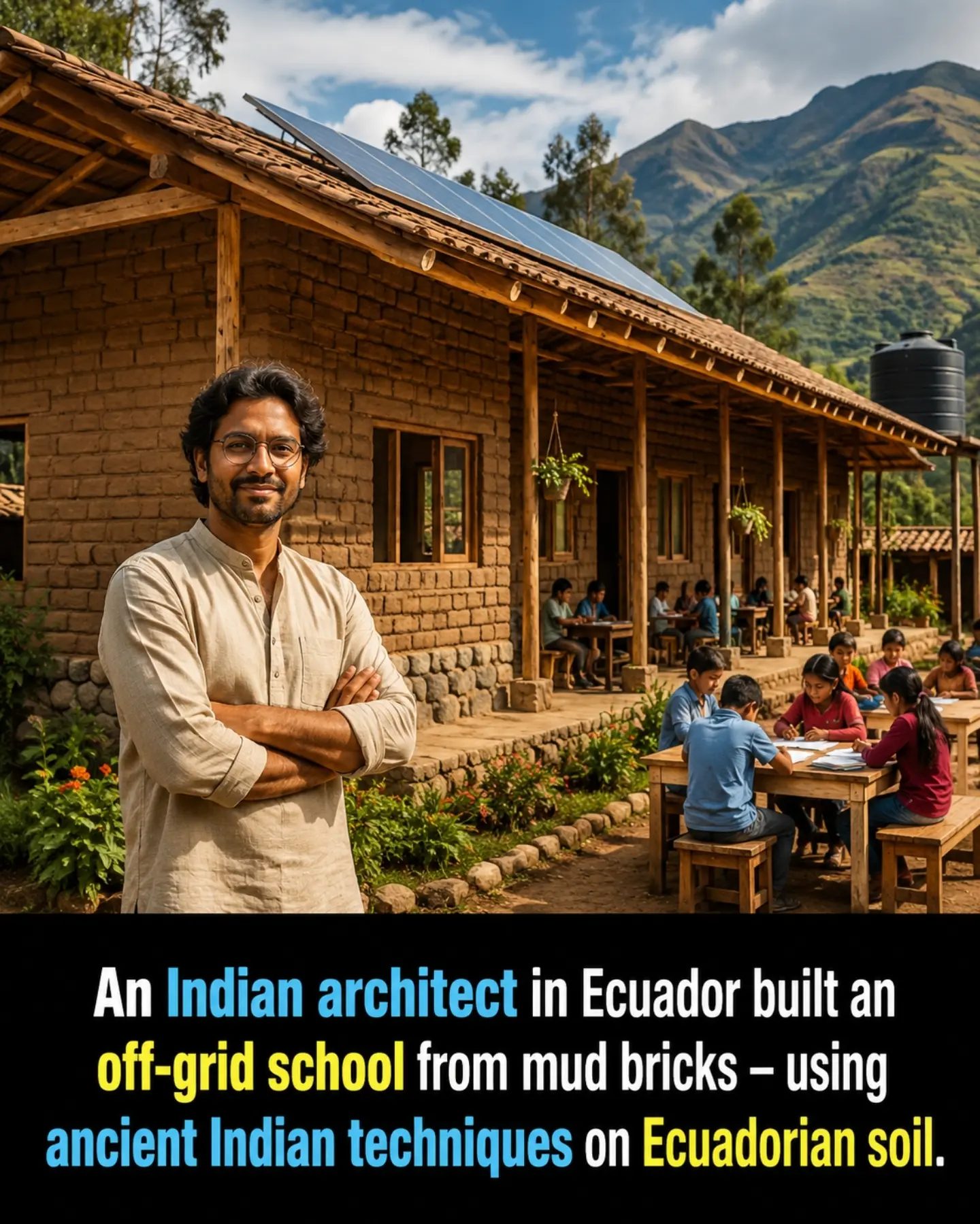
Sustainable School Construction in Ecuador
Ecuador hosts a remarkable example of sustainable architecture: a school constructed using mud bricks and powered by solar panels. This innovative project combines ancient Indian construction techniques with modern sustainable practices, creating an off-grid educational facility in the heart of Ecuador.
Context / Why this matters
Sustainable construction is not just about using eco-friendly materials; it's about integrating these materials into the local environment in a way that enhances the community's quality of life. This school in Ecuador exemplifies this approach by leveraging both ancient and modern techniques to create a functional, energy-efficient building.
Main discussion
The Power of Ancient Techniques
The construction of this school draws heavily on ancient Indian techniques, which have been adapted to the specific needs and resources of Ecuador. Mud bricks, also known as adobe bricks, are a testament to this ancient craft. These bricks are made from local soil, which is mixed with water and sometimes stabilizers like clay or straw, then dried in the sun. This method not only conserves resources but also reduces the carbon footprint associated with traditional brick manufacturing.
Mud Bricks: A Sustainable Choice
Mud bricks are a sustainable alternative to conventional bricks. They are made from readily available local materials, and their production process requires minimal energy. Additionally, using mud bricks in construction helps regulate indoor temperatures. During the day, the thick walls absorb heat and release it at night, keeping the interior cool. This natural thermal regulation reduces the need for artificial cooling, further enhancing energy efficiency.
Solar Panels: Harnessing the Sun's Power
The school in Ecuador aims to minimize its environmental impact by incorporating solar panels as its primary energy source. Solar panels convert sunlight into electricity, providing a renewable and clean energy source. Off-grid systems, like the one used here, are particularly beneficial in remote areas where access to the conventional power grid may be limited.
Combining Ancient and Modern
The fusion of ancient Indian techniques and modern solar technology showcases the potential of merging traditional wisdom with contemporary innovation. This approach not only respects the historical knowledge of the past but also embraces the challenges and opportunities of the present. The result is a sustainable building that serves the educational needs of the community while minimizing environmental impact.
Practical tips
Embrace Local Materials
Building with local materials reduces transportation costs and the overall carbon footprint. In Ecuador, mud bricks are an excellent choice due to their availability and eco-friendly production process.
Accurate site planning is crucial for ensuring the longevity and efficiency of a sustainable building. Consider the local climate, sun exposure, and natural resources available when designing your structure.
Incorporate Renewable Energy
Relying on renewable energy sources such as solar or wind power is beneficial for the environment and can significantly reduce energy costs over time. For off-grid buildings, solar panels are a practical and effective solution.
Community Involvement
Involve the local community in the planning and construction process. This not only ensures that the building meets the community’s needs but also fosters a sense of ownership and responsibility.
Prioritize Energy Efficiency
Implement design features that promote energy efficiency, such as passive solar design, natural ventilation, and thermal mass. These features can help maintain comfortable indoor temperatures without relying on mechanical systems.
Important takeaways
The Need for Sustainable Construction
Sustainable construction is essential for preserving the environment and ensuring that future generations have access to the resources they need. By adopting sustainable practices, we can reduce our reliance on non-renewable resources and mitigate the effects of climate change.
The Benefit of Ancient Techniques
Ancient construction techniques offer valuable insights into sustainable building practices. By integrating these methods with modern technology, we can create structures that are both efficient and environmentally responsible.
The Role of Community
Community involvement is key to the success of any sustainable construction project. Engaging local residents in the planning and construction process ensures that the building meets the community's needs and fosters a sense of ownership and responsibility.
Conclusion
The school in Ecuador serves as a beacon of sustainable construction, showcasing the potential of combining ancient techniques with modern technology. By embracing local materials, incorporating renewable energy sources, and involving the community, we can create buildings that are not only functional but also environmentally responsible. As we move forward, it's crucial to continue innovating and adapting sustainable practices to build a more resilient and eco-friendly future.
Questions readers ask
What are the benefits of using mud bricks in school construction, as seen in the Ecuadorian example?
Mud bricks offer several advantages, including excellent thermal mass, which helps maintain comfortable indoor temperatures. They are also locally sourced and produced, reducing the carbon footprint associated with transportation and manufacturing. Additionally, mud bricks are durable and can last for centuries, as demonstrated by ancient structures.
How does the use of solar power contribute to the off-grid status of the Ecuadorian school?
Solar power allows the school to generate its own electricity independently of the grid. By harnessing the sun's energy, the school can power its facilities without relying on fossil fuels. This not only reduces its environmental impact but also ensures a steady power supply in remote areas where grid connectivity might be challenging.
What ancient Indian techniques are used in the construction of this sustainable school?
The school incorporates ancient Indian construction techniques, such as the use of mud bricks and passive solar design. These techniques have been adapted to fit modern standards and the local climate, enhancing the building's sustainability and efficiency.
Can other schools in Ecuador adopt similar sustainable practices?
Yes, other schools in Ecuador can adopt similar practices by integrating local materials and renewable energy sources. This approach not only promotes sustainability but also supports the local economy by creating jobs and reducing the need for imported materials. Additionally, schools in other regions can tailor these practices to suit their specific environmental and cultural contexts.
How does the integration of ancient and modern design benefit the community?
The blend of ancient and modern design creates a unique learning environment that reflects the community's heritage while also promoting environmental stewardship. This approach can instill a sense of pride and responsibility among students and community members, encouraging them to preserve their cultural legacy and protect the environment.
What are the advantages of having an off-grid school in a remote area?
Off-grid schools provide a reliable power source in areas where grid connectivity is limited or non-existent. This ensures that students have access to essential services like lighting, heating, and technology, enhancing their overall learning experience. Additionally, off-grid schools promote energy independence and reduce the community's reliance on external energy sources.
How does the sustainable design of the school in Ecuador support environmental stewardship?
The school's sustainable design minimizes its environmental footprint by using locally sourced materials and renewable energy. This approach reduces greenhouse gas emissions and promotes biodiversity. Moreover, the school's design serves as a model for other institutions, inspiring them to adopt similar practices and contribute to a more sustainable future.
Related deep dives
Similar reads based on topic and creator.




Recent articles
Fresh deep dives from the latest Reels we unpacked.



Comments
Be the first to comment.