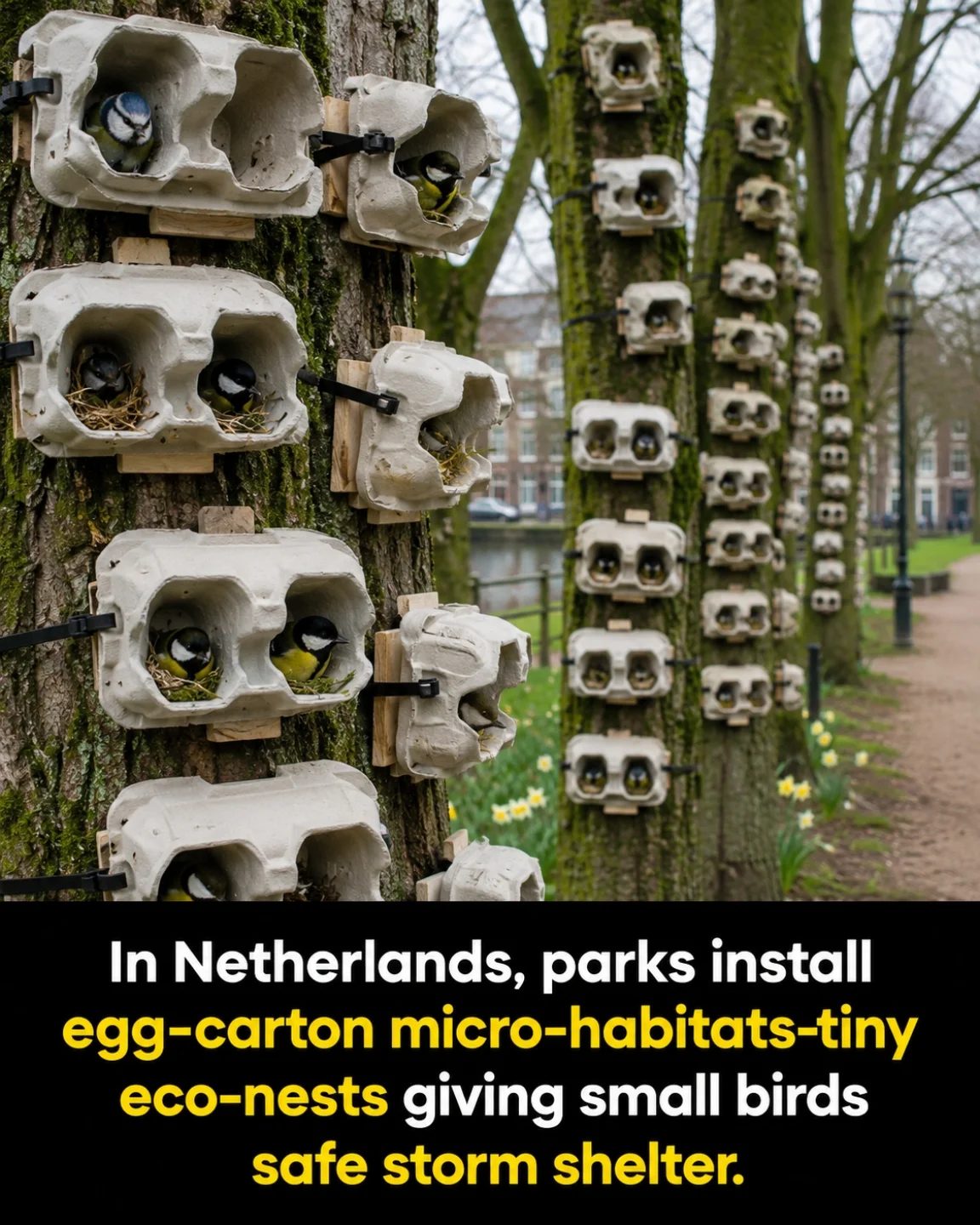
Egg-Carton Bird Habitats: A Creative Solution for Urban Wildlife
In parks across the Netherlands, a unique and eco-friendly initiative is underway. Egg-carton micro-habitats are being installed on trees to provide small birds with safe shelter from storms. These DIY-style nests, crafted from recycled egg cartons, are a testament to innovative urban wildlife conservation efforts.
Why This Matters
Urbanization often leads to a loss of natural habitats, making it challenging for wildlife to thrive in city environments. This initiative addresses this issue by creating small, safe spaces for birds in urban parks. These habitats not only support local bird populations but also encourage a more harmonious coexistence between humans and wildlife.
The Benefits of Egg-Carton Bird Habitats
Eco-Friendly Materials
The use of recycled egg cartons is a standout feature of this initiative. These materials are not only readily available but also biodegradable, making them an excellent choice for eco-friendly urban design. By repurposing waste materials, this project reduces environmental impact and sets a positive example for sustainable living.
Providing Safe Shelter
Small birds face numerous challenges in urban environments, including predators and harsh weather conditions. These egg-carton habitats offer a safe haven for birds, protecting them from storms and other potential threats. The design of these micro-habitats ensures that birds have a secure place to rest and nest, which is crucial for their survival.
Encouraging Urban Wildlife Conservation
This initiative is part of a broader movement towards integrating wildlife conservation into urban planning. By creating habitats for birds in public parks, the Netherlands is fostering a greater appreciation for urban wildlife and promoting the idea that cities can be designed to support biodiversity.
Practical Tips for Creating Your Own Egg-Carton Bird Habitats
If you're inspired to create your own bird habitats, here are some tips to get you started:
Materials Needed
- Empty egg cartons ( cardboard or biodegradable)
- Non-toxic glue or adhesive
- String or twine
- Scissors or a craft knife
- Decorative elements (optional)
Steps to Create
- Gather and Clean: Collect empty egg cartons and ensure they are clean and dry. Remove any plastic or Styrofoam trays if present.
- Cut and Shape: Cut the egg carton into individual cups, ensuring each one is secure and sturdy. You can leave the bottom intact or cut out a small hole for drainage.
- Decorate (Optional): If you want to add a personal touch, consider painting or decorating the egg cartons with non-toxic materials. This can make the habitats more visually appealing and blend them better with their surroundings.
- Attach to Trees: Use non-toxic glue or adhesive to attach the string or twine to the top of the egg carton. Hang the habitat from a tree branch at a height that is safe from ground-level predators but accessible to birds.
Placement Tips
- Choose a tree with a sturdy branch that is high enough to avoid ground-level predators.
- Ensure the habitat is placed in a location that is sheltered from direct sunlight and strong winds.
- Avoid placing the habitat near sources of noise or disturbance, such as busy roads or playgrounds.
Important Takeaways
Egg-carton bird habitats are a simple yet effective way to support urban wildlife. Here are some key takeaways from this initiative:
- Reuse and Recycle: Repurposing egg cartons reduces waste and contributes to a more sustainable environment.
- Support Local Wildlife: Providing safe shelter for small birds helps maintain biodiversity in urban areas.
- Community Engagement: Initiatives like these encourage community involvement in wildlife conservation and promote a greater appreciation for urban wildlife.
Conclusion
The installation of egg-carton micro-habitats in parks across the Netherlands is a shining example of innovative and eco-friendly urban design. By providing small birds with safe shelter, these habitats support local wildlife and promote a more sustainable approach to urban planning. Whether you're a park administrator, a wildlife enthusiast, or someone looking to make a difference in your community, creating egg-carton bird habitats is a practical and impactful way to support urban wildlife.
Questions readers ask
How are egg cartons used to support bird conservation in the Netherlands?
Egg cartons are repurposed and attached to trees in urban parks to create small, cozy shelters for birds. These structures provide birds with a safe haven from storms and other urban challenges, supporting local bird populations.
What are the benefits of using egg cartons for bird habitats in urban areas?
Egg carton bird houses offer a sustainable solution by recycling waste materials and providing safe, easily accessible habitats for small birds. These shelters encourage urban wildlife conservation and promote a more harmonious coexistence between humans and birds in city environments.
Are there specific bird species that benefit from these egg carton shelters?
These shelters are primarily designed to support small bird species that often struggle to find suitable habitats in urban areas. By providing safe, secure spaces, these shelters help these birds navigate the challenges of city life more effectively.
How do these eco-friendly bird habitats contribute to urban wildlife conservation?
By installing egg carton bird habitats, the Netherlands is addressing the loss of natural habitats due to urbanization. These initiatives create small, safe spaces for birds, fostering urban wildlife conservation and encouraging a more balanced ecosystem within city parks.
Why are these DIY bird nests considered green urban initiatives?
These DIY bird nests are made from recycled egg cartons, reducing waste and promoting recycling. By creating sustainable bird shelters, these initiatives contribute to a cleaner, greener urban environment, aligning with broader sustainability goals.
What is the impact of urbanization on bird populations, and how do these habitats help?
Urbanization often leads to a decline in bird populations due to the loss of natural habitats. By installing egg carton bird habitats in urban parks, the Netherlands is providing small birds with secure spaces to nest and thrive, mitigating the negative impacts of city life on bird populations.
How can I create an egg carton bird shelter in my own backyard?
To create an egg carton bird shelter, collect clean, unused egg cartons, and attach them to a tree or a post in your backyard. Ensure the shelter is secure and elevated to protect it from predators and provide a safe space for birds to nest. You can also customize the shelter with additional materials to make it more appealing to local bird species.
Related deep dives
Similar reads based on topic and creator.


Recent articles
Fresh deep dives from the latest Reels we unpacked.
Comments
Be the first to comment.