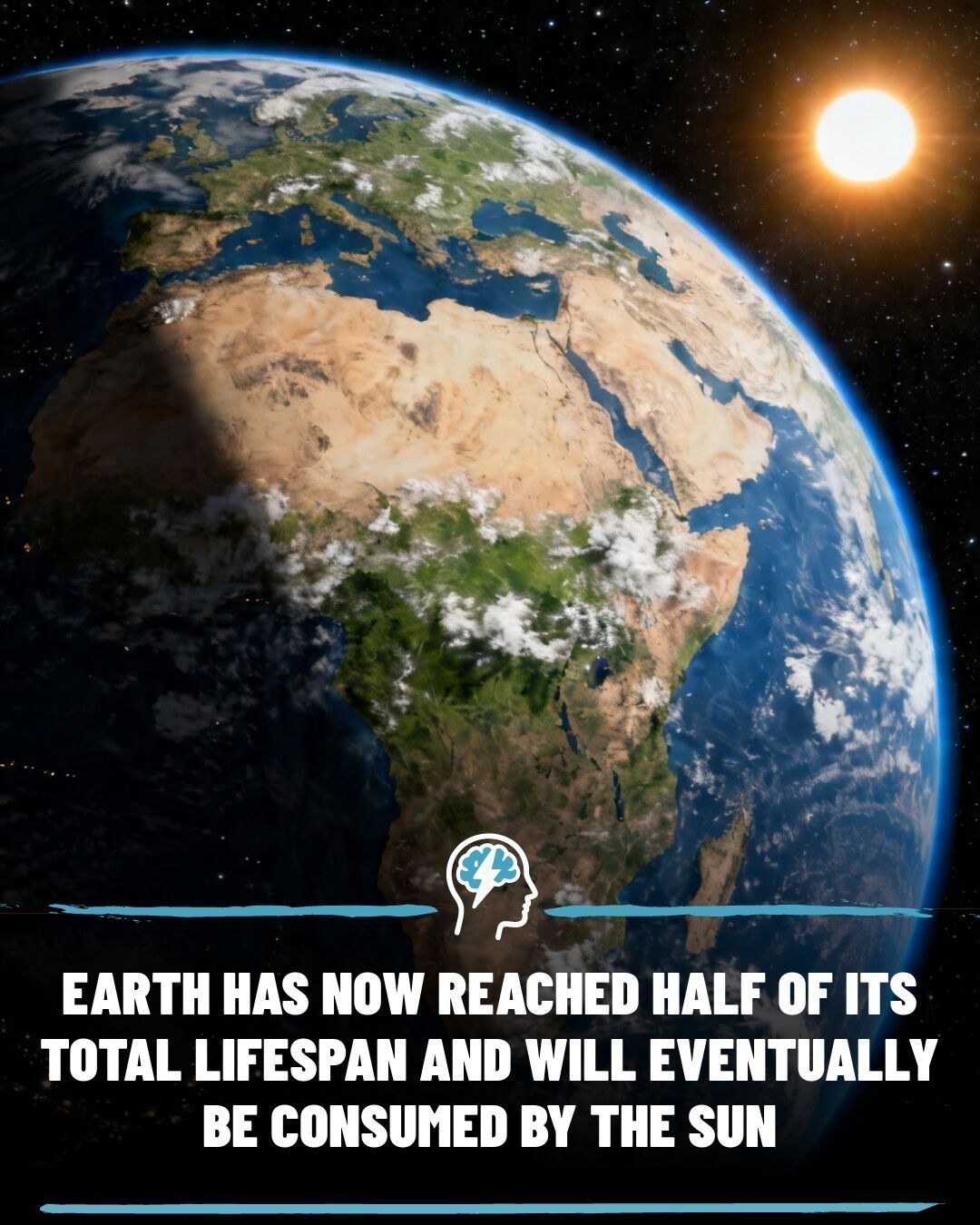
Earth's Lifespan
Earth is a remarkable place, but it is not eternal. The planet has a finite lifespan, and understanding the timeline and processes involved can provide a fascinating perspective on our place in the universe.
Context / Why this matters
The lifespan of Earth is a crucial aspect of understanding the history and future of our planet, and the study of Earth's demise helps to contextualize the significance of our existence. As humans, we are part of a vast cosmic narrative. Earth is part of this narrative, and its lifespan is a critical piece of that story.
Main discussion
The formation of Earth
Earth formed roughly 4.5 billion years ago from the same swirling cloud of gas and dust that created the Sun. This information has been confirmed through radiometric dating of ancient meteorites. One of the most well-known meteorites used for this purpose is the Canyon Diablo meteorite, which crashed into Arizona thousands of years ago. These space rocks are like time capsules, preserving the earliest chemistry of our solar system.
The Sun’s Role in Earth’s Lifespan
The Sun is the primary driver of Earth's lifespan. It converts about 600 million tons of hydrogen into helium every second. This nuclear fusion process is what keeps our star shining and our planet warm. However, this process is not infinite. Astronomical models suggest that in approximately 5 billion years, the Sun will exhaust its hydrogen core. At this point, the Sun will begin to expand into a red giant. This bloated version of our star may grow massive enough to engulf Mercury, Venus, and potentially even Earth.
What Happens to Earth?
The transformation of the Sun into a red giant will have profound effects on Earth. The Sun’s expansion means that it will reach outwards to consume nearby planets. Earth, being relatively close, is at significant risk. The planet will likely be engulfed by the expanding Sun, marking the end of its habitability and structural integrity. This process will be gradual, but its inevitability is a stark reminder of the impermanence of our planet.
Practical tips
Understanding Earth's lifespan can provide several practical insights:
-
Perspective on Time: Five billion years is an almost incomprehensible stretch of time. For perspective, complex life has only existed on Earth for about 500 million years. Human civilization is merely 10,000 years old. This means we have more time ahead of us than we can possibly imagine. This cosmic perspective can help us prioritize our actions and appreciate the present moment.
-
Environmental Awareness: Knowing that our planet has a finite lifespan can inspire us to take better care of it. It underscores the importance of sustainability and conservation efforts. Every action we take has consequences that ripple through time and space.
-
Appreciation of Life: The knowledge that Earth will eventually be consumed by the Sun can remind us to cherish our time and existence. It emphasizes the importance of living fully and making the most of our window of habitability.
Important takeaways
Earth has reached half of its total lifespan, and this realization should inspire us to appreciate our existence and take care of our planet. The Sun's transformation into a red giant will eventually engulf Earth, marking the end of its habitability. This process, while inevitable and far in the future, provides a valuable perspective on our place in the universe and the importance of sustainable living.
Conclusion
Earth's lifespan is a fascinating and humbling topic. It reminds us of the vastness of time and the imperative of living mindfully. The knowledge that our planet has a finite lifespan can motivate us to cherish our existence and take better care of the world around us. By understanding the cosmic processes at play, we can gain a deeper appreciation for the extraordinary phenomenon of life on Earth.
Questions readers ask
How long has Earth existed and what is its expected lifespan?
Earth formed approximately 4.5 billion years ago. Scientists estimate that Earth has about 5 billion more years left before the Sun's evolution into a red giant makes it impossible for Earth to continue as it has.
What will happen to Earth when the Sun becomes a red giant?
When the Sun enters its red giant phase, it will expand significantly, engulfing Mercury, Venus, and likely Earth. This process will make Earth uninhabitable and mark the end of its existence as a planet.
Why is understanding Earth's lifecycle important for humanity?
Studying the lifecycle of Earth helps us appreciate the vast scale of cosmic history and our place within it. It encourages us to consider the significance of our existence, and plan for the long-term future of humanity.
Is there a way for Earth to avoid being engulfed by the Sun?
There is no known way for Earth to avoid being engulfed by the Sun. It is a natural process based on the Sun's evolution. However, humanity could potentially explore options to mitigate the effects in the very distant future.
What does the timeline of Earth's existence tell us about our planet's history?
The timeline reveals that Earth has been through numerous changes since its formation. By understanding the earth's history, we can learn about the processes that have shaped our planet and potentially predict future changes.
What are the future phases of the Sun that will affect Earth?
The Sun will gradually become hotter and brighter, eventually entering the red giant phase. During this phase, the Sun's outer layers will expand, engulfing Earth and rendering it uninhabitable.
How do scientists know about the future of Earth and the Sun?
Scientists use various methods, including observing other stars and planets, modeling stellar evolution, and studying the behavior of the Sun. This data allows them to predict the Sun's future phases and the corresponding fate of Earth.
Related deep dives
Similar reads based on topic and creator.


Recent articles
Fresh deep dives from the latest Reels we unpacked.




Comments
Be the first to comment.