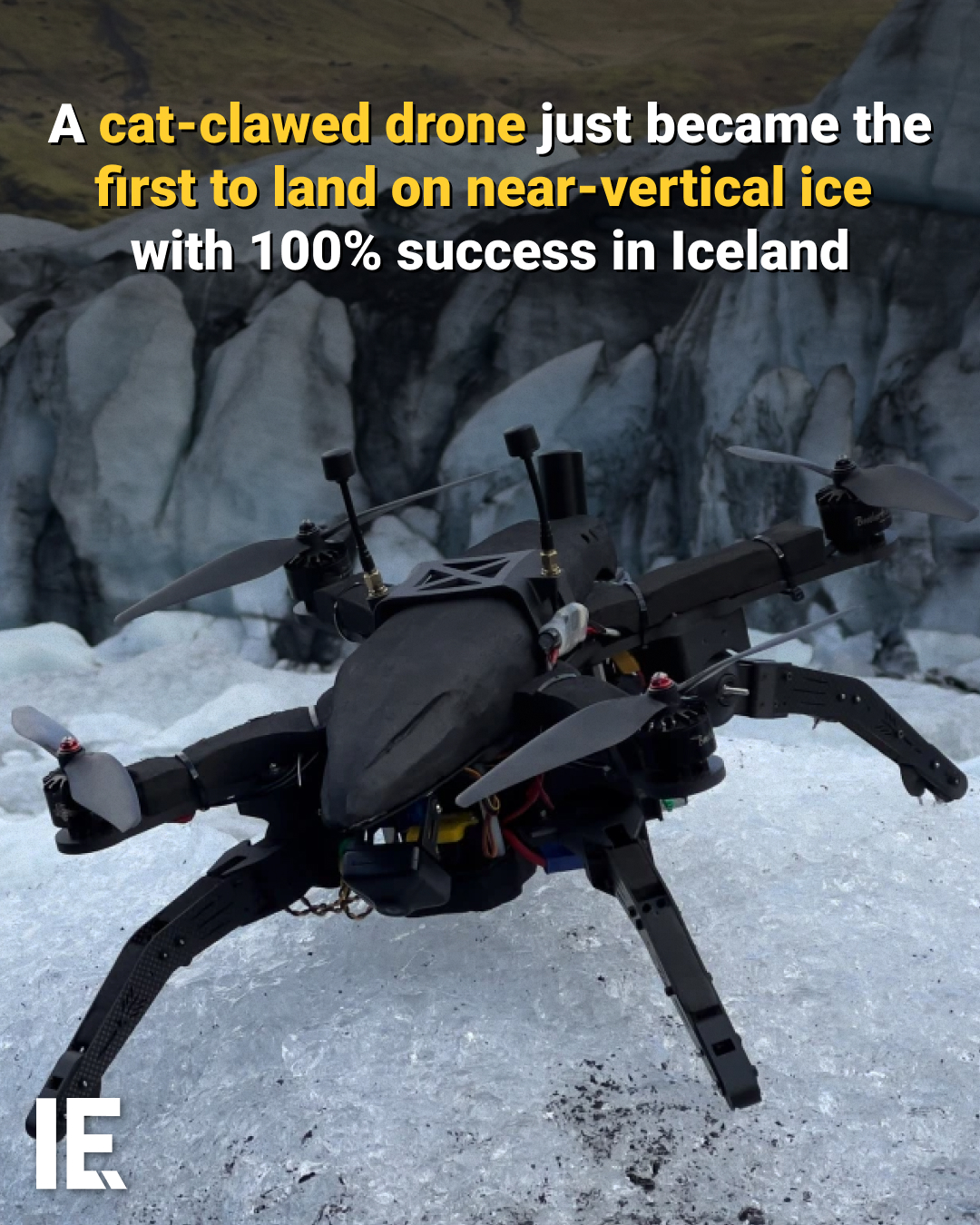
A drone outfitted with clawed landing gear just landed successfully on a nearly vertical ice wall in Iceland. The achievement made aviation history as a world-first, breaking through the boundaries of how drones can navigate extreme environments.
The Mechanical Marvel of the Cat-Clawed Drone
This cat-clawed drone is not the typical quadcopter you might spot in a park. Its landing gear looks more like a set of four retractable, flexible cat claws, which are critical to its capability. These cat claws are the defining feature of the drone––theoretically, the claws can grab and grip uneven, challenging surfaces such as the near-vertical ice of a glacier. The drone's body is black, and it has multiple propellers to handle the demands of the icy terrain. The video shows the drone navigating a steep, icy surface with apparent ease. The journey to design and successfully land this drone on such an inhospitable surface was controlled entirely by technology.
The Role of Exteme Drone Adventures
The drone landing in Iceland highlights the intersection between technological innovation and environmental exploration. As drones become more advanced, they are pushing the boundaries of where humans can explore and how they can monitor changing landscapes. Drones are becoming increasingly vital for scientific research in hard-to-reach places. The video's documentation of the drone landing in Iceland is more than just a stunt. It reflects a larger trend of using drones to explore and document extreme environments. As climate change accelerates, drones can play a crucial role in helping researchers access and study remote, rapidly changing environments. Drones have been used in glacial monitoring, tracking polar bears, and more. This drone could be the future of monitoring glaciers as climate change increasingly affects these icy landscapes. The drone's ability to land on near-vertical ice surfaces is significant. Being able to land safely in such challenging conditions is a major innovation, with potential implications for search and rescue operations. In the future, a similar drone could be deployed to rescue climbers or divers caught in extreme conditions.
Drone Design
The Cat Claw Gear Adaptation
The cat claw gear was developed to solve a range of problems when landing drones in challenging terrain. Landing gear is essential for drones as it ensures the drone's stability and safety. The design of the cat claw gear ensures that the drone remains stable on the landing surface, even when it's uneven or precarious. The clawed mechanism keeps the drone from sliding or tipping, which is crucial when landing on near-vertical surfaces.
The Claws
The gear is made up of four retractable claws, which give the drone a much firmer grip on the surface. "These claws are robust," says the drone operator. This allows the drone to land safely. The claws retract on demand during flight, ensuring that the drone remains agile and maneuverable while flying. While on the ground, they lock into position, keeping the drone steady on the landing surface. The claws are designed to withstand the pressure and weight of the drone and remain stable even on steep inclines.
The Steep Landing
Landing on near-vertical surfaces is inherently difficult due to the steep incline. The drone must be carefully maneuvered to land safely. The drone operator has to use the propellers to steady the drone as it descends, making small adjustments to ensure the drone lands at the correct angle. The landing surface is slick and uneven, posing an additional challenge when attempting to grip the surface. The landing gear is designed with this in mind, as it can grip the surface firmly. This ensures the drone remains stable and does not slip.
The Icelandic Glacier
The drone landed on an Icelandic glacier, a challenging environment due to the extreme cold and constantly shifting terrain. The conditions of Icelandic glaciers are unpredictable and dangerous, making them a harsh environment for drones. The drone operator had to be cautious before and during the landing. The glacier, in particular, is known for its steep inclines and the wet and slippery ice surface. This made the drone's 100% successful landing all the more impressive. The landing was a world-first. This means the drone was the first to successfully land in such extreme conditions. The drone's landing gear is critical to this success. The landing gear is designed to ensure the drone remains stable while landing, which is essential when navigating challenging terrain. The drone's maneuverability was necessary for such a landing: Operating a drone on a glacier requires careful navigation and control. The drone's success highlights the potential for drone technology in extreme conditions. As drone technology continues to develop, drones could be used to explore inaccessible environments such as glaciers, mountains, and caves. This would allow researchers to gather valuable data from these environments, contributing to a better understanding of Earth's ecosystems and climate change.
The Largest Drone Achievement in the history?
The drone's landing is a significant technological advancement. The landing system showcased by the drone is a critical development. The fact that the drone can land on a near-vertical ice surface is impressive. The drone was able to grip the surface firmly and remained stable during the landing. Ultimately, this advances the field of drone technology and opens up new possibilities for drones in extreme conditions. The drone's landing pinnacle is likely only the beginning. The drone's success on a glacier may pave the way for similar drone achievements in the future. Further advancements in drone technology could increase the potential for drones in scientific research and search and rescue operations. Future uses for drone technology could increase in scope. It is not impossible that drones will be used more frequently for research in inaccessible environments, or for search and rescue operations in dangerous terrain.
Getting a Drone with Special Landing Gear
This drone is a machine for extreme conditions. The drone's landing gear is critical to its functionality, as it ensures stability and safety during landing. The retractable cat claw landing gear of the drone is what allows it to land safely on the steep, icy surface. If you want to buy the drone, ensure it has the retractable landing system. While no brand name is mentioned, understanding the drone's unique capabilities could lead you to a similar product.
- Drone with landing gear potential: Look for drones with retractable or specialized landing gear for stable landings.
- Drones for icy terrain: Choose drones with steel landing gear for stability.
- Drone with multiple propellers: A drone with multiple propellers can take off and land more safely and efficiently.
Questions readers ask
How exactly do the retractable claws on the drone work?
The retractable claws on the drone are designed to extend and lock into position when the drone needs to land. They provide a firm grip on uneven surfaces, keeping the drone stable even on steep inclines. During flight, the claws retract to allow for agile maneuvering.
What makes this drone different from typical quadcopters?
Unlike typical quadcopters, this drone is equipped with retractable, claw-like landing gear that allows it to grip and land on nearly vertical surfaces. This unique feature sets it apart and enables it to navigate extreme environments that other drones can't handle.
Why is the ability to land on vertical ice significant for environmental monitoring?
The ability to land on vertical ice surfaces is significant because it allows drones to access and monitor hard-to-reach areas that are crucial for environmental research, especially in the context of climate change. This capability can help scientists gather data from rapidly changing landscapes, such as glaciers, which are often difficult to study.
What other applications could this technology have beyond environmental monitoring?
Beyond environmental monitoring, this technology has potential applications in search and rescue operations. Imagine a drone deployed to rescue climbers or divers caught in extreme conditions, where traditional landing methods wouldn't be feasible.
How does the drone's design ensure stability on uneven surfaces?
The drone's stability on uneven surfaces is ensured by its unique cat claw gear. The claws are designed to grip firmly onto the surface, preventing the drone from sliding or tipping. This is crucial for landing on near-vertical surfaces, where stability is paramount.
What challenges did the developers face when designing the clawed landing gear?
The developers had to solve several problems to design the clawed landing gear. They needed to ensure the drone remained stable on uneven surfaces, could grip firmly on near-vertical ice, and could retract the claws during flight to maintain agility and maneuverability.
Could this drone be used in other extreme environments besides icy terrains?
While the drone was specifically designed for icy terrains, its adaptable claw mechanism could potentially be used in other extreme environments. Anywhere there are challenging, uneven surfaces—like rocky cliffs or steep mountain faces—this drone's technology could prove useful.
Related deep dives
Similar reads based on topic and creator.

Recent articles
Fresh deep dives from the latest Reels we unpacked.

Comments
Be the first to comment.