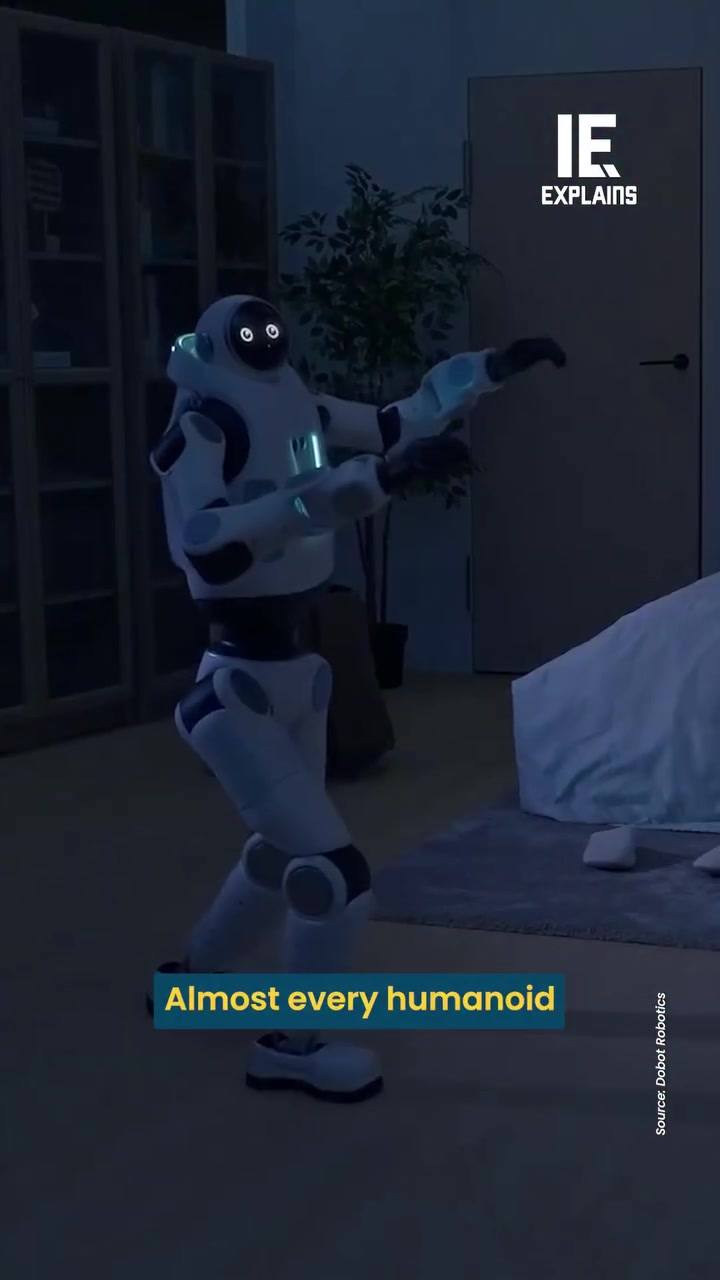
From outset, walking on grass became a question of design. The robotics market prioritized factory floors, then suddenly, it's the living room. And the pervasive question is: What can it do in the field—how are we getting from 2D X and Y motion on a flat floor to the real world? In China, a robotics firm has released a prototype. Augustin released Dobot Lumo on August 6, and it is a robot that can navigate rough terrain. Unlike other humanoid robots, Lumo can walk on grass, sand, and cobblestone. It stands at 1.3 meters, roughly 4 feet 3 inches, closer to a child's height than a factory worker's. The robot is designed to move seamlessly between outdoor and indoor environments without changing its gait. It can spar with a child outdoors, and indoors, it can read a person's mood from their face and voice, responding independently. At night, it shifts to a softer walking mode and quietly turns off the lights. The robot's capabilities are powered by Dobot's in-house model, which includes multimodal emotion sensing, a 3D spatial system with navigation and obstacle avoidance, and continuous learning from real home data.
A Humanoid Robot That Walks Where Other Ones Don’t
Dobut Lumo features are amazing at a glance. The robot can walk on grass, sand, and cobblestone, which is a significant advancement from the typical flat lab floors where most humanoid robots operate. And that's the beginning of what makes Lumo distinct: it was designed for all-terrain activity, which means it can navigate uneven surfaces and obstacles. This capability is a breakthrough in robotics, as it opens up new possibilities for robots to operate in real-world environments. It is also adaptable to different environments. Lumo can move seamlessly between outdoors, home, and office settings without changing its gait. This adaptability makes it versatile and practical for various applications. Expansion into home assistance and education are part of this trajectory. Here's what make it tick. The robot's in-house model consists of multimodal emotion sensing that fuses vision and audio, a 3D spatial system with navigation and obstacle avoidance, and continuous learning from real home data. These features enable Lumo to interact with its environment and users in a more natural and intuitive way. Another noteworthy feature is the robot's ability to learn and adapt to its owner's routine over time.
Why Dobut Lumo Matters
Humanoid robots are expanding in power, and the next step is getting out of the factory. For so long, humanoid robots have been largely confined to controlled environments like lab floors and factories, but the implications of Dobut Lumo are environments where the outdoors and home settings are unpredictable. Imagine a robot that can assist with daily tasks, interact with family members, and even teach children about technology and robotics. As noted, Lumo is a teaching platform. Schools and universities can use the robot for coursework in SLAM navigation, motion control, and human-robot interaction. This makes it a valuable tool for education and research, as it provides students with hands-on experience in robotics and related fields. It also allows educators to keep pace with the future of robotics, in a competitive global market.
Terrain Navigation: How Dobut Lumo Walks
The most immediate novelty is that Lumo was built for rough terrain. It walks on grass, sand, and cobblestone. This is a significant advancement from the typical flat lab floors where most humanoid robots operate. The ability to navigate uneven surfaces and obstacles is a breakthrough in robotics, as it opens up new possibilities for robots to operate in real-world environments. The robot relies on 3D spatial systems.
Gait Transitions
Lumo can move seamlessly between different environments without any change in its gait. This adaptability makes it versatile and practical for various applications. It uses multimodal emotion sensing to detect emotions and respond accordingly. It also has obstacle detection and avoidance capabilities
Indoor Adaptiveness
Dobut Lumo reads a person's mood from their face and voice. This capability allows it to respond independently to its surroundings and users, making it more intuitive and interactive. It can dance in time with music and turn off the lights quietly at night, indicating that it has detected the owner has fallen asleep.
A Teaching Platform
Dobot is also positioning Lumo as an educational robot. Schools and universities can use it for coursework in SLAM navigation, motion control, and human-robot interaction. This makes it a valuable tool for education and research, as it provides students with hands-on experience in robotics and related fields. And it allows educators to keep pace with the future of robotics.
Human-Interactivity
It also has obstacle detection and avoidance capabilities, allowing it to navigate its environment more effectively. It can walk over to you rather than wait for you, and it can dance in time with music without any external commands.
Dobut Lumo: Home Robots
Right now, Lumo is just a prototype. The Chinese firm clearly has bigger plans for this humanoid robot in home environments. Lumo's capabilities make it a versatile tool for various applications, from assistance to education. Dobut Lumo stands at 1.3 meters, roughly 4 feet 3 inches, closer to a child's height than a factory worker's. It's a startling design pivot. The concept of a robot that can walk on grass, sand, and cobblestone, navigate uneven surfaces and obstacles, and move seamlessly between different environments is a significant advancement in robotics. And Lumo's capabilities make it a valuable tool for education and research, providing students with hands-on experience in robotics and related fields.
Questions readers ask
What makes Dobut Lumo different from other humanoid robots?
Dobut Lumo stands out because it can navigate various terrains like grass, sand, and cobblestone, unlike most humanoid robots designed for flat surfaces. Its all-terrain capability allows it to move seamlessly between outdoor and indoor environments without changing its gait, making it more versatile for real-world applications.
How does Dobot Lumo adapt to different environments?
Lumo uses a 3D spatial system for navigation and obstacle avoidance, along with multimodal emotion sensing that combines vision and audio. This allows it to understand and react to its surroundings, whether it's outdoors, in a home, or in an office. Over time, it learns and adapts to its owner's routine, becoming more intuitive and natural in its interactions.
What are the practical applications of Dobut Lumo?
Dobut Lumo has a range of practical applications. It can assist with daily tasks, interact with family members, and even teach children about technology and robotics. Additionally, it can be used as an educational tool in schools and universities for coursework in SLAM navigation, motion control, and human-robot interaction.
Can Dobut Lumo operate in low-light conditions?
Yes, at night, it shifts to a softer walking mode and quietly turns off the lights. This suggests that it has sensors and programming to operate effectively in low-light conditions, although specific details on its low-light capabilities aren't provided.
How does Dobut Lumo learn and adapt to its owner's routine?
The robot continuously learns from real home data, allowing it to understand and adapt to its owner's routine over time. This means it can become more intuitive and natural in its interactions as it gathers more information about the environment and the people it interacts with.
What is the height of Dobut Lumo, and why is that significant?
Dobut Lumo stands at 1.3 meters, or roughly 4 feet 3 inches, which is closer to a child's height than an adult's. This size makes it more approachable and suitable for interacting with children, as well as for navigating indoor spaces designed for humans.
Is Dobut Lumo available for purchase or use outside of China?
The article does not specify the availability of Dobut Lumo outside of China. Since it's a prototype released by a Chinese robotics firm, it's likely that availability and distribution details will be announced as the technology develops and commercialization plans are finalized.
Related deep dives
Similar reads based on topic and creator.



Recent articles
Fresh deep dives from the latest Reels we unpacked.


Comments
Be the first to comment.