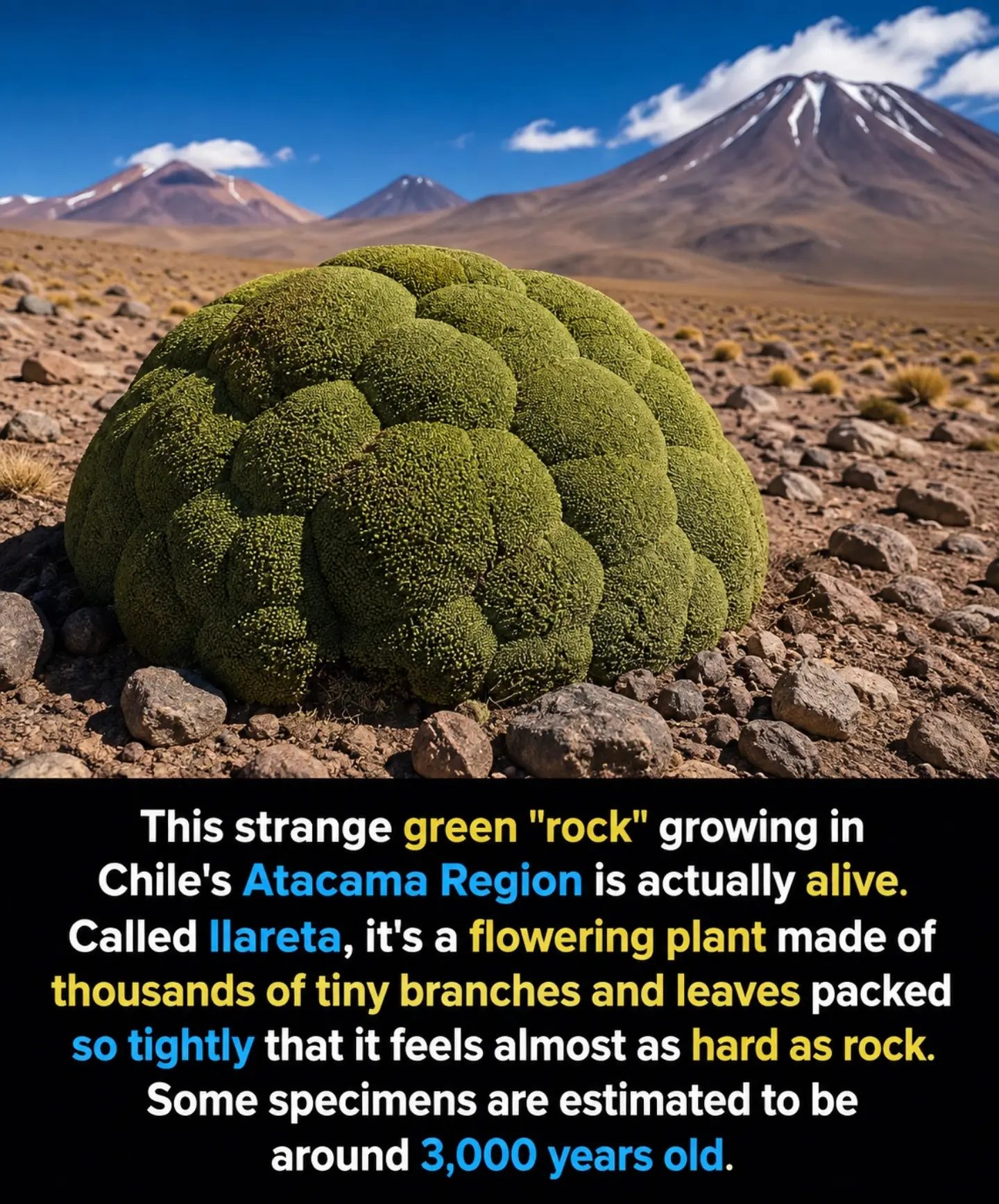
Llareta Plant in Chile's Atacama Region
Nestled in Chile's Atacama Region lies a fascinating plant known as Llareta. Often mistaken for a peculiar green rock, Llareta is actually a remarkable flowering plant composed of thousands of tightly packed branches and leaves. This unique plant is not only visually intriguing but also has a rich history and ecological significance.
Why This Matters
Llareta's extraordinary resilience and longevity make it a subject of scientific interest and a symbol of the unique biodiversity found in the Atacama Desert. Understanding this plant provides insights into how life can thrive in some of the harshest conditions on Earth. Moreover, Llareta's distinctive appearance and cultural significance make it a fascinating topic for nature enthusiasts and travelers alike.
The Remarkable Longevity of Llareta
Estimated Age of Specimens
One of the most striking aspects of Llareta is its longevity. Some specimens are estimated to be around 3,000 years old. This extraordinary lifespan is a testament to the plant's ability to adapt and survive in the harsh desert environment. The slow growth rate and resilient nature of Llareta contribute to its remarkable age.
Factors Contributing to Longevity
Several factors contribute to the longevity of Llareta. The plant's tightly packed branches and leaves create a dense structure that helps it retain moisture and protect against the harsh desert conditions. Additionally, Llareta's slow growth rate and minimal water requirements allow it to conserve resources over long periods.
The Unique Appearance of Llareta
Resemblance to a Rock
Llareta's unique appearance is often mistaken for a rock due to its hard, green exterior. This hardness comes from the tightly packed branches and leaves, which create a dense, almost rock-like structure. This unique feature helps Llareta blend into its surroundings, providing camouflage and protection against harsh environmental conditions.
Flowering Characteristics
Despite its rock-like appearance, Llareta is a flowering plant. The flowers are small and inconspicuous, but they play a crucial role in the plant's reproduction. These flowers are often overlooked due to the plant's overall appearance, which can be deceiving.
Ecological and Cultural Significance
Biodiversity in the Atacama Desert
Llareta is an essential component of the Atacama Desert's unique biodiversity. The desert, known for its aridity, is home to a variety of plant and animal species that have adapted to survive in its harsh conditions. Llareta's presence adds to the rich tapestry of life in this extreme environment, showcasing the resilience and adaptability of nature.
Cultural and Symbolic Importance
In the local culture, Llareta holds significant symbolic value. It is often seen as a symbol of endurance and resilience, embodying the spirit of survival in the face of adversity. The plant's unique appearance and longevity have made it a subject of fascination for both locals and visitors, adding to its cultural significance.
Practical Tips for Exploring Llareta
When visiting the Atacama Region, exploring Llareta can be a rewarding experience. Here are some practical tips to make the most of your encounter with this unique plant:
Best Time to Visit
The best time to visit the Atacama Desert is during the spring and autumn months when the weather is mild, and the landscape is in full bloom. This period offers the best conditions for observing Llareta and other desert flora and fauna.
Where to Find Llareta
Llareta is primarily found in the higher elevations of the Atacama Desert, where the climate is cooler and more conducive to its growth. Popular spots to find Llareta include the El Tatio Geysers and the Salar de Atacama. Guided tours and local experts can provide valuable insights and help you locate these remarkable plants.
Tips for Observation
When observing Llareta, it's essential to approach it with care and respect. Avoid touching or disturbing the plant, as it is delicate and can be easily damaged. Use a magnifying glass or binoculars to get a closer look at its intricate structure and flowers.
Important Takeaways
Llareta is a fascinating example of how life can thrive in extreme environments. Its unique appearance, remarkable longevity, and ecological significance make it a valuable subject of study and exploration. Understanding Llareta offers insights into the adaptability of nature and the rich biodiversity of the Atacama Desert.
Conclusion
Exploring Llareta in Chile's Atacama Region is an experience that combines natural wonder with cultural curiosity. From its rock-like appearance to its incredible lifespan, Llareta stands as a testament to the resilience and adaptability of life in one of the world's most extreme environments. Whether you are a nature enthusiast, a traveler, or a scientist, encountering Llareta is a memorable and enlightening experience.
Questions readers ask
What makes the Llareta plant unique in the Atacama Desert?
The Llareta plant is unique due to its distinctive appearance, often being mistaken for a green rock, and its extraordinary resilience. It can survive in the harsh conditions of the Atacama Desert and has a remarkably slow growth rate, which has allowed some specimens to live for thousands of years.
Why is the Llareta plant often referred to as a 'living rock'?
The Llareta plant is referred to as a 'living rock' due to its appearance and structure. It is composed of thousands of tightly packed branches and leaves which make it look like a green, mossy rock. This unique formation helps the plant retain water and protects it from the harsh desert environment.
What does the Llareta plant look like?
The Llareta plant appears as a dense, green, dome-shaped mound that can reach up to 2 meters in diameter. Its tightly packed branches and leaves give it a rock-like texture and appearance, making it easy to mistake for a peculiar green rock.
How old can a Llareta plant get?
The Llareta plant has an incredibly slow growth rate and can live for thousands of years. Some specimens in the Atacama Desert are estimated to be over 3,000 years old, making them one of the oldest living organisms on Earth.
What role does the Llareta plant play in the Atacama Desert ecosystem?
The Llareta plant plays a crucial role in the Atacama Desert ecosystem by providing habitat and sustenance for various species. Its dense structure offers shelter for insects and small animals, while its flowers provide nectar for pollinators. Additionally, the plant helps prevent soil erosion in the desert environment.
How does the Llareta plant survive in the harsh conditions of the Atacama Desert?
The Llareta plant has adapted to survive in the Atacama Desert through several mechanisms. Its dense structure helps retain moisture, and its slow growth rate allows it to conserve energy. The plant also has a unique ability to absorb and store water from the infrequent rainfall, enabling it to endure long periods of drought.
Are there any cultural significance or uses of the Llareta plant?
The Llareta plant holds cultural significance for the indigenous people of the Atacama Desert. It has been used traditionally for medicinal purposes and as a source of dyes. Additionally, the plant's unique appearance and longevity have made it a symbol of resilience and endurance in the harsh desert environment.
Related deep dives
Similar reads based on topic and creator.




Recent articles
Fresh deep dives from the latest Reels we unpacked.



Comments
Be the first to comment.