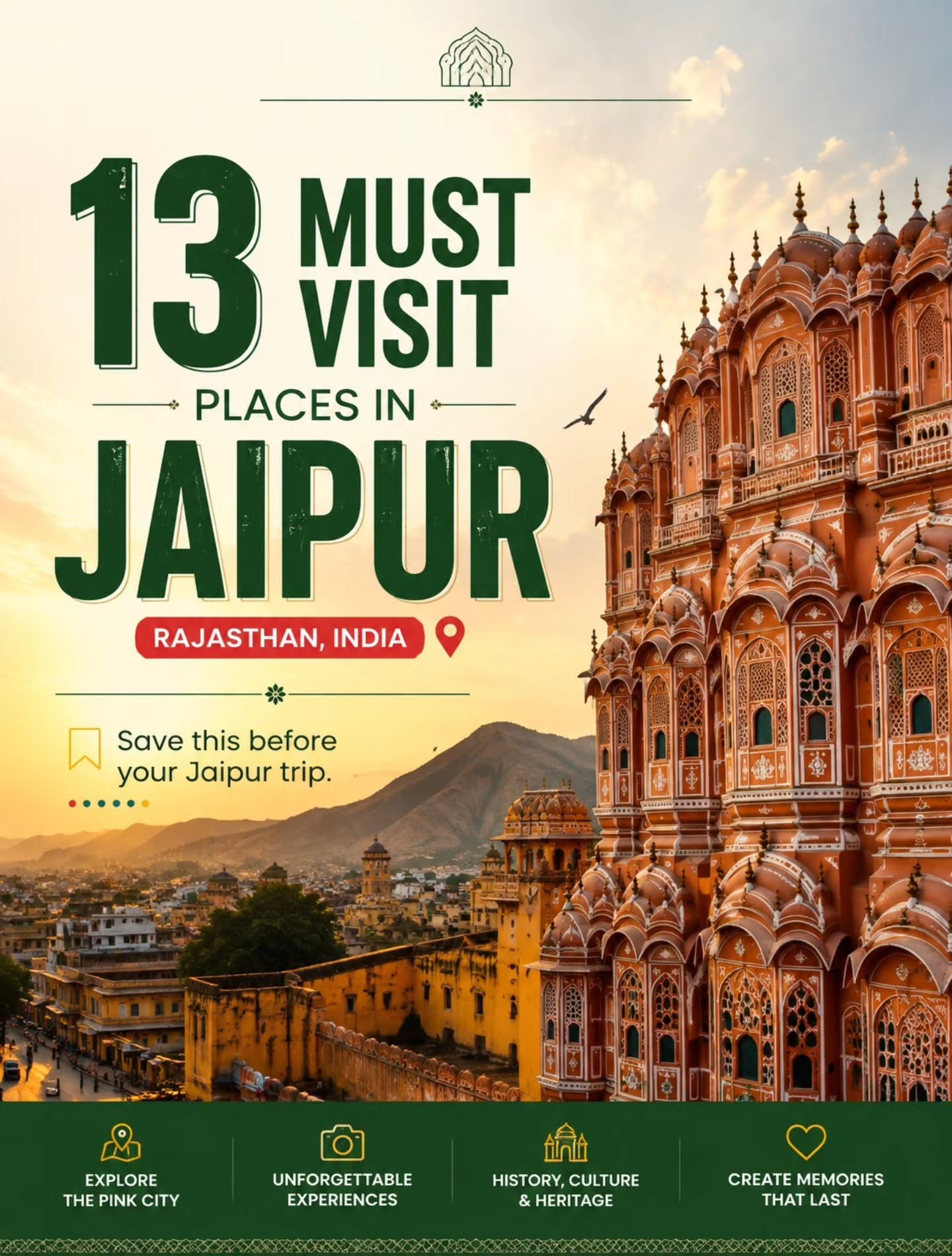
Jaipur: A Treasury of Historical and Cultural Landmarks
Jaipur, the capital of Rajasthan, India, is a city that beautifully blends history, culture, and heritage. Known as the "Pink City," Jaipur is a treasure trove of architectural marvels, cultural richness, and unforgettable experiences. With a plethora of must-visit places, Jaipur offers a unique blend of royal grandeur and modern charm. This guide highlights 13 iconic locations that every traveler should explore.
Why This Matters
Jaipur is not just a city; it's an experience. It offers a glimpse into India's rich history and vibrant culture. Whether you're a history buff, a culture enthusiast, or a wanderer seeking unique experiences, Jaipur has something for everyone. The city's architectural brilliance, vibrant markets, and rich cultural heritage make it a must-visit destination.
Must-Visit Places in Jaipur
Albert Hall Museum
The Albert Hall Museum, also known as the Central Museum, is one of the oldest museums in the region. Built-in 1876, this museum is a blend of Indo-Saracenic architecture and houses a vast collection of artifacts, paintings, carpets, and metal sculptures. It's a treasure trove for history and art enthusiasts, offering a deep dive into Rajasthan's rich heritage.
Amer Fort
Amer Fort, also known as Amber Fort, is a magnificent fortress located high on a hill. Built in the 16th century, this fort is a testament to the architectural brilliance of the Rajput rulers. The fort's intricate carvings, grand halls, and stunning views of the Maota Lake make it a must-visit. The fort's unique blend of Hindu and Islamic architecture is a sight to behold.
Shree Kale Hanuman Ji
Shree Kale Hanuman Ji is a revered temple dedicated to Lord Hanuman. The temple is known for its unique architecture and the belief that it grants wishes. The main idol of Lord Hanuman is believed to have been brought from Nepal, and the temple's serene environment makes it a perfect place for spiritual seekers.
Toran Dwar
Toran Dwar, located in the heart of Jaipur, is a beautiful gateway that serves as the entrance to the famous Jawahar Circle. This iconic landmark is a symbol of Jaipur's rich history and vibrant culture. The intricate carvings and architectural brilliance of Toran Dwar make it a must-visit for architecture enthusiasts.
Patrika Gate
Patrika Gate is a grand entrance to the sprawling Rajasthan Patrika Press. This architectural marvel is a fusion of Indian and Mughal styles. The gate is adorned with intricate carvings and designs, making it a visual treat for visitors. It's a must-visit for those interested in the city's rich history and cultural heritage.
Moti Dungri Ganesh Ji
Moti Dungri Ganesh Ji is a revered temple dedicated to Lord Ganesha, the elephant-headed deity. The temple is situated on a small hillock and offers a panoramic view of the city. The tranquil environment, coupled with the architectural brilliance of the temple, makes it a must-visit for spiritual seekers and architecture enthusiasts alike.
Beyond the Landmarks
Jaipur is not just about its historical landmarks. The city is also famous for its vibrant markets, delicious cuisine, and rich cultural heritage. Here are a few additional experiences that you shouldn't miss.
Vibrant Markets
Jaipur's markets are a shopper's paradise. From the bustling Johari Bazaar to the colorful Bapu Bazaar, Jaipur's markets offer a wide range of traditional handicrafts, textiles, jewelry, and spices. Visiting these markets is a sensory experience, with the vibrant colors, fragrant spices, and lively chatter.
Cuisine
Jaipur's cuisine is as rich and vibrant as its culture. The city is famous for its dal baati churma, laal maans, and ghewar. The rich flavors and aroma of Jaipur's traditional dishes are a treat for food lovers. Whether you're enjoying a street food snack or a lavish meal at a royal palace, Jaipur's cuisine is an experience in itself.
Cultural Experiences
Jaipur is a city that celebrates its cultural heritage. From traditional dance performances to folk music, Jaipur offers a plethora of cultural experiences. The city's rich cultural heritage is a testament to its vibrant past and continues to captivate visitors with its unique traditions and customs.
Practical Tips
Visiting Jaipur can be an overwhelming experience with so many places to see and things to do. Here are some practical tips to make your trip more enjoyable:
Best Time to Visit
The best time to visit Jaipur is during the winter season, from October to March. During this time, the weather is pleasant, making it ideal for exploring the city's historical landmarks and vibrant markets.
Getting Around
Jaipur is well-connected by road, rail, and air. The city has a good public transportation system, including buses and auto-rickshaws. Renting a car or hiring a taxi can also be a convenient option for exploring the city.
Accommodation
Jaipur offers a wide range of accommodation options, from luxurious royal palaces to budget-friendly hotels. Depending on your preference and budget, you can choose from a variety of options to make your stay comfortable and memorable.
Important Takeaways
Jaipur is a city of contrasts, where ancient history meets modern charm. From its grand palaces and forts to vibrant markets and delicious cuisine, Jaipur is a city that captivates the senses. It is a city that offers a unique blend of history, culture, and heritage, making it a must-visit destination for travelers.
Conclusion
Jaipur, with its rich history, vibrant culture, and architectural brilliance, is a treasure trove of unforgettable experiences. Whether you're exploring its historical landmarks, shopping in its vibrant markets, or indulging in its delicious cuisine, Jaipur offers a unique blend of traditional and modern experiences. From Albert Hall Museum and Amer Fort to Shree Kale Hanuman Ji and Moti Dungri Ganesh Ji, Jaipur's must-visit places offer a glimpse into the city's rich heritage and vibrant culture.
Questions readers ask
Why is Jaipur known as the 'Pink City'?
Jaipur is known as the 'Pink City' due to the distinctive pink-colored buildings found throughout the city. This color scheme was originally chosen by Maharaja Ram Singh in 1876 to welcome the Prince of Wales, and it has since become a signature feature of Jaipur's architecture.
What is the significance of Amer Fort in Jaipur?
Amer Fort, located just outside Jaipur, is a UNESCO World Heritage Site and a stunning example of Rajput architecture. It is famous for its intricate carvings, mirrored halls, and the panoramic views of the surrounding landscape. A visit to Amer Fort often includes an elephant ride up to the fort’s entrance, adding to the regal experience.
What can visitors expect to see at the Albert Hall Museum?
The Albert Hall Museum is a must-visit for those interested in Jaipur's rich cultural heritage. It houses a vast collection of artifacts, including sculptures, paintings, and decorative objects, that showcase the region's artistic and historical legacy. The museum's architecture, inspired by Indo-Saracenic styles, is also a highlight.
Are there any notable markets in Jaipur that are worth exploring?
Jaipur is famous for its vibrant markets, where visitors can find a variety of traditional crafts, textiles, and jewelry. Some of the most popular markets include Johari Bazaar, known for its gemstones and jewelry, and Bapu Bazaar, where you can find a wide range of local products and souvenirs.
What makes Hawa Mahal a unique attraction in Jaipur?
Hawa Mahal, or the 'Palace of Winds,' is an iconic landmark in Jaipur known for its distinctive honeycomb-like facade. This five-story structure was designed to allow royal women to observe street festivals and daily life without being seen. Its intricate latticework and unique architecture make it a standout attraction.
What are the best times of the year to visit Jaipur?
The best times to visit Jaipur are during the winter months, from October to March, when the weather is pleasant and ideal for exploring the city's historical sites. Summers in Jaipur can be extremely hot, while the monsoon season may limit outdoor activities. Additionally, cultural festivals and events often take place during the winter months, enhancing the overall experience.
Related deep dives
Similar reads based on topic and creator.



Recent articles
Fresh deep dives from the latest Reels we unpacked.



Comments
Be the first to comment.