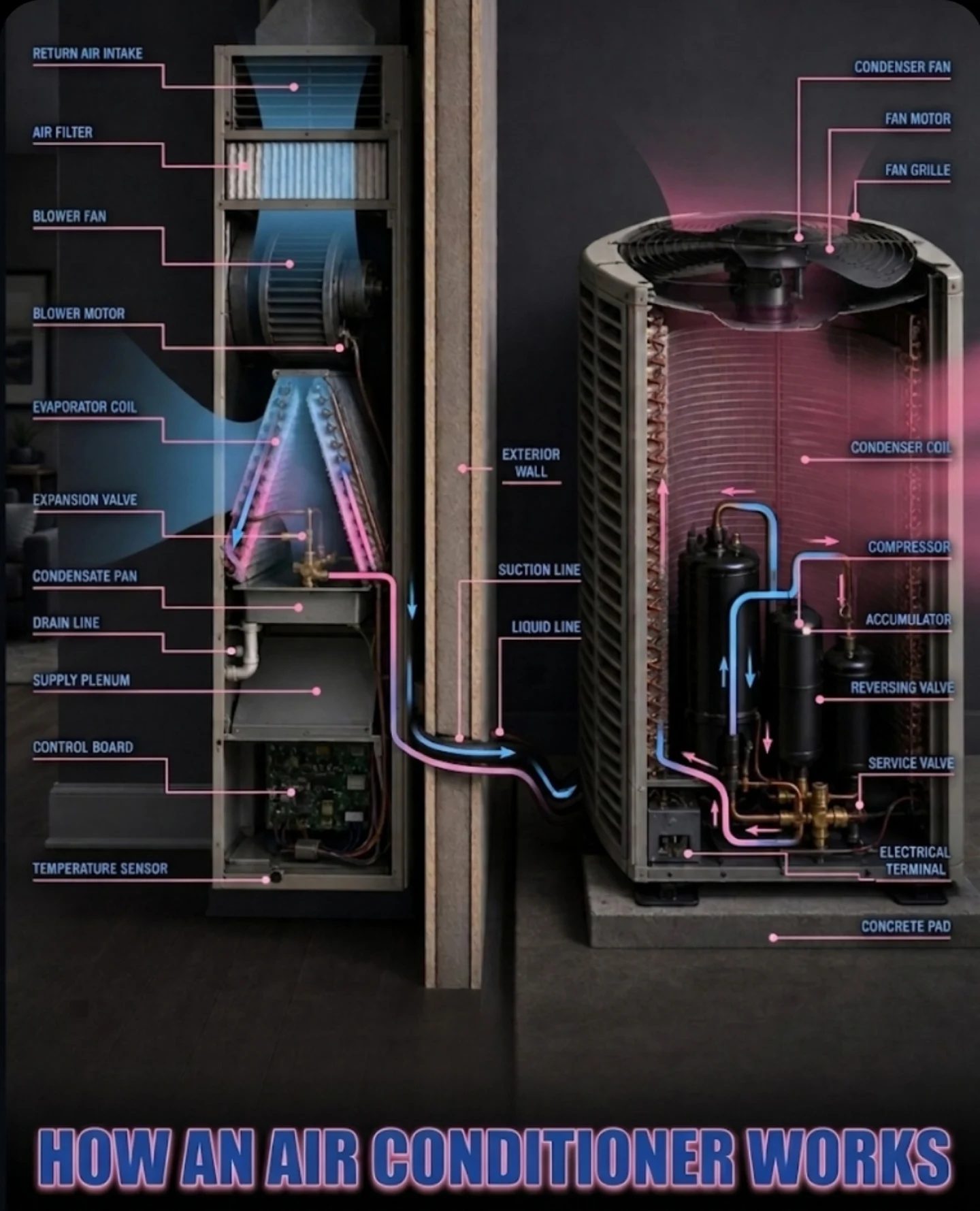
Air Conditioner Operation
Modern residential air conditioning relies on a complex interplay of mechanical components and thermodynamics to maintain comfortable indoor environments. This intricate process involves a continuous refrigeration loop that bridges the indoor and outdoor environments, effectively managing heat exchange and air circulation.
Context
Understanding air conditioning operation is crucial for homeowners and professionals alike. This knowledge can help in troubleshooting issues, optimizing performance, and making informed decisions when purchasing or maintaining air conditioning units. The split-system architecture, which is common in residential settings, separates the system into indoor and outdoor components. This design enhances efficiency and allows for targeted climate control.
Main Discussion
The Heat Exchange Cycle
The air conditioning process begins with the absorption of heat from the indoor air. This is achieved through the evaporator coil, which is part of the indoor unit. The refrigerant within the coil absorbs heat, causing it to evaporate and turn into a gas. This cooled air is then circulated back into the living space by the blower fan, providing the cooling effect that makes air conditioners so effective. The dehumidification process occurs during this stage as the cooled air condenses moisture from the indoor air, which is then drained out of the system.
The Role of the Compressor
The compressor is a critical component located in the outdoor unit. Its primary function is to pressurize the refrigerant gas, increasing its temperature and pressure. This high-pressure, high-temperature gas is then directed to the condenser coil, where it releases the absorbed heat into the outdoor environment. The process of compressing the refrigerant is essential for maintaining the flow of the refrigeration loop and ensuring continuous heat exchange.
The Condenser Coil
The condenser coil is responsible for dissipating the heat absorbed from the indoor air. The high-pressure refrigerant gas enters the condenser coil and begins to cool down as it releases heat to the surrounding outdoor air. This cooling causes the refrigerant to condense back into a liquid state, ready to be cycled back through the system. The efficiency of the condenser coil is crucial for the overall performance of the air conditioning unit, as it directly affects the system's ability to remove heat from the indoor environment.
The Blower Fan
The blower fan plays a pivotal role in circulating air through the system. It draws warm indoor air over the evaporator coil, facilitating the heat absorption process. The cooled air is then blown back into the living space, ensuring a constant supply of cool air. The blower fan also helps in distributing the cooled air evenly throughout the room, enhancing overall comfort.
The Control Board
The control board is the brains of the air conditioning unit. It manages the operation of all components, ensuring they work in harmony to achieve the desired temperature and humidity levels. Modern control boards often include advanced features such as programmable thermostats, energy-saving modes, and remote control options, providing users with greater control over their indoor climate.
Practical Tips
Regular Maintenance
Regular maintenance of your air conditioning unit is essential for its longevity and efficiency. This includes cleaning or replacing air filters, checking refrigerant levels, and ensuring that all components are functioning correctly. Neglecting maintenance can lead to reduced performance and increased energy consumption.
Proper Installation
Ensure that your air conditioning unit is properly installed by a qualified professional. Proper installation, including the correct placement of the outdoor unit and ensuring adequate airflow, can significantly impact the unit's performance and efficiency.
Energy Efficiency
To maximize energy efficiency, consider using a programmable thermostat. This allows you to set specific temperature settings for different times of the day, reducing energy consumption when cooling is not needed. Additionally, regular cleaning of the condenser coil and evaporator coil can help maintain optimal performance and energy efficiency.
Important Takeaways
Air conditioning is a complex system that relies on the seamless integration of various components and thermodynamic principles. Understanding the heat exchange cycle, the roles of key components, and the importance of regular maintenance can help ensure that your air conditioning unit operates efficiently and effectively.
The split-system architecture, with its indoor and outdoor units, provides a targeted and efficient means of climate control. The evaporator coil, compressor, condenser coil, blower fan, and control board all work together to manage heat exchange and air circulation, providing a comfortable indoor environment.
Conclusion
Air conditioning units are essential for maintaining comfortable indoor environments, especially during hot weather. By understanding the underlying principles and components of air conditioning, you can make informed decisions about maintenance, performance, and energy efficiency. Regular maintenance, proper installation, and the use of advanced control features can all contribute to a more efficient and effective air conditioning system, enhancing your overall comfort and reducing energy costs.
Questions readers ask
What are the key components of an air conditioning system?
The main components include the evaporator coil, compressor, and condenser. The evaporator absorbs heat from the indoor air, the compressor pressurizes the refrigerant, and the condenser releases heat outside. Additionally, the blower and control panel are essential for air circulation and system management.
How does the refrigeration cycle in an air conditioner work?
The refrigeration cycle involves a continuous loop of refrigerant that moves through the evaporator, compressor, and condenser. The refrigerant absorbs heat from indoor air in the evaporator, is compressed into a high-pressure gas, and then releases heat in the condenser before returning to the evaporator.
What is the purpose of the outdoor air conditioning unit?
The outdoor unit houses the compressor and condenser. It plays a crucial role in releasing the absorbed heat from the indoor environment to the outdoors, completing the heat exchange process that cools your indoor space.
How can I troubleshoot common issues with my air conditioning system?
Start by checking the thermostat settings and air filters. Ensure the outdoor unit is clear of debris and the indoor blower is functioning properly. If the problem persists, consult a professional for a thorough inspection of the compressor, evaporator coil, and refrigerant levels.
What are some tips for maintaining my air conditioning system?
Regular maintenance includes cleaning or replacing air filters every 1-3 months, keeping the outdoor unit free of debris, and scheduling annual professional check-ups. Ensure the blower and control panel are functioning correctly and monitor the system for any unusual noises or performance issues.
Related deep dives
Similar reads based on topic and creator.




Recent articles
Fresh deep dives from the latest Reels we unpacked.



Comments
Be the first to comment.