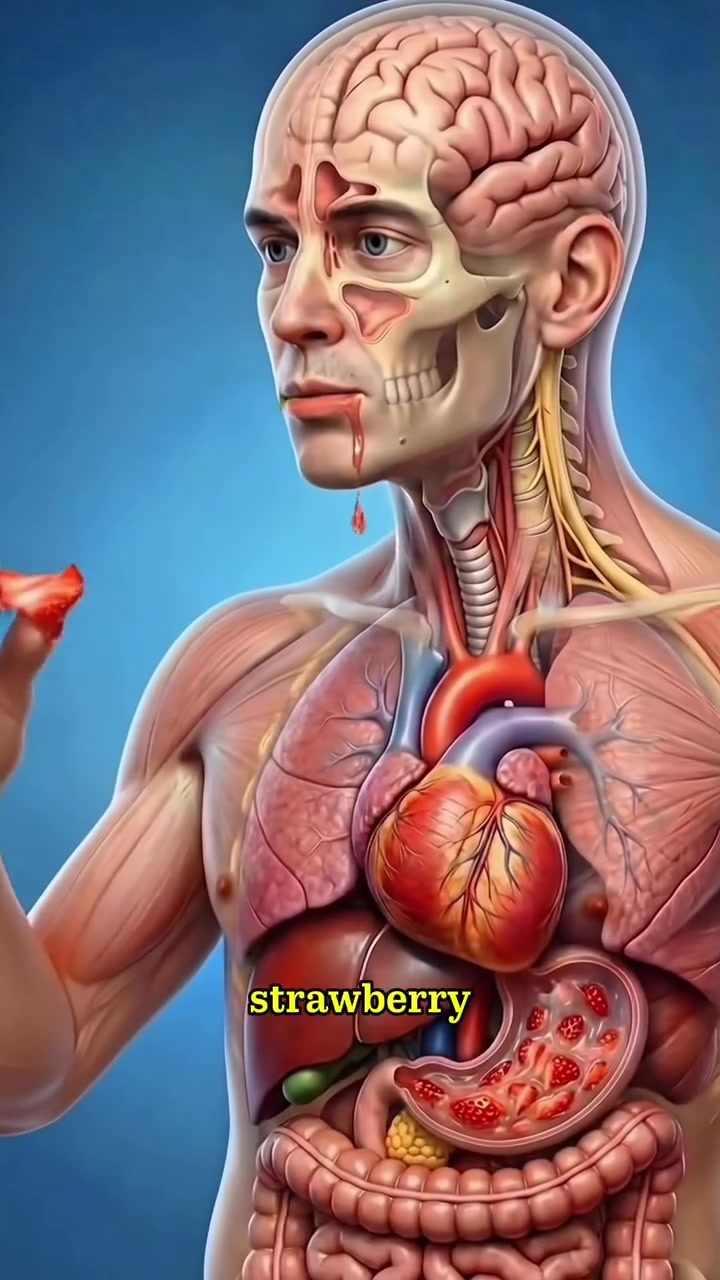
Human Digestion and Nutrient Transport
Digestion is a complex process that transforms the food you eat into the nutrients your body needs to function. Understanding this process can offer valuable insights into how the body absorbs and utilizes nutrients from food. The journey begins in the mouth and stomach, culminating in nutrient-rich blood that travels to the brain, muscles, and organs.
Why This Matters
Delving into the digestive process helps explain why nutrition is so crucial for overall health. It sheds light on how nutrients from the food you eat are absorbed and circulated throughout your body. This knowledge can help you make informed decisions about your diet and well-being.
The Journey of Digestion
The Stomach
When you take a bite of a strawberry, the digestion process begins. The strawberry enters the stomach through the esophagus. Here, digestive juices mix with the strawberry and start breaking it down into smaller, softer pieces. This process is essential for preparing the food for the next stage of digestion, where nutrients can be absorbed.
The Small Intestine
The partially digested strawberry then travels to the small intestine. This is where the magic of nutrient absorption happens. The small intestine is lined with tiny, finger-like projections called intestinal villi. These villi are covered in even smaller projections called microvilli, which increase the surface area for absorption.
In the small intestine, nutrients like carbohydrates, proteins, fats, vitamins, and minerals are absorbed through the intestinal walls into the bloodstream. The intestinal villi play a critical role in this process by facilitating the absorption of these essential nutrients.
The Liver’s Role
Once absorbed, the nutrients travel to the liver via the portal vein. The liver plays a crucial role in processing and balancing these nutrients. It acts as a filter, breaking down and metabolizing toxins, excess nutrients, and waste products. The liver also stores essential nutrients like vitamins A, D, and B12, and helps regulate blood glucose levels.
The Heart and Blood Circulation
After processing in the liver, the nutrient-rich blood then moves to the heart. The heart pumps this enriched blood throughout the body, ensuring that every cell and organ receives the nutrients it needs to function optimally.
The Brain and Body
As the nutrient-rich blood reaches the brain, it delivers the energy needed to support mental focus and activity. This energy then spreads to muscles and organs across the entire body, fueling physical activity and maintaining overall health.
Practical Tips for Optimal Digestion
Chew Thoroughly
Chewing your food thoroughly aids in the initial breakdown of food particles, making it easier for digestive enzymes to work. Aim to chew each bite 20-30 times before swallowing.
Stay Hydrated
Drinking plenty of water is essential for digestion. Water aids in the breakdown of food and helps prevent constipation. Aim for at least 8 glasses of water a day.
Eat a Balanced Diet
A diet rich in fiber, vitamins, and minerals supports a healthy digestive system. Include plenty of fruits, vegetables, whole grains, and lean proteins in your diet.
Avoid Eating Too Quickly
Eating too quickly can lead to overeating and indigestion. Take your time when eating, and enjoy your meals in a relaxed environment.
Important Takeaways
The digestive process is a well-coordinated series of events that ensures the body receives the nutrients it needs. From the stomach to the liver and heart, each organ plays a critical role in nutrient absorption and circulation.
Understanding this process can help you make better food choices and adopt habits that support a healthy digestive system. Whether it’s chewing thoroughly, staying hydrated, or eating a balanced diet, small changes can have a significant impact on your overall health.
Conclusion
The journey of a strawberry from your mouth to your body's cells is a fascinating process that highlights the complexity and efficiency of the human digestive system. By understanding how nutrients are absorbed and circulated, you can make informed decisions about your diet and overall health. Focus on supporting your digestive system through a balanced diet, hydration, and mindful eating to ensure that your body receives the nutrients it needs to thrive.
Questions readers ask
How does the digestive process begin when you eat a strawberry?
The digestive process starts in the mouth where enzymes begin to break down the strawberry's sugars. Chewing also physically breaks down the strawberry into smaller pieces, increasing the surface area for enzymes to act upon. This initial breakdown is crucial for the rest of the digestive journey.
What role does the stomach play in the digestive process?
The stomach is a powerhouse in the digestive process. It churns and mixes the partially digested food from the mouth with gastric juices, which contain strong acids and enzymes. This environment helps to further break down the food, especially proteins, preparing it for the next stages of digestion in the intestines.
Where does nutrient absorption primarily occur in the digestive journey?
The small intestine is where the majority of nutrient absorption takes place. The inner surface of the small intestine is lined with tiny, finger-like projections called villi, which increase the surface area for absorption. Nutrients from the digested food pass through the villi into the bloodstream, becoming nutrient-rich blood that travels to the body's vital organs.
How does the digestive system convert food into energy?
The digestive system converts food into energy through a series of steps. First, food is broken down into smaller components like glucose, which can be absorbed into the bloodstream. From there, glucose and other nutrients are transported to cells throughout the body, where they are used to produce energy in the form of ATP (adenosine triphosphate).
What happens if the digestive process is disrupted?
If the digestive process is disrupted, it can lead to various issues. For example, if your body struggles to break down and absorb nutrients properly, you may experience deficiencies, fatigue, and other health problems. Understanding how digestion works can help identify potential issues and guide you towards making dietary changes or seeking appropriate medical advice.
Recent articles
Fresh deep dives from the latest Reels we unpacked.

Comments
Be the first to comment.