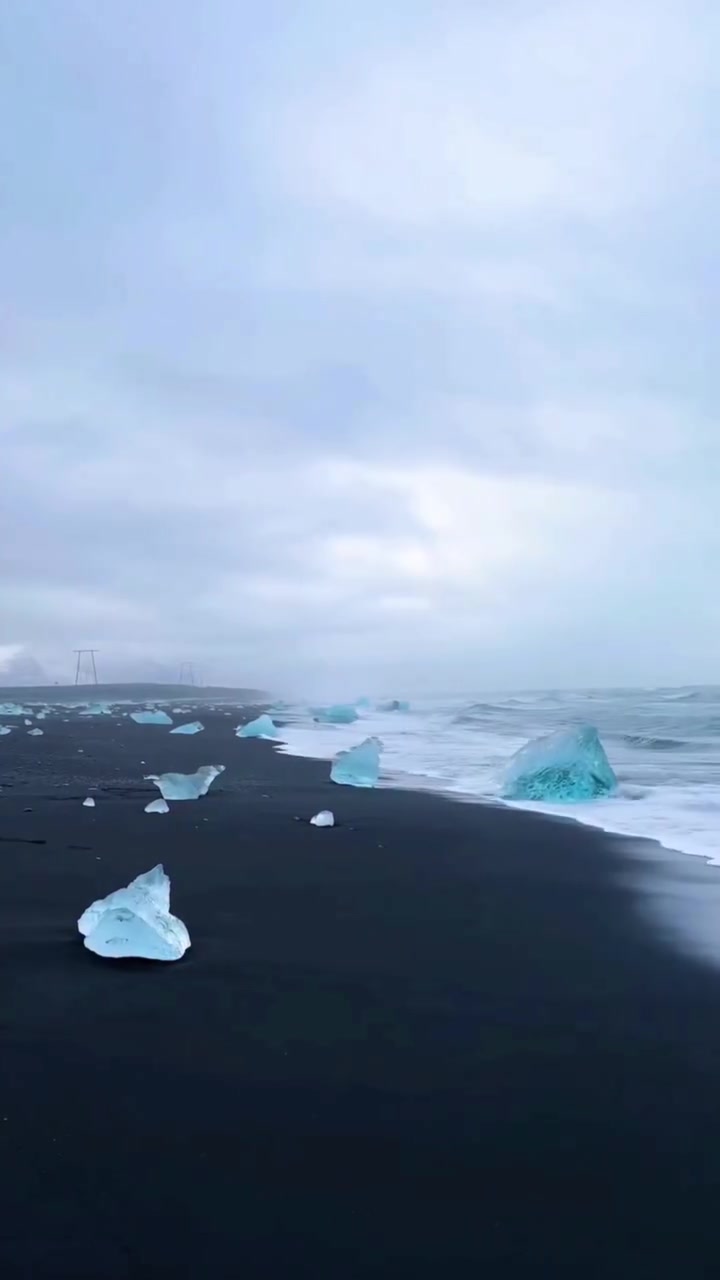
Diamond Beach: A Surreal Landscape of Ice and Sand
At first glance, Diamond Beach looks like a landscape from a dream. Crystal-clear blue ice chunks litter the beach. The ice is as if someone had scattered diamonds across a black sand beach in Iceland. Giant pieces of ice drift toward the ocean, break away from the glacier and get washed back onto the beach, creating this incredible and surreal image. The ice chunks are a stark contrast to the black sand, the Atlantic Ocean and the clear sky. But Diamond Beach is not a mirage. This is glacial ice from a nearby glacier lagoon, beached on a volcanic black sand beach. At Diamond Beach, you can walk along the beach, get incredibly close to the ice, and watch as the waves move these giant chunks of glacier ice around the shore. This is one of the incredible stops you can make while driving Iceland's famous ring road, a route around the country that encounters some of the most dramatic landscapes in the world. The dramatic contrast of black sand, blue ice, and the Atlantic Ocean stretches as far as the eye can see.
The magic of geology and climate
Iceland's surreal landscape takes place in a volcano country where black sand and glacial ice must share space. The geology of the area makes Diamond Beach unique. This is a black volcanic sand beach, which is common in Iceland where many beaches are formed from lava and volcanoes. But the ice calls attention to the climate in Iceland, which can bring ice and snow in the heart of summer. High winds and storms in Iceland are strong enough to pick up ice chunks and deposit them on the beach. At times, Diamond Beach is covered with ice chunks in the middle of summer.
Glacier Breaking
Iceland's Glaciers
Iceland's glacial ice has some of the most dramatic images in the world. Glaciers are massive rivers of ice that form over thousands of years. Iceland's glaciers are at the intersection of black volcanic sand beaches and blue glacial ice, forming landscapes that are otherworldly. Diamond Beach is a visual delight. Glaciers are moving bodies of ice. Those chunks of ice on Diamond Beach came from glaciers which are in the process of breaking up.
The Scenery
Because of the movement of glaciers, ice chunks break off from a nearby glacier lagoon. Glaciers break up over time, or from a change in temperature. As the ice chunks break apart and drift towards the ocean, some of the pieces are washed back onto the volcanic black sand beach. These stunning blocks of blue ice contrast with the dark volcanic sand, the waves, and the sky, creating a unique and dramatic view.
The Aurora
The journey of Diamond Beach is only one fascinating element of the landscape in Iceland, but there are countless other dramatic landscapes. The Aurora Borealis, or Northern Lights, often dance above Iceland's landscapes. The Aurora reflects vibrant green and purple hues even reflecting off the glaciers, the sand, and the ice. It creates a magical atmosphere. As the sky changes through the day, so does the landscape. “The best part? You can actually visit it. Diamond Beach is one of the incredible stops you can make while driving Iceland's famous ring road,” the video's narrator states. Iceland’s Ring Road, or Route 1, is a 1,332 km trip around the country.
Why is Diamond Beach a magnet for travelers?
At Diamond Beach, you can get close to the dramatic view. It’s not a fantasy. The ice is real. The sand is real. The ocean is real. You can walk across the black sand, let the waves wash over your feet, and watch the ice pieces move around the shore. You will experience the enchantment of this location. The beauty of Diamond Beach is a testement to the forces of nature. The ice is moving. The ocean is moving. You will likely hear wind howling and sense the power of the waves. For all the beauty and spectacle of Diamond Beach, it is also a unique opportunity to experience a glacier breaking up and the movement of ice and sand. It is a practical experience of geology and climate. It is also a visceral experience of how literal forces of nature operate.
Educational Adventure
Whether you're looking to experience nature at its most powerful, or you are looking to understand how glaciers operate, the landscape and sight are intimidating and inviting. Diamond Beach can teach about volcanic beaches, glaciers, and the forces of the ocean. For those who go, it is not just a visual experience but a tactile experience. **The world's access to the magic of Iceland’s glaciers and volcanic landscapes is part of a larger endeavor to promote discovery, learning, and wonder. The word "DAISY" that is the acronym of the phrase "Discover, Learn, and Savor". One could say the word "ONLY ON EARTH" if there were a caption to that image.
Questions readers ask
What causes the ice chunks to end up on Diamond Beach?
The ice chunks on Diamond Beach come from a nearby glacier lagoon. As the glacier breaks up, either naturally over time or due to changes in temperature, large pieces of ice drift towards the ocean. Some of these ice chunks are then washed back onto the black sand beach by the waves.
Can you touch the ice chunks on Diamond Beach?
Yes, you can get very close to the ice chunks and even touch them. The beach allows visitors to walk along the shore and experience the ice up close. However, always be cautious and respectful of the environment.
Is Diamond Beach only accessible in winter?
No, Diamond Beach can be visited year-round. While it might be more dramatic in winter, the beach can be covered in ice chunks even in the middle of summer due to strong winds and storms that deposit the ice on the shore.
How does the black sand on Diamond Beach form?
The black sand on Diamond Beach is volcanic in origin. Many of Iceland's beaches are formed from lava and volcanic activity, which gives the sand its distinctive dark color. This contrast with the blue glacial ice creates the beach's surreal landscape.
What is the best time of day to see the Northern Lights at Diamond Beach?
The Northern Lights, or Aurora Borealis, are best seen at night when the sky is dark. The exact timing can vary, but generally, the best views are from late evening to early morning. The lights often reflect vibrant colors off the glaciers, sand, and ice, enhancing the magical atmosphere.
Related deep dives
Similar reads based on topic and creator.




Recent articles
Fresh deep dives from the latest Reels we unpacked.




Comments
Be the first to comment.