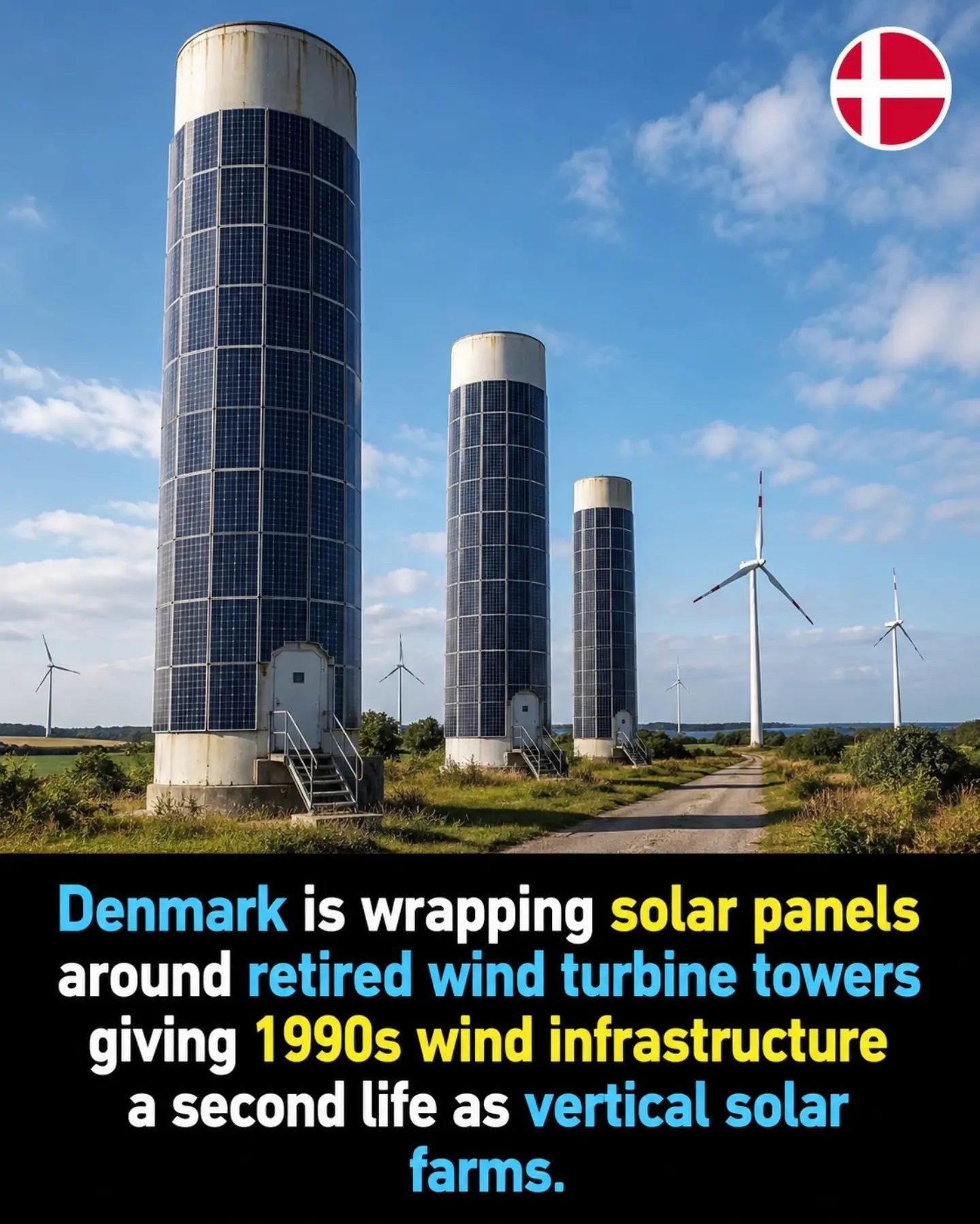
Vertical solar farms are the innovative solution that rejuvenates retired wind turbine towers in Denmark. This unique approach to renewable energy highlights how older infrastructure can be repurposed to enhance sustainability efforts. The process involves wrapping solar panels around these towers, effectively transforming them into dual-purpose vertical solar farms. By doing so, Denmark is not only extending the life of its 1990s wind infrastructure but also maximizing the use of available land and resources.
Why This Matters
The transition to renewable energy is a critical goal for many countries, and Denmark is no exception. With an ever-growing need for sustainable energy sources, the country is finding creative ways to utilize its existing infrastructure. This initiative is particularly significant because it addresses several key challenges:
-
Land Use Optimization: Traditional solar farms require large, flat areas, which can be difficult to find in densely populated regions. By using vertical spaces, Denmark optimizes land use and reduces the need for additional acreage.
-
Infrastructure Longevity: Retiring wind turbines does not mean these structures are obsolete. By integrating solar panels, Denmark extends the useful life of these towers, making the most of past investments.
-
Energy Diversification: The addition of solar energy to wind power creates a more resilient and diverse energy portfolio. This diversification helps ensure a stable energy supply, even during periods of low wind or solar radiation.
-
Sustainability Goals: Denmark has ambitious sustainability targets, and initiatives like vertical solar farms play a crucial role in achieving these goals. By repurposing existing structures, the country can accelerate its transition to renewable energy.
How Vertical Solar Farms Are Built
The process of converting retired wind turbine towers into vertical solar farms involves several key steps. Although the exact details may vary, the general approach includes:
Assessment and Preparation
Before any modifications are made, the retired wind turbines undergo a thorough assessment. Engineers evaluate the structural integrity of the towers to ensure they can safely support the additional weight and stress of solar panels. This step is crucial for ensuring the long-term viability of the new solar farms.
Panel Installation
Once the towers are deemed suitable, solar panels are carefully mounted around the structures. The panels are designed to capture as much sunlight as possible, even in suboptimal conditions. The installation process requires precision to ensure the panels are securely attached and can withstand environmental factors like wind and weather.
Integration and Optimization
After installation, the solar panels are integrated into the existing energy grid. This involves setting up the necessary electrical connections and optimizing the system to ensure efficient energy generation. The goal is to create a seamless transition from wind power to solar power, maximizing the output from both energy sources.
Practical Tips for Implementing Vertical Solar Farms
While Denmark's approach to vertical solar farms offers a unique solution, it's essential to consider several practical factors for successful implementation:
Site Selection
Choosing the right site is crucial for the efficiency of vertical solar farms. Ideally, locations with ample sunlight and existing wind infrastructure are the best candidates. However, it's also important to consider factors like accessibility for maintenance and proximity to energy grids.
Structural Integrity
Ensuring the structural integrity of the towers is paramount. Before installing solar panels, a comprehensive structural assessment is necessary. This includes checking for potential weaknesses and reinforcing the towers as needed. Regular inspections and maintenance should also be part of the ongoing strategy.
Technological Integration
Vertical solar farms require sophisticated technology to integrate seamlessly with existing energy systems. This includes advanced monitoring systems to track energy production, environmental sensors to optimize panel positioning, and smart grid technologies to distribute energy efficiently.
Important Takeaways
-
Innovation in Renewable Energy: Vertical solar farms represent a groundbreaking approach to renewable energy, showcasing how innovation can solve complex sustainability challenges.
-
Efficient Use of Resources: By repurposing retired wind turbines, Denmark's vertical solar farms exemplify the efficient use of existing resources, reducing the need for new land acquisition and minimizing waste.
-
Dual-Purpose Infrastructure: The integration of solar panels with wind turbines highlights the potential for dual-purpose infrastructure, enhancing energy diversity and resilience.
-
Long-Term Sustainability: This initiative underscores the importance of long-term sustainability planning, ensuring that investments in infrastructure continue to yield benefits over time.
Conclusion
Denmark's vertical solar farms are a testament to the country's commitment to sustainable energy solutions. By repurposing retired wind turbine towers with solar panels, Denmark is not only optimizing its use of resources but also setting a global example for innovative and efficient renewable energy systems. As more countries look to transition to renewable energy, initiatives like these will play a crucial role in achieving sustainability goals.
Questions readers ask
What are vertical solar farms and how do they work?
Vertical solar farms are solar energy systems installed on vertical structures, such as retired wind turbine towers. In Denmark, these farms work by wrapping solar panels around the towers, allowing them to generate electricity from sunlight while also serving as a secondary support structure. This innovative setup enables dual use of the tower to harness renewable energy in a space-efficient manner.
How does Denmark benefit from repurposing wind turbines into vertical solar farms?
Denmark benefits in several ways from repurposing wind turbines into vertical solar farms. Firstly, it extends the lifespan of existing infrastructure, reducing waste and lowering the cost of renewable energy. Secondly, it optimizes land use by generating solar power without occupying additional land. Lastly, it diversifies Denmark's energy portfolio, enhancing sustainability and reducing reliance on a single energy source.
What is the process of converting a wind turbine into a vertical solar farm in Denmark?
The conversion process involves installing solar panels around the retired wind turbine towers. The panels are secured to the tower, allowing the structure to support the solar installation while generating electricity from sunlight. This process is a key part of Denmark's efforts to maximize the use of its existing infrastructure and enhance renewable energy production.
Why is Denmark focusing on combining wind and solar power?
Denmark is combining wind and solar power to create a more robust and diverse renewable energy portfolio. By integrating these two sources, the country can ensure a more consistent and reliable power supply, as wind and solar energy generation complement each other. This diversified approach helps Denmark meet its sustainability goals more effectively.
What are the sustainability goals that Denmark aims to achieve through this initiative?
Denmark's initiative to convert retired wind turbine towers into vertical solar farms is aimed at promoting sustainable energy practices. The country seeks to reduce its carbon footprint, minimize waste from decommissioned wind infrastructure, and maximize the use of available resources. This approach supports Denmark's overarching goal of transitioning to a more sustainable and environmentally friendly energy system.
How does this approach help in maximizing land use in Denmark?
By installing vertical solar farms on existing wind turbine towers, Denmark avoids the need for additional land acquisition. This method allows for the generation of renewable energy without encroaching on new areas, which is particularly beneficial in a country with limited land resources. It's a strategic way to increase solar power capacity while respecting land use constraints.
What are the key advantages of vertical solar installations over traditional horizontal ones?
Vertical solar installations offer several advantages. They require less land, making them ideal for densely populated or land-constrained areas. Additionally, vertical panels can capture sunlight from different angles throughout the day, which can improve overall energy generation efficiency. Moreover, integrating them with existing structures like wind towers enhances space efficiency and resource utilization.
Related deep dives
Similar reads based on topic and creator.



Recent articles
Fresh deep dives from the latest Reels we unpacked.



Comments
Be the first to comment.