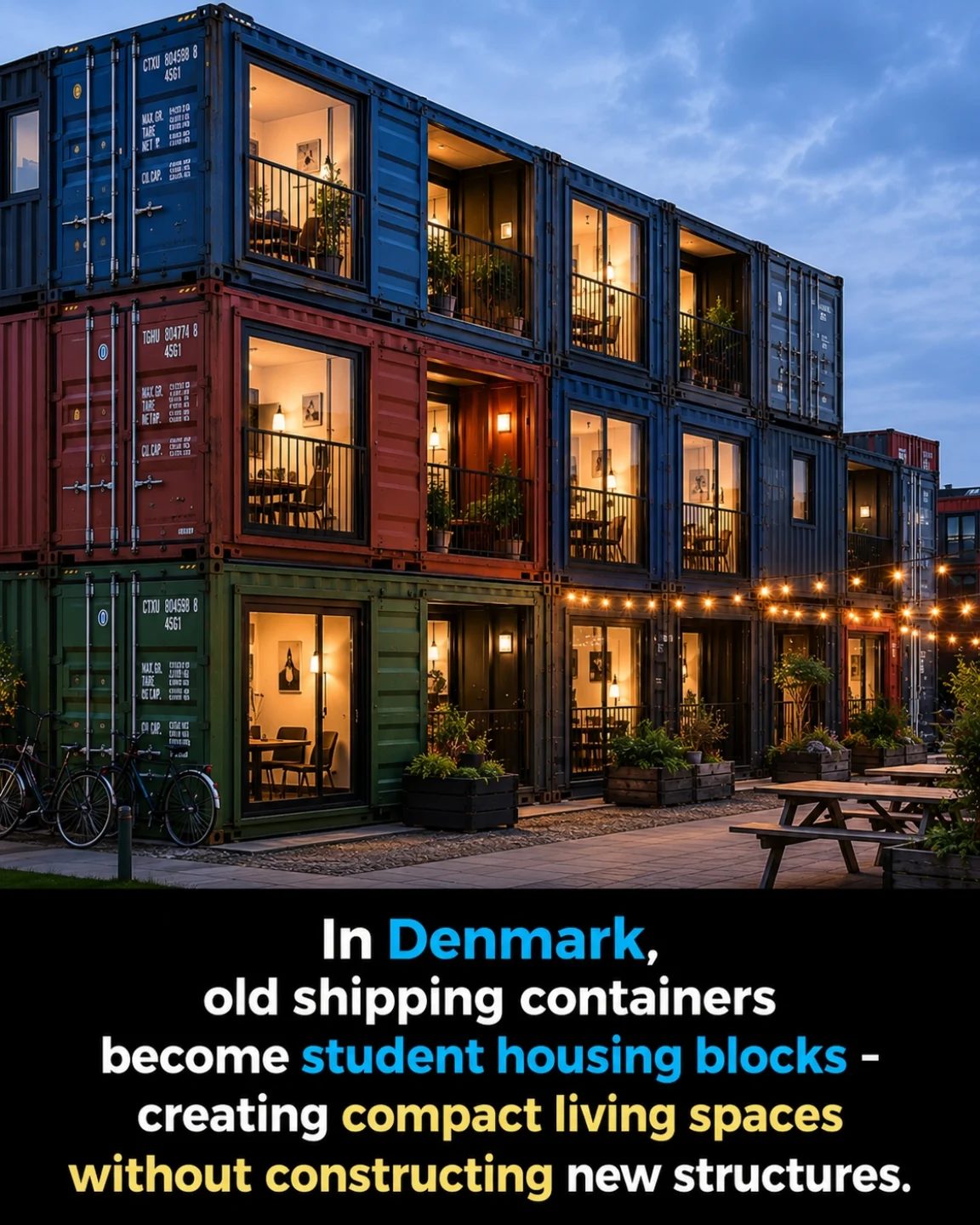
Shipping Container Housing: A Sustainable Solution for Student Accommodation
In Denmark, an innovative approach to student housing has emerged, transforming old shipping containers into functional and compact living spaces. This unique solution not only addresses the housing needs of students but also contributes to sustainable urban development by repurposing existing materials and reducing the need for new construction.
Context: Why This Matters
Repurposing shipping containers for housing is an exciting development in sustainable architecture. Around the world, universities and cities are grappling with the challenge of providing affordable and adequate student housing. This innovative approach offers a practical solution by utilizing existing resources in a creative and eco-friendly manner.
Main Discussion
The Rise of Repurposed Shipping Containers
Shipping containers, designed for durability and ease of transport, have become a popular choice for repurposing into housing units. These containers are robust, weather-resistant, and can be easily stacked and arranged to create multi-story structures. This modularity makes them ideal for urban settings where space is often limited.
Denmark's Student Housing Innovation
In Denmark, the repurposing of shipping containers for student housing has gained traction. Multiple factors drive this trend. Firstly, the availability of old shipping containers provides a cost-effective building material. Secondly, Denmark's focus on sustainability makes this eco-friendly approach particularly attractive.
Compact Living Spaces
Compact living spaces are a key feature of this innovative approach. The small footprint of shipping containers allows for efficient use of urban land. Each container can be outfitted with basic amenities, such as a bed, desk, and small kitchenette, creating a cozy and functional living environment. These spaces often include shared amenities like bathrooms and common areas, fostering a sense of community among residents.
Avoiding New Construction
One of the most significant advantages of using shipping containers for housing is the avoidance of new construction. This reduces the environmental impact associated with traditional building methods, such as deforestation, carbon emissions, and waste generation. Additionally, repurposing existing materials can significantly lower construction costs, making it an attractive option for budget-conscious projects.
Practical Tips
Assessing Suitability for Your Location
When considering shipping container housing for students, it's essential to assess the suitability of your location. Ensure that local zoning laws and building regulations permit the use of shipping containers for residential purposes. Additionally, evaluate the availability of old shipping containers and the cost of repurposing them.
Designing for Comfort and Functionality
Designing compact living spaces requires careful planning to ensure both comfort and functionality. Each container should be outfitted with essential amenities and designed to maximize space efficiency. Consider incorporating natural light and ventilation to create a comfortable living environment.
Community and Shared Amenities
Creating a sense of community is crucial for student housing. Design shared spaces, such as common rooms, kitchens, and outdoor areas, to encourage social interaction among residents. This not only enhances the living experience but also promotes a supportive community environment.
Important Takeaways
- Shipping containers offer a durable and cost-effective material for student housing.
- Denmark’s approach showcases how repurposing old containers can create compact, sustainable living spaces.
- This method reduces the environmental impact of new construction and lowers costs.
- Proper planning and design are essential for creating comfortable and functional living environments.
- Shared amenities and community spaces enhance the overall living experience for students.
Conclusion
Shipping container housing represents a forward-thinking solution to the challenges of student accommodation. By repurposing old shipping containers, Denmark has demonstrated how innovative design and sustainable practices can address urban housing needs. This approach offers a model for other cities and universities looking to create affordable, eco-friendly, and efficient living spaces for students. The integration of compact design, community spaces, and shared amenities ensures a comfortable and supportive living environment, making shipping container housing a viable and attractive option for the future.
Questions readers ask
How do repurposed shipping containers benefit student housing in Denmark?
Repurposed shipping containers offer a cost-effective and eco-friendly solution to student housing in Denmark. They provide a quick and affordable way to create compact living spaces, reducing the need for new construction and minimizing environmental impact. Additionally, these containers are durable and can be stacked to create multi-story housing units, maximizing limited urban space.
Are shipping container homes suitable for long-term living?
Yes, properly designed shipping container homes can be comfortable for long-term living. Many of these containers are equipped with insulation, plumbing, and electrical systems to ensure a pleasant and functional living environment. They can accommodate essential amenities, including kitchens, bathrooms, and bedrooms, similar to traditional apartments.
What are the environmental benefits of using repurposed shipping containers for student housing?
Using repurposed shipping containers reduces the demand for new building materials and minimizes construction waste. This approach also decreases the need for land development and new construction, lowering carbon emissions. Furthermore, stacking containers vertically maximizes urban space, contributing to more sustainable urban planning.
How does Denmark ensure the safety and comfort of students living in container homes?
Denmark ensures the safety and comfort of students living in container homes by enforcing strict building codes and regulations. Containers are designed with proper insulation, ventilation, and safety features. Additionally, these homes are often situated in well-planned communities with access to essential services, enhancing the overall living experience for students.
What are the typical amenities included in Denmark's shipping container student housing?
Shipping container student housing in Denmark typically includes essential amenities such as a small kitchen, a bathroom, and a compact living and sleeping area. Some units may also feature shared spaces like communal kitchens, lounges, and study areas. These amenities are designed to be space-efficient, making the most out of the limited area within the container.
Can shipping container homes be customized to fit different student needs?
Yes, shipping container homes can be customized to a large extent. Their modular nature allows for various configurations and add-ons, such as additional windows, extended living spaces, or specialized amenities. This flexibility makes them adaptable to different student needs, whether they require more storage, a dedicated study area, or other specific features.
Related deep dives
Similar reads based on topic and creator.



Recent articles
Fresh deep dives from the latest Reels we unpacked.




Comments
Be the first to comment.